Reformation Pratum 2015: Who is Jesus?

Who-Is-Jesus-1280November 13-14, 2015

Emmanuel Bible Church

Now, and throughout church history, there have been many errors and misunderstandings about who Jesus is.  Reformation Pratum: Who is Jesus? will focus on who Jesus was in His role as Prophet, Priest, and King, as well as some historical misunderstandings of Jesus.  All ages are invited to attend, as we will have a simultaneous conference for kids 3 years old through 6th grade.  Nursery is also provided.  The cost is free.

Friday, 5:30-9:00 PM

Jesus as God & Man

How was Jesus both God and man, and why does it matter?  There have been many errors taught about this doctrine, and it matters greatly.  The New Testament is clear that we are to know the true Jesus as presented in the Bible.  Andrew Murch of LifePoint Church will address this fundamental issue.

Christianity & Liberalism

 The late 19th and early 20th centuries saw a dwindling of orthodox theology in favor of a “modern” approach to Christianity (i.e. Jesus existed as a great example but not Lord, man was essentially good, etc.) and many fought against it.  Brett Davisson of Emmanuel Bible Church will focus on how J. Gresham Machen fought for truth and explain how his example is pertinent in our day.

Jesus as Chief Prophet

Jesus not only heralded the Word of God to man, but is Himself the Word.  Ending the era of the Old Testament prophets, He proclaimed a new era in man’s relationship with God.  Just as the  Old Testament prophets spoke against sin, called people to repentance, and pronounced the forgiveness and pardon of God, so Jesus as our sufficient Prophet has done all of these for us.

Saturday, 8:30-12:00 AM

Jesus as Great High Priest

     Jesus was and is the ultimate and perfect sacrifice, the Lamb of God.  He is the ONLY mediator.  Demetrius Rogers of LifePoint Church will expand on the ways in which Jesus fulfills the office of great high priest, and graciously deals with our sin.

Dr. Martyn Lloyd-Jones

     Martyn Lloyd-Jones was an influential British pastor who staunchly defended the purity of the Gospel and fought against the general down-grade of doctrine in the greater evangelical church. Stan Myers of Emmanuel Bible Church will use Jones’ life and teaching to inform our Christian life in a culture increasingly hostile to truth.

Jesus as Conquering King

    King Jesus rules now and forever over heaven and earth, old and new.  He is the greater David.  Christ is not just our Savior but is our Lord.  Andrew Murch of LifePoint Church will wrap up the conference teaching on Jesus as our King.

Posted in Who is Jesus? | Tagged , | Leave a comment

The Humiliation of Christ: His Incarnation

The Apostle tells us that Christ humbled Himself. In answer to the question, Wherein his humiliation consisted? our standards wisely content themselves with the simple statements of the Scriptures: “Christ’s humiliation consisted in his being born and that in a low condition, made under the law, undergoing the miseries of this life, the wrath of God, and the cursed death of the cross; in being buried, and continuing under the power of death for a time.”Charles Hodge

On all these points the schoolmen and modern philosophical theologians have indulged in unprofitable speculations. All that is known, or can be known respecting them is the facts themselves.

The person of whom all the particulars above enumerated are predicated, is the Eternal Son of God. It was He who was born, who suffered, and who died. It was a person equal with God, who, the Apostle says, in Philippians ii. 7, 8, was made in the likeness of men, and found in fashion as a man. It was the Son of God who was born of a woman, and made under the law. (Gal. iv. 4.) In the Old Testament it was predicted that a virgin should conceive, and bring forth a son, who should be called Immanuel, the mighty God. In revealing these facts the Scriptures reveal all we can know concerning the birth of Christ. He was born of a woman. In the birth of an ordinary human being there are mysteries which neither speculation nor science can solve. All we know is that in conception an immaterial principle, a human soul, is joined in unity of life with the germ of a human body, and, after a given process of development, is born a perfect child. In the case of our Lord, by the immediate or supernatural power of the Holy Ghost, these elements of humanity, material and immaterial (body and soul), from the beginning of their existence were n personal union with the Logos, so that the child born of the Virgin was in a true and exclusive sense the Son of God.

In opposition to the early heretics, some of whom said that Christ had no real human body, and others, that his body was not fashioned out of matter, but formed of a celestial substance, the fathers inserted in their creeds, that he was “born of the substance of the Virgin Mary.” This is involved in the Scriptural statement that He was born of a woman, which can only mean that He was born in the sense in which other children of men are born of women. This is essential to his true humanity, and to that likeness to men which makes them his brethren, and which was se cured by his taking part in flesh and blood. (Heb. ii. 14.)

The incarnation of the Son of God, his stooping to take into personal and perpetual union with Himself a nature infinitely lower than his own, was an act of unspeakable condescension, and therefore is properly included in the particulars in which He humbled Himself. It is so represented in the Scriptures, and that it is such is involved in the very nature of the act, on any other hypothesis than that which assumes the equality of God and man; or that man is a modus existendi of the Deity, and that the highest.

The Lutheran theologians exclude the incarnation as an element of Christ’s humiliation, on the ground that his humiliation was confined to his earthly existence, whereas his union with our nature continues in heaven. This, however, is contrary to Scripture, because the Apostle says that He made himself of no reputation in becoming man. (Phil. ii. 7.) It is constantly represented as a wonderful exhibition of his love for his people. It was for their sake that He stooped to become a partaker of flesh and blood. The objection that his humiliation can include only what is limited to the earthly stage of his existence, is purely verbal or technical. That He bears his glorified humanity in heaven, having transmuted that humble mantle into a robe of glory, does not detract from the condescension involved in its assumption, and in his bearing it with all its imperfections during his earthly pilgrimage.

There are some forms of the modern speculations on this subject which effectually preclude our regarding the incarnation as an act of humiliation. It is assumed, as stated on a previous page, that this union of the divine and human is the culminating point in the regular development of humanity. Its relation to the sinfulness of man and the redemption of the race is merely incidental. It would have been reached had sin never entered into the world. It is obvious that this is a mere philosophical theory, entirely outside of the Scriptures, and can legitimately have no influence on Christian doctrine. The Bible everywhere teaches that God sent his Son into the world to save sinners; that He was born of a woman and made under the law for our redemption; that He became man in order that He might die, and by death destroy the power of Satan. No speculation inconsistent with these prevailing representations of the Word of God can be admitted as true by those to whom that word is the rule of faith.

Christ was born in a Low Condition.

Not only the assumption of human nature, out also all the circumstances by which it was attended enter into the Scriptural view of the humiliation of our Lord. Had He when He came into the world so manifested his glory, and so exercised his power, as to have coerced all nations to acknowledge Him as their Lord and God, and all kings to bow at his feet and bring Him their tributes, enthroning Him as the rightful and absolute sovereign of the whole earth, it had still been an act of unspeakable condescension for God to become man. But to be a servant; to be born in a stable and cradled in a manger; to be so poor as not to have a place where to lay his head; to appear without form or comeliness, so as to be despised and rejected of men, makes the condescension of our Lord to pass all comprehension. There is, indeed, a wonderfu1 sublimity in this. It shows the utter worthlessness of earthly pomp and splendour in the sight of God. The manifestation of God in the form of a servant, has far more power not only over the imagination but also over the heart, than his appearing in the form of an earthly king clothed in purple and crowned with gold. We bow at the feet of the poor despised Galilean with profounder reverence and love than we could experience had He appeared as Solomon in all his glory.

Charles Hodge, Systematic Theology, Volume II                                                                      1797-1878

Posted in Charles Hodge, Who is Jesus? | Tagged , , , | Leave a comment

He is Risen

What was it that within a few days transformed a band of mourners into the spiritual conquerors of the world? It was not the memoirs of Jesus’ life; it was not the inspirational which came from past contact with him.  But it was the message, “He is risen.” That message alone gave the disciples a living Savior, and it alone can give us a living Savior today. We shall never have vital contact with Jesus if we attend to His person and neglect the message for it is the message which makes him ours.

But the Christian message contains more than the fact of the resurrection.  It is not enough to know that Jesus is alive; it is not enough to know that a wonderful Person lived in the first century of the Christian era and that Person still lives, somewhere and somehow, today. Jesus lives, and that is well; but what good is it to us ? We are like the inhabitants of far-off Syria or Phoenicia in the days of His flesh. There is a wonderful Person who can heal every ill of body and mind. But, alas, we are not with Him, and the way is far. How shall we come into His presence? How shall contact be established between us and Him? For the people of ancient Galilee contact was established by a touch of Jesus’ hand or a word from His lips. But for us the problem is not so easy. We cannot find Him by the lake shore or in crowded houses; we cannot be lowered into any room where He sits amid scribes and Pharisees. If we employ only our own methods of search, we shall find ourselves on a fruitless pilgrimage. Surely we need guidance, if we are to find our Savior.

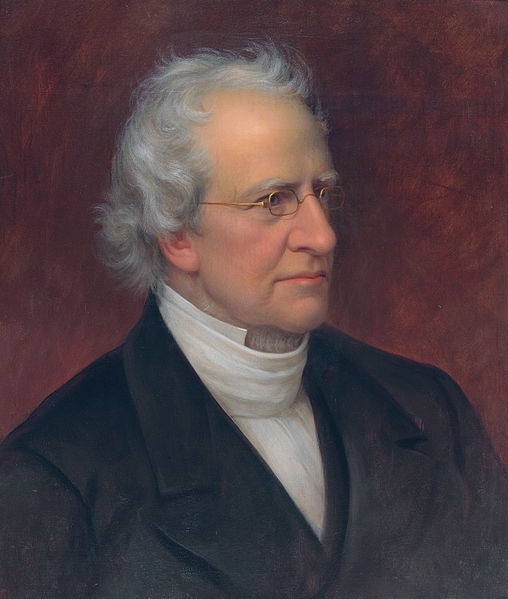
And in the New Testament we find guidance full and free–guidance so complete as to remove all doubt, yet so simple that a child can understand. Contact with Jesus according to the New Testament is established by what Jesus does, not for others, but for us. The account of what Jesus did for others is indeed necessary. By reading how He went about doing good, how He healed the sick and raised the dead and forgave sins, we learn that HeJ_Gresham_Machen_2 is a Person who is worthy of trust. But such knowledge is to the Christian man not an end in itself, but a means to an end. It is not enough to know that Jesus is a Person worthy of trust; it is also necessary to know that He is willing to have us trust Him. It is not enough that He saved others; we need to know also that He has saved us.

That knowledge is given in the story of the Cross. For us Jesus does not merely place His fingers in the ears and say, “Be opened”; for us He does not merely say “Arise and walk.” For us He has done a greater thing–for us He died. Our dreadful guilt, the condemnation of God’s law–it was wiped out by an act of grace. That is the message which brings Jesus near to us, and makes Him not merely the Savior of the men of Galilee long ago, but the Savior of you and me.

It is vain, then, to speak of reposing trust in the Person without believing the message. For trust involves a personal relation between the one who trusts and him in whom the trust is reposed. And in this case the personal relation is set up by the blessed theology of the Cross. Without the eighth chapter of Romans, the mere story of the earthly life of Jesus would be remote and dead; for it is through the eighth chapter of Romans, or the message which that chapter contains, that Jesus becomes our Savior today.

J. Gresham Machen  “Christianity & Liberalism”  1923

Posted in J. Gresham Machen, Who is Jesus? | Tagged , , | Leave a comment

He is both Teacher and Lesson, Guide and Way!

“Take My yoke upon you and learn from Me, for I am meek and lowly in heart, and you will find rest for your souls. For My yoke is easy and My burden is light.”  Matthew 11:29-30

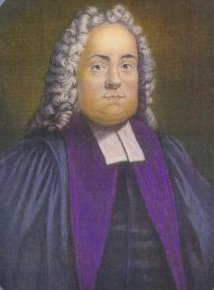
MatthewHenryWe are here invited to Christ as . . .
our Priest, to be saved by Him,
our Prince, to be ruled by Him, and
our Prophet, to be taught by Him.

First, we must come to Christ as our Rest, and repose ourselves in Him.

Second, we must come to Him as our Ruler, and submit ourselves in Him, ‘Take My yoke upon you.’ This must go along with the former, for Christ is exalted to be both a Prince and a Savior (Acts 5:31), ‘a priest upon his throne‘ (Zechariah 6:13). The rest He promises is a release from the drudgery of sin–not from the service of God. Christ has a yoke for our necks–as well as a crown for our heads; and this yoke He requires that we should take upon us.

Third, we must come to Him as our Teacher, and set ourselves to learn of Him. We must learn of Him to be ‘meek and lowly,’ and to mortify our pride and passion, which render us so unlike to Him. We must so learn of Christ, for He is both Teacher and Lesson, Guide and Way.

Matthew Henry                                                                                                                                   1662-1714

Posted in Jesus Christ, Matthew Henry | Tagged , | Leave a comment

A Self-Pity Refresher

dog_licking_paws11I remember it well. A new, exciting ministry position was up for grabs. Quietly in my mind, I congratulated myself as being the most faithful candidate. Since I “put in my time,” it was a sure thing, so I thought. However, my inflated view of self and self-flattery only set me up for greater disappointment when another person (who I thought was less qualified) was chosen for the position. I couldn’t believe it. I was humiliated, not because it was humiliating so much as I had created my own humiliation by wallowing in my shattered ego. For a few weeks after, I continued licking my wounds as I felt sorry for myself. I created my own misery. And in a narcissistic way, I liked it; it was a nurturing form of self-therapy.

Self-pity: a self-absorbed, feeling sorry for oneself fueled by a high view of self, a low view of God, and an attitude of entitlement.

As I’ve struggled with the sin of self-pity, God has been kind to expose some of its dangers.

The following is a brief refresher on some of self-pity’s dangers:

  1. Self-pity is a real temptation for all of us.

Two big ingredients blend together, which present self-pity as a tasty option: external struggle and internal struggle. Battles outside of us really do leave their scars on us. Life is hard. People get wounded. Sometimes, in unbearable ways.

iphone-features-self-pityAdditionally, we have a fallen nature which causes an internal battle leading to wrongly-handled hurt and struggle. Whether a large and legitimate hurt, or a small or imagined one, our sin looks to use it for the glory of self. This makes self-pity a constant temptation, and a deep frustration for God’s people as they seek to live for his glory.

  1. Self-pity comes from an internal pride, not external circumstances.

This is not to overlook real, external struggles in any way. But self-pity looks at those struggles and then responds: it is a response to struggle (real or imagined) fueled by the pride of a high view of self. Our circumstances do not force it; they merely present the opportunity. And, if we’re not careful, pride will take the opportunity every time.

For that reason, self-pity is not a morally neutral act. I’ll never forget the first day I heard it. I was sitting in my first pastoral counseling class, when Dr. Stuart Scott said something along the lines of, “Men, self-pity is sinful pride.” An overdue shift occurred in my soul that day. What I always thought was an innocent feeling sorry for oneself had been exposed for what it really is.

In self-pity, pride preaches, “This should not be happening to you. You are so much greater than all of this. You are entitled to enthronement. God is a poor Lord.” And so, we feel sorry for ourselves and the spiral begins.

Of self-pity, Stuart Scott writes, “Some proud people may not come across proud at all, because they are always down on themselves. This is still evidence of pride because one is focused on self and wants self to be elevated. Having a ‘woe is me’ attitude is self-pity, which is pride.” So then, boisterous bragging and quiet self-pity are two sides of the same coin. They both are born from the same mother of pride.

  1. Self-pity can come from a worship of our feelings.

hqdefaultFeelings are the golden calf of our day. We worship our feelings and hold them higher than anything, especially truth. This is evident, for example, in that our feelings become the determiner of what is good and bad; the judge of what is right and wrong. If my feelings are hurt, then something must be wrong. If you hurt my feelings, then you are a villain. Never mind that I probably needed wounding (Prov. 27:5-6). And never mind looking at what idols and sinful cravings might be fueling my hurt feelings (Jas. 4:1-2).

So, where there is self-pity, there is the idol of feelings. My feelings have been hurt by something. Since I hold feelings as supreme, I become consumed by feeling sorry for myself. So, self-pity’s goal, then, becomes setting my toppled idol of feelings back on its feet. And if you hinder this cause, and do not help it, then you are labeled “unloving.”

  1. Self-pity is fueled by an “I deserve” mentality.

Often in self-pity, I will continue feeling sorry for myself because I am wanting something that I am not getting or I am getting something that I am not wanting. Perhaps I want, and feel that I deserve, some recognition, attention, or promotion. If do not get it in the way and amount I feel that I deserve, I resort to self-pity. Perhaps, on a more difficult scale, I really do not want (nor think I deserve) some struggle or hard circumstance in my life.

If I do not flee the “I deserve” mentality, then self-pity takes root. What happens, then, is “I deserve” mutates into expectations and demands, leading to a deepening self-consumed pouting. And in a weird and painful way, it can feel really good.

But we must humbly recall that we only deserve the wrath of God for our sin. If we have sinned, then all that we are due is condemnation and wrath (Ezek. 18:4, Rom. 6:23). If God really gave us what we deserved, then we would be enduring his just anger for eternity in hell.

  1. Self-pity is a deep ingratitude.

Because it is fueled by a high view of self, self-pity will be accompanied by a lack of thankfulness. It is focused on wanting something else and willfully blind to the goodness of God in my life. In that sense, self-pity is greedy: it is discontent with present circumstances, feeling like it deserves more, and refuses to be thankful.

  1. Self-pity has a low view of God.

throneWhen self is big, God is small. And self-pity is one of those times when our view of ourselves is inflated like a blowfish. We are absorbed in the world of our cravings, our entitlements, and our feelings. God is nowhere in the picture. Actually, God is in the picture, but only as the recipient of our complaining.

I have booted God off of his throne and placed my wants, my feelings, and myself on the throne.

Self-pity is, then, fundamentally a breaking of the greatest commandment.

  1. Self-pity often inflates its struggles and deflates those of others.

Because it is self-consumed and self-indulging, self-pity often thinks that everyone has it easier than them. It meditates on ante-1 Corinthians 10:13: “My temptations are completely uncommon to man and there is no way of escape.”

Similarly, the heart will lament how no one really understands. And in some sense, that may be true: there may be no individuals in my midst who thoroughly understand what I’m enduring. However, self-pity clings to that thought in a self-absorbed, self-exalting way. It takes dark joy in no one understanding, whether or not that is true.

  1. Self-pity will rally a fan-club from undiscerning sympathizers.

Self-pity can be a strategic tactic for seeking sympathizers. Well-meaning, but undiscerning, friends will run to comfort me in my “woe-is-me” attitude. On the surface they see a proverbial wounded puppy. Like liberating the innocent dog from the pound, they come to the rescue. But little do they realize, self-pity craves the fan-club for its own glory, and, in the meantime, uses the sympathy as a nurse to heal the wounded pride back to health.

Self-pity, in turn, will manipulate the sympathizers. For example, it will say, “You really are a true friend,” or, “No one else has shown love like you have,” or, “No one really understands what I’m going through, except you. You really have a gift.” Flattery, then, can be a common tactic of self-pity to recruit that growing sympathy fan-club (and as a sidenote, it’s easy to see how self-pity is often at the root of church splits and divisions). Self-pity makes some of its best friends through manipulation and flattery. It may not think it is manipulating or flattering, because self-pity really does feel loved by it all (and the sympathizer may not feel manipulated because they are rewarded by self-pity’s praise). But make no mistake: the compliments and accolades are fueled by the monster of pride; it’s nothing more than a sinister self-love. And before they know it, self-pity’s undiscerning sympathizers have been converted into advocates for its self-centered cause. It’s sinfully brilliant.

Church leaders, too, need to be aware of this. Self-pity will look for a church where it will not be shepherded, but coddled. It looks less for truth, and more for feelings-coddling in the name of God and his word. Undiscerning leadership can mistake the hurt feelings for the whole story, when it’s merely a fraction, and a surface problem. Thinking they are shepherding the individual, they will do them harm by pandering them so as to give them a bigger view of themselves than God and the work of Christ. Meanwhile, the roots of self-pity keep growing beneath the surface, further damaging the individual.

  1. Self-pity is a hazardous demeanor for decision-making.

ger_imgOur motivation during self-pity is the glory and exaltation of self. We’re like Humpty Dumpty: our fragile ego has fallen off the wall, shattered on the hard ground of reality, and we’re looking for an idolatrous balm to put it back together again. The goal is to restore the enthronement of self with just about whatever means possible. For that reason, making decisions, especially big ones, is hazardous during these times. We will reap what we sow. If we sow to soothe our idolatrous feelings, we will be sure to reap greater seasons of self-pity and bitterness in the future. If we keep feeding our narcissism, it will only bloom into a more miserable monster.

We will flee the hard situations which are in reality gifts from God to strengthen us in a difficult world. We may flee relationships and people who are there to help and care for us God’s way. We might make foolish financial decisions in our self-absorption. We can make a myriad of other foolish decisions thinking that a change of scenery, job, place, and people will be the solution to our problems.

And if we do get what makes us feel better in times of self-pity (whether through our decision-making or not), we should not interpret that as God’s blessing on us. Quite the opposite, perhaps. Our self-absorbed jockeying has merely managed to manipulate further idolatry.

  1. Self-pity is typically a gateway into other sin.

Self-pity is usually the entrance point into self-justifying, subjective affirmation of what one wants. It’s used as the permission slip into other sins. The high view of self fuels a reward mentality which will look for all sorts of fleshly trophies to present itself for enduring hardship. In doing so, moments of self-pity can become gateways to further sin.

  1. Christ is our hope in self-pity.

As a man of sorrows, acquainted with grief, and tempted in all ways like us, Christ faced the great temptation of self-pity. And if anyone, we might understand if he succumbed to self-pity. No one has faced greater injustice than Jesus Christ. Never was there anyone so deserving of glory, yet received such an onslaught of sin. In return for creating, sustaining, and loving us, humanity gave, and continues to give, him sin.

And yet, despite our enmity, he never resorted to self-pity. Instead, he trusted his Father (1 Pet. 2:23), looked ahead to the good his sufferings would accomplish (Rom. 8:28, Heb. 12:2), focused on serving others (Mark 10:45), and sought to please God in it all (Matt. 26:42, John 8:29).

And because he never sinned, Christ offered himself on the cross as the only sufficient sacrifice by whom the wrath of God due our sin could be extinguished. The propitiatory work of Jesus Christ in our place on the cross is sufficient to remove our condemnation, including that for our self-pity. He is our hope. We can ask his forgiveness for the pride of self-pity and receive it freely.

Then, by his transforming grace, we can turn from self-pity. Instead of wallowing in self-sympathy, we can rest in Christ’s sympathy who was tempted in all ways like us yet never sinned (Heb. 4:15-16). We can rest in the fact that the love and grace which God has shown us in Christ is far greater than the hurt and indifference we’ve received from others. We can trust that things tempting us to self-pity are sovereignly used for good to make us more like Christ. By his grace, we can turn the self-consumption of self-pity into serving others; the focus on hurt feelings to a focus on the goodness of God towards us; the manipulating of sympathizers into seeking to love and encourage others; the focus on entitlement to thankfulness for the Person and work of Christ.

by Eric Davis  JUNE 17, 2015 on the Cripplegate blog.

Photo credit: media.philly.com, cdn.smosh.com, i.ytimg.com, liesyoungwomenbelieve.com, dokuwiki.noctrl.edu.

Posted in Christian Living, Cripplegate | Tagged , , | Leave a comment

10 Ways to Ruin Your Life in Your 20s (or at any age)

No one ever plans to ruin their life. Nobody makes that a goal, or a New Year’s resolution, or an integral part of their 5-year plan. Kids don’t sit around and dream about growing up to be an alcoholic; students don’t go to class to learn how to be bankrupt; brides and grooms don’t go to the altar expecting their marriage to fail.

Nobody ever plans for it, but it does happen. It happens far too often. And it happens because of the choices we make, even though that is not a result that anyone would ever willingly choose.

Most of those choices take place when people are relatively young—old enough to be making important decisions about their life, but young enough for those decisions to snowball and grow to have disastrous consequences. In other words, these are choices of young adults, which is the prime demographic for The Porch.

How can we avoid making such mistakes? Below are 10 things people can do to ruin their lives while still in their 20s. It is a list of what not to do, or things to stop doing immediately if you don’t want to suffer the results.

1. Believe that ideas don’t have consequences.

This was the biggest lie I believed in my twenties. I thought I could do what I wanted and get away with it; after all, I’m young. But I’ve since learned otherwise. Right now you are in the process of becoming what you will one day be. You are preparing for something. You are either doing the things that will prepare you to be a great spouse, parent, employee, friend, etc.; or, you are preparing to be the opposite of that. Everything you think and do now will lead you down one of those paths.

The simple believe anything, but the prudent give thought to their steps. – Proverbs 14:15

2. Live outside your means.

Ah, Dallas, the city that practically invented the term “$30k millionaire.” But when you spend more than you can afford, you still have to pay for it—plus interest. By living the “good life” now, you ensure you’ll be living the bad life of debt payments, downsizing, financial worries, and delayed/nonexistent retirement in your future decades. Many people today are still paying for experiences that happened years ago, long after the “instant gratification” has been forgotten.

The rich rule over the poor, and the borrower is slave to the lender. – Proverbs 22:7

3. Feed an addiction.

Whether it is alcohol, money, drugs, pornography, shopping, or whatever, it seems like most people have an addiction of some kind. These addictions bring death: either literal death, or death to relationships, to freedom, and to joy.

How do addictions happen? You feed them. I’ve been addicted to several things, and each of them took work to develop. You don’t drink one beer and immediately get addicted; it takes repetition, just like exercise. The more you do a thing, the stronger the addiction grows, and the harder it is to stop doing it. Stop now; it will only be harder with “one last time.”

The righteousness of the upright delivers them, but the unfaithful are trapped by evil desires. – Proverbs 11:6

4. Run with fools.

Fact: you are becoming who you hang around with. It’s been said you are the average of the five people you spend the most time with. You do what they do (because you’re doing it together), you pick up on their ideas and beliefs, and you even learn their mannerisms and language.

So if you hang around with idiots, or addicts, or criminals, that’s what you will become. But if you hang around with wise people, who are committed to following Christ and to making a difference with their lives, then that is what you’ll become. Change your playmates and playground.

Walk with the wise and become wise, for a companion of fools suffers harm. – Proverbs 13:20

5. Carelessly give your heart away.

Want heartbreak? Give your heart to someone who will break it. And how do you know who will break it?Everyone will, except for someone who truly commits to protecting your heart and loving you until the end, no matter what. If they are really willing to commit to that, they will gladly do so officially through marriage vows. So, only give your heart away once—at your wedding. Until then, be careful with your heart. Be careful with what entertains it and what you allow it to seek. You may not be able to choose who you love, but you can choose who you let love grow with.

Above all else, guard your heart, for everything you do flows from it. – Proverbs 4:23

6. Tolerate evil.

You’ve probably heard the quote: “The only thing necessary for evil to prevail is for good people to do nothing.” Well, it’s true. Because there is evil in the world, actively seeking to destroy others, and if nobody opposes those actions they will succeed. And then eventually you’ll be the target.

“Tolerance” is a big word right now, and is often held up as an absolute good—that you should always tolerate every person and every idea. But some people kill. Some take part in sex trafficking. Some promote ideas of genocide or infanticide, or argue that they should be able to sleep with whomever they feel like. God does not tolerate sin; He paid for it. Stand against evil, or one day there may be no one left to stand for you.

To fear the Lord is to hate evil; I hate pride and arrogance, evil behavior and perverse speech. Proverbs 8:13

7. Make secondary things ultimate and ultimate things secondary.

If an outsider were to observe how you spend your time and resources, what would they end up saying your life is about? Making money? Looking good? Fantasy football? Would they say you worship God, or worship that 60-inch HD TV?

There is nothing wrong with working, or working out, or having hobbies, or being interested in the opposite sex. Those are all good things, if you don’t go overboard and make them the focus of your life. They are all secondary, the side dishes of an eternal life. God is ultimate, is the very reason you are here, and is the only one of those things that will last forever.

Keep falsehood and lies far from me; give me neither poverty nor riches, but give me only my daily bread. Otherwise, I may have too much and disown you and say, ‘Who is the Lord?’ Or I may become poor and steal, and so dishonor the name of my God. – Proverbs 30:8-9

8. Believe that this life is all about you.

You are one of seven billion people alive currently, and though you are special, so is each of the other 6,999,999,999—and the billions who have come before but are now long dead and forgotten.

You are not the star of this show. You have a cameo that will be forgotten as soon as the screen changes.

People who become the biggest thing in their world are dysfunctional. They have a skewed view. They will always end up either disappointed or delusional. And when they go, their world disappears; they don’t actually leave any impact.

If you do want to be important and make a difference, live for God. Resolve to give your life away for something bigger, and make an impact on the people around you.

Pride goes before destruction, a haughty spirit before a fall. – Proverbs 16:18

9. Live for immediate gratification.

Almost nothing truly worthwhile comes quickly. It takes time and discipline to become an Olympic athlete, or to simply get in shape; to get a degree, or become a CPA, or become a great husband or wife. And any of the things you truly want long-term can be derailed by indulging yourself in the moment.

Do you want an amazing marriage, or just one amazing night? Do you want to retire in 36 years, or drive a luxury car for the next 36 months? Because in each case, choosing the latter makes it more difficult (or impossible) to have the former. Don’t choose ramen over riches.

The wise store up choice food and olive oil, but fools gulp theirs down. – Proverbs 21:20

10. Avoid accountability.

We all have the tendency to screw up, or be blind to our own failings, or to convince ourselves that we can change on our own even though it’s never worked in the past.

That’s why God created us to live in community with others: so we can encourage each other, or point out blind spots, or have help in times of weakness.

But are you running to community and accountability, or running away from it? Some people avoid it like the plague. The only reason you avoid accountability is because you don’t want to be corrected, even though that means you then continue to do the things that ruin your life. If you really want to change, and really want to put God first every day, then do the one simple thing that makes that possible: Christ-centered community.

Whoever loves discipline loves knowledge, but whoever hates correction is stupid. – Proverbs 12:1

There you have it: how to ruin your life in 10 simple steps. Now please don’t. Instead, make these your resolutions:

  1. Resolve to walk with God this year.
  2. Resolve to live below your means.
  3. Resolve to starve addictions.
  4. Resolve to change your playmates and playground.
  5. Resolve to be careful with your heart.
  6. Resolve to stand against the evil around you.
  7. Resolve to prioritize the things of God above all other things.
  8. Resolve to give your life away for something bigger.
  9. Resolve to hold out for God’s best.
  10. Resolve not to do any of this alone.

Jonathan Pokluda  from The Porch  February 10, 2014

Posted in Christian Living | Leave a comment

My Shepherd!

“The LORD is my shepherd; I have everything I need!” Psalm 23:1

The shepherd is a favorite Scriptural picture of the divine love and care. In the Old Testament, the twenty-third Psalm gathers the whole wonderful truth in exquisite lines, which are dear to young and old wherever the Bible is known. Then in the New Testament, when our Lord would give His friends the sweetest revealings of His heart toward them, and tell them what they are to Him, and what He would be to them–He says, “I am the Good Shepherd. The Good Shepherd lays down His life for the sheep.” John10:11 

The Hebrew shepherd lives with his sheep. If they are out in the storm–he isJR Miller with them. If they are exposed to danger–so is he. Just so, Christ lives with His people. He enters into closest relations with them.

The shepherd knows his sheep. He has a name for each one and calls them all by their names. Just so, Christ knows each one of His friends, and has intimate personal knowledge of each one. He knows the best in us–and also the worst. He knows our faults, our sins, our wanderings. Yet, knowing us as we are–He loves us still and never wearies of us!

The shepherd is most gentle with his sheep. He does not drive them–but goes before them and leads them. When they need rest on the way–he makes them lie down, and chooses for their resting-place, not the dusty road–but green pastures. He is especially kind to the lambs, gathers them in his arms and carries them in his bosom. All this is an exquisite picture of the gentleness of our Good Shepherd in His care of His sheep. He is thoughtful toward the weak. He loves the lambs and makes room for them in His bosom. Whatever the need is, there is something in the heart of Christ which meets its craving and supplies its lack! “He will feed His flock like a shepherd. He will carry the lambs in his arms, holding them close to His heart. He will gently lead the mother sheep with their young.” Isaiah 40:11

The shepherd defends his flock in all danger. Often he had to risk his own safety, even his life, in protecting his sheep. Just so, the Good Shepherd gives His life–for His sheep!

Christ’s sheep are absolutely safe in His keeping. “I give unto them eternal life,” He said; “and they will never perish–ever! No one will snatch them out of My hand!” Then at last, He will bring His own all safely home, “and they shall become one flock–with one Shepherd!”

J.R. Miller  “Bethlehem to Olivet”                                                                                                 1905


Posted in J.R. Miller | Tagged , | Leave a comment

The Sensational leads to the Outrageous

Why is this? Whence this distaste for the ordinary services of the sanctuary? I believe that the answer, in some measure, lies in a direction little suspected. There has been a growing pandering to sensationalism; and, as this wretched appetite increases in fury thSpurgeone more it is
gratified, it is at last found to be impossible to meet its demands. Those who have introduced all sorts of attractions into their services have themselves to blame if people forsake their more sober teachings, and demand more and more of the noisy and the singular. Like dram-drinking, the thirst for excitement grows. At first, the fiery spirit may be watered down; but the next draught of it must be stronger, and soon it is required to be overproof. The customary gin-drinker wants something stronger than the pure spirit, deadly though that draught may be. One said, as she tossed off her glass, “Do you call that gin? Why, I know a place where, for threepence, I can get a drink that will burn your very soul out!” Yes, gin leads on to vitriol; and the sensational leads to the outrageous, if not to the blasphemous. I would condemn no one, but I confess that I feel deeply grieved at some of the inventions of modern mission work.

Charles Spurgeon “An All-Around Ministry”                                                                              1834-1892

Posted in Charles Spurgeon | Tagged , , | Leave a comment

Charles Spurgeon & the Down-Grade Controversy

For the fifth session, Brett Davisson of Emmanuel Bible Church gave an historical example of discernment in action.  Charles Spurgeon, known as “The Prince of Preachers”, was not a man of his time.  As churches in the late 19th century worked to “soften” the gospel message to attract more people, Spurgeon was one of the few to recognize the eternal importance of what was happening.  He was ridiculed as old fashioned and divisive at the time, but history has shown his warnings to be all too true.

Posted in Charles Spurgeon, Church History, Discernment, Discernment Conference, Video | Tagged , , , | 2 Comments

Having a Biblical Worldview part 2

In our fourth session of Reformation Pratum: Discernment, Larry Nickel of Emmanuel Bible Church addressed the topic of discerning the competing worldviews that we are presented with today.  Our worldview is the lens through which we interpret the world around us, and making sure the Bible is that lens is of the utmost importance.  Larry explored the implications that occur when people abandon the book of Genesis and the Bible at large, and replace it with another worldview.

Posted in Discernment, Discernment Conference, Video | Tagged , | Leave a comment