Using Discernment with Entertainment

“Immorality or any impurity or greed must not even be named among you, as is proper among saints; and there must be no filthiness and silly talk, or coarse jesting, which are not fitting, but rather giving of thanks.”      Ephesians 5:3

John MacArthur small“Those two verses alone rule out much of what passes as entertainment in our world today—sexual immorality and impurity, dirty jokes and silly talk, and anything that promotes greed or undermines the giving of thanks. That list is a pretty good summary of what is wrong with much of contemporary American media.

Movies, for example, are usually rated according to language, violence, sexual content, and thematic elements. Many of them 9780736926430-macarthur-right-thinking-world-gone-wrongare not just non-Christian, they are anti-Christian. I don’t mean that they openly attack the Christian faith. But at least in some cases they might as well. They employ filthy language and lewd humor (Colossians 3:8; Titus 2:6-8); they glorify violence rather than peace (Titus 1:7; 1 John 4:7-8); they glamorize lust and immorality rather than holiness (1 Thessalonians 4:3-5; 1 Peter 1:16); they instill feelings of discontentment and desire rather than thankfulness (Ephesians 5:20; 1 Timothy 6:6); and they promote worldviews that are antithetical to biblical Christianity (2 Corinthians 10:5). Does that mean a Christian should never watch movies? Not necessarily. But we must be discriminating about the things we allow into our minds. We are called to renew our minds (Romans 12:2; Ephesians 4:23; Colossians 3:16). When we continually fill our minds with the filth of this world, we do ourselves a great spiritual disservice. . .

. . .Movies, television, radio, video games, MP3s, and the Internet— these and other forms of mass media pervade our world. In and of themselves, these technologies are not inherently sinful. Most other forms of leisure and recreation are not inherently sinful either. In fact, fun, happiness, and joy are gifts from God.

But before we wholeheartedly embrace the media-driven entertainment of our culture, we must not forget that we are Christians. Our identity is defined by Jesus Christ, not by the society around us. That distinction should be reflected in everything we think, say, and do. We live in a world carried along by ungodly lusts and entertained by sin. Yet we are called to walk in thankful holiness. Though we are in this world, we are not of this world (John 17:14-16). That means we can’t watch every movie, laugh at every joke on television, download every new music album, click on every online video, or visit every Internet page. Taking a stand for righteousness in your own life and family is not being legalistic. It’s being Christian.”

John MacArthur  “Right Thinking in a World Gone Wrong”  2009


Posted in Christian Living, Discernment, John MacArthur | Tagged , , | 2 Comments

Except Ye Abide

As the Branch Cannot Bear Fruit of Itself, Except It Abide In the Vine; No More Can Ye, Except Ye Abide in MeJohn 15.4

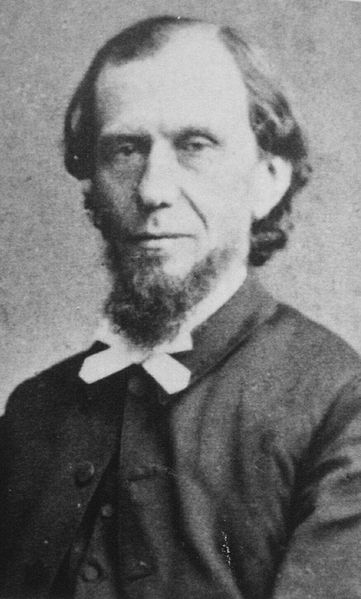
 We know the meaning of the word except. It expresses some indispensable condition, some inevitable law. “The branch cannot bear fruit of itself, except it abide in the vine. NoAndrew Murray more can ye, except ye abide in me.” There is but one way for the branch to bear fruit, there is no other possibility, it must abide in unbroken communion with the vine. Not of itself, but only of the vine, does the fruit come. Christ had already said: “Abide in me”; in nature the branch teaches us the lesson so clearly; it is such a wonderful privilege to be called and allowed to abide in the heavenly Vine; one might have thought it needless to add these words of warning. But no—Christ knows so well what a renunciation of self is implied in this: “Abide in me”; how strong and universal the tendency would be to seek to bear fruit by our own efforts; how difficult it would be to get us to believe that actual, continuous abiding in Him is an absolute necessity! He insists upon the truth: Not of itself can the branch bear fruit; except it abide, it cannot bear fruit. “No more can ye, except ye abide in me.”

But must this be taken literally? Must I, as exclusively, and manifestly, and unceasingly, and absolutely, as the branch abides in the vine, be equally given up to find my whole life in Christ alone? I must indeed. The except ye abide is as universal as the except it abide. The no more can ye admits of no exception or modification. If I am to be a true branch, if I am to bear fruit, if I am to be what Christ as Vine wants me to be, my whole existence must be as exclusively devoted to abiding in Him, as that of the natural branch is to abiding in its vine.

Let me learn the lesson. Abiding is to be an act of the will and the whole heart. Just as there are degrees in seeking and serving God, “not with a perfect heart,” or “with the whole heart,” so there may be degrees in abiding. In regeneration the divine life enters us, but does not all at once master and fill our whole being. This comes as matter of command and obedience. There is unspeakable danger of our not giving ourselves with our whole heart to abide. There is unspeakable danger of our giving ourselves to work for God, and to bear fruit, with but little of the true abiding, the wholehearted losing of ourselves in Christ and His life. There is unspeakable danger of much work with but little fruit, for lack of this one thing needful. We must allow the words, “not of itself,” “except it abide,” to do their work of searching and exposing, of pruning and cleansing, all that there is of self-will and self-confidence in our life; this will deliver us from this great evil, and so prepare us for His teaching, giving the full meaning of the word in us: “Abide in me, and I in you.”

Our blessed Lord desires to call us away from ourselves and our own strength, to Himself and His strength. Let us accept the warning, and turn with great fear and self-distrust to Him to do His work. “Our life is hid with Christ in God!” That life is a heavenly mystery, hid from the wise even among Christians, and revealed unto babes. The childlike spirit learns that life is given from Heaven every day and every moment to the soul that accepts the teaching: “not of itself,” “except it abide,” and seeks its all in the Vine. Abiding in the Vine then comes to be nothing more nor less than the restful surrender of the soul to let Christ have all and work all, as completely as in nature the branch knows and seeks nothing but the vine.

Abide in Me. I have heard, my Lord, that with every command, Thou also givest the power to obey. With Thy “rise and walk,” the lame man leaped, I accept Thy word, “Abide in me,” as a word of power, that gives power, and even now I say, Yea, Lord, I will, I do abide in Thee.

Andrew Murray, True Vine: Meditations for a Month on John 15:1-16                         1828-1917

Posted in Andrew Murray | Tagged , | Leave a comment

Abhoring Error and Loving the Truth

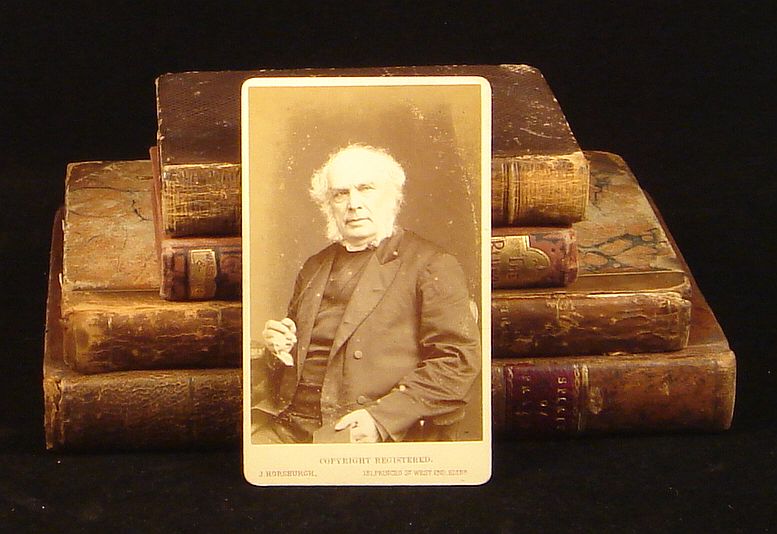
Our Reformers, working on the model of the Bible, laboured to set truth before the nations. They did not despise ‘head knowledge.’ They were careful that head knowledge should be true knowledge; and, in so far as it was so, they urged its widest propagation; undeterred by the thought which acts as a drag or damper on some, ‘What is the use of head knowledge without heart knowledge?’ They had confidence in truth, because it was of God, and because it was the representative of Him who is the wisdom and the truth of God. They felt that truth could be trusted to do its own work, and to fulfill its heavenly mission among the sons of men; and so they launched it forth as seamen do the lifeboat; they spread it far and wide, as husbandmen do the precious seed, believing in its vitality, and its power to spring up and cover the broad fields of earth with its summer green and autumn gold. They had faith in the truth, because they had faith in the Bible, and they had faith in the Bible because they had faith in God, and in His almighty, all-quickening Spirit.horatius_bonar

Our Reformers, following Scripture, abhorred error. They regarded it as sin, as in itself evil, and as the root of almost every evil. They loved truth, upheld it, sought to spread it. They eschewed error as poison; they prized truth as medicine, containing in it the world’s true health. They knew that men might have it and yet not use it, that they might abuse it, that they might ‘hold it in unrighteousness;’ but they loved it still, and refused to believe that any untruth, however beautiful, however well argued or well adorned, however recommended by authority, or antiquity, or genius, could be available for the revivification of collapsed prostrate Europe, for expelling the poison of ages from the veins of humanity, for bracing the constitution of the race, even apart from the great purpose of saving the lost, of gathering in the chosen of the Father, the purchased of the Son.

Are we not often traitors to the truth under the pretext of cautioning men against ‘head knowledge?’ In decrying the later, do we not often disparage the former? Are we not cowards in our propagation of the truth? Are we not but half in earnest, playing with the sword, not wielding it; or wielding it with a timid unbelieving arm, as those who have no confidence in its edge and power?

Truth is one, not many; truth is sure, not doubtful. There is but one true creed, one Gospel, one revelation. There is but one faith that saves and blesses. ‘One Lord, one faith, one baptism, one God and Father of all’ (Eph 4:4-6).

Let us honor the truth as God has done, as His apostles did, as our Reformers did. Let us fearlessly wield it. Let us give it fair play and full swing everywhere. It is ‘quick and powerful, sharper than any two-edged sword’ (Heb 4:12). It is a fire, melting the iron. It is a hammer, breaking the rock in pieces.

Truth is not the feeble thing that men often think they can afford to disparage. Truth is power; let it be treated and trusted as such. We need not discuss the question as to the frequent divorcement of head and heart, in the matter of knowledge. Let us beware of undervaluing either; but still more let us beware of that unscriptural, unphilosophical sentimentalism which affirms that the heart may be all right when the head is all wrong.

Horatius Bonar, Catechisms of the Scottish Reformation.                                                   1808-1889

Posted in Horatius Bonar | Tagged , | Leave a comment

Prayer for Pastors

Let the pastors boldly dare all things by the Word of God. . . .

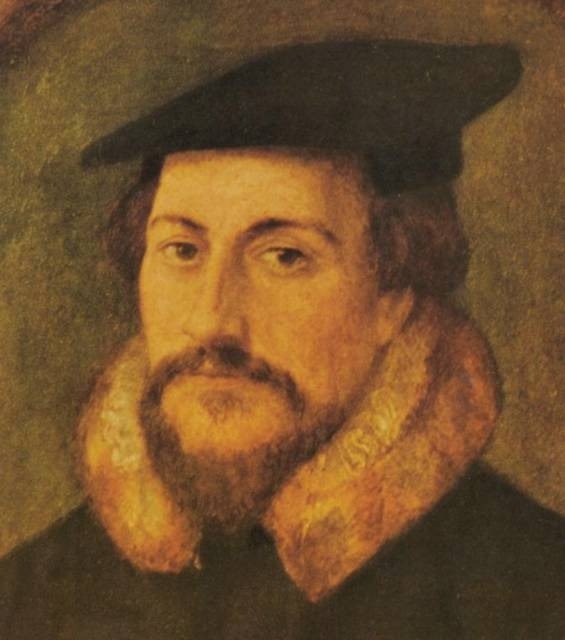
Let them constrain all the power, glory, and excellence of the world to give place to and tojohn-calvin obey the divine majesty of this Word.

Let them enjoin everyone by it, from the highest to the lowest.

Let them edify the body of Christ.

Let them devastate Satan’s reign.

Let them pasture the sheep, kill the wolves, instruct and exhort the rebellious.

Let them bind and loose thunder and lightning, if necessary, but let them do all according to the word of God.

John Calvin With Calvin in the the Theater of God, pp. 136-37.  John Piper, ed.

Posted in John Calvin | Tagged , , | Leave a comment

The Lost Art of Discernment

We have lost sight of what the first Christians seemed to know so well, that it is important for believers to exercise discernment. Indeed, it is of such importance that the apostle Paul understood “spiritual discernment” as a spiritual gift in itself (1 Cor. 12:10). Discernment is a Bible mandate that cannot be ignored by Christians claiming to walk in the light of the faith.

In the New Testament, the word that is translated “discernment” is derived from the decision of a judge adjudicating between conflicting claims. It is seen as necessary to be able to distinguish between what is good and bad, true and false, and between evil spirits and good spirits. Christian discernment is the careful process of sorting through truth claims to arrive at the clearest possible decision concerning their trustworthiness and value as it relates to Christian orthodoxy. Such discernment reveals, clarifies, and proclaims truth and exposes, examines, and rejects error. This involves the Christian fully, as it is a personal commitment to the command of 1 Thessalonians 5:21–22 as a necessary part of Christian growth in grace (or as verse 23 points out, sanctification). The word “discern” appears in Matthew 16:3Hebrews 5:14, and in Ezekiel 44:23. The clear sense of the term is that discernment necessarily involves making value judgments between differing claims as needed so as to reveal by examination what is right or wrong, or somewhere in the middle. To make such judgments involves the process of examining the claims by an objective standard, and for the orthodox Christian, such a standard exists only in the Word of God (2 Tim. 3:16).

Discernment involves each one of us in thinking in a specifically Christian way about each issue. It requires of us that we employ our minds by informing ourselves through the study of the truth revealed in God’s Word. To be grounded in the revealed truth is the surest way to prepare to be able to recognize error. Yet information alone does not provide us with discernment. At the same time our hearts have to be engaged in devotion to Christ. Then and only then will we find ourselves in tune with the mind of God and be able to make judgments and appraisals that accord with that mind, because to the believer is promised the presence of the Holy Spirit. It is the ministry of Word and Spirit in the life of the Christian as in the Christian community that produces the certainty of faith and the obedience of faith.

Discernment is seen in Scripture as an essential component for spiritual growth. The author of the epistle to the Hebrews expresses the importance of spiritually mature believers regularly and routinely making their decisions by distinguishing between the principles of good and evil: “solid food is for the mature, for those who have their powers of discernment trained by constant practice to distinguish good from evil” (5:14). In the Old Testament the prophet Ezekiel makes clear that spiritually mature leaders will teach others how to recognize accurately the difference between the holy and the unholy (Ezek. 44:23). Discernment, according to Scripture, is a critical part of Christian life.

It was also seen as essential in making wise decisions, as James makes clear when he wrote, “If any of you lacks wisdom, let him ask God, who gives generously to all without reproach, and it will be given him” (James 1:5). If we are to be faithful, wise Christians in the pluralistic setting where we live among people who do not share our convictions and values, we need to see the need for discernment and also to develop skills in discernment.

Assessing and judging truth from error enables us not only to believe the truth but to be able to live appropriately. For it is clear that if you believe the wrong things, you will most certainly end up with a distorted piety and an impaired Christian witness.

In the providence of God, a book that was written to belittle Christ and Christians can be used to serve kingdom purposes. The interest that has been created by this work gives to the believer a unique opportunity to engage the non-believing culture in an honest pursuit of truth. The content of the book is demonstrably inaccurate and deliberately hostile both to Christ and the church. The believer should understand that, and Jesus warned us that the hostility of the world is a natural condition. The responsibility of the believer is to know and trust the truth, and so be confident as we expose evil, confront lies, and unmask deception; and in so doing we are given a unique opportunity to present honor to Christ and announce the truth of His Gospel, which brings life, light, freedom, and hope.

Published in © Tabletalk Magazine  May 1st, 2006

Posted in Christian Living, Discernment | Tagged , , | Leave a comment

God’s Glory in Marriage

Posted in Christian Living, Video | Tagged , , , | 1 Comment

What does the Lord require of you?

What does the Lord require of you? “To act justly and to love mercy and to walk humbly with your God.” Micah 6:8

Simplicity and comprehensiveness mark the requirements of my God. He can abbreviate His demands into the fewest words; but they are words which embrace . . .
the inward and outward,
the present and future,
the earthly and the heavenly.

I may fall into serious error regarding His will for me:

It is not a religion of ritual observances which He requires. How easily I attach an undue importance to ceremonies and forms, rites and penances and fasts!

Nor does He solicit primarily a religion of external moralities. God looks on my heart.

Nor is it a religion of emotions of which He is in quest. I must not put excitement and tears, in the place of saving grace and childlike obedience.

But see, my soul, God asks us to act justly. I cannot be His, unless I do justly. Everything that takes an improper advantage of another, and all that departs from the straightest line of absolute rectitude–I must hate and abjure. It is a demand which pierces deeper than it seems. For the integrity of conduct He desires–is the outcome only of a conscience He has quickened, and a will He has bent into submission to His law. The ethics of the Gospel are preceded and rendered possible, by the redemption and regeneration of the Gospel.

And God asks tenderness. He counsels me to love mercy. The world is full of sorrow, and I am to move through it as a good physician, befriending and uplifting those in need.

It is what He does Himself. Every glorious quality has its fountain in Him–but pre-eminently the quality of mercy. He is the great Forgiver and the great Helper–no earthly father loves like Him, and no mother is half so mild. So my feeble torch is but kindled at His altar. My charities and philanthropies must be learned in His school, who pardons my ten thousand transgressions!

And God asks humility. He commands me to lay my hand in His, and to walk humbly in His company. Nothing is so essential as poverty of spirit. It is the source and spring from which alone runs the fertilizing river of a holy life. The humble heart is where the flowers of Heaven find their congenial soil, and grow into beauty and fragrance. I only begin to be a disciple, when my proud heart is brought low–and my Savior is lifted high.

Now, my Father, if these are to be the features of my soul–then it is manifest that none but You can create them, and can nurture them, and can lead them to their perfection. Do the work Lord, and have the glory!

Alexander Smellie, “On the Secret Place” 1907

Posted in Alexander Smellie, Christian Living | Tagged , , | Leave a comment

Jesus Not Only Died for Us, He Lived for Us

We must see that the righteousness of Christ that is transferred to us is the righteousness He achieved by living under the Law for thirty-three years without once sinning. Jesus had to live a life of obedience before His death could mean anything. He had to acquire, if you will, merit at the bar of justice. Without His life of sinless obedience, Jesus’ atonement would have had no value at all. We need to see the crucial significance of this truth; we need to see that not only did Jesus die for us, He lived for us.

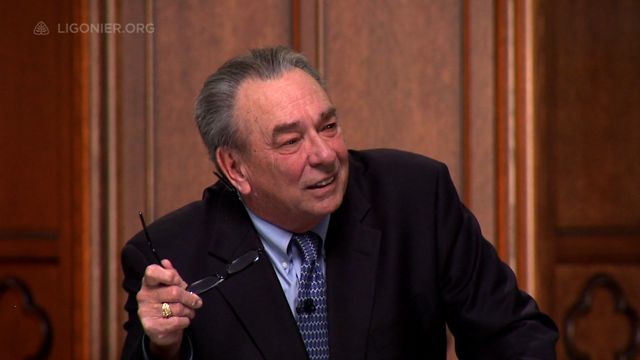
Roman Catholics call this concept a legal fiction, and they recoil from it because they believe it casts a shadow on the integrity of God by positing that God declares to be just people who are not just. In response, the Reformers conceded that this concept would be a RC Sproullegal fiction if imputation were fictional. In that case, the Protestant view of justification would be a lie. But the point of the Gospel is that “imputation is real—God really laid our sins on Christ and really transferred the righteousness of Christ to us. We really possess the righteousness of Jesus Christ by imputation. He is our Savior, not merely because He died, but because He lived a sinless life before He died, as only the Son of God could do.

Theologians like to employ Latin phrases, and one of my favorites is one that Martin Luther used to capture this concept. The essence of our salvation is found in this phrase: Simul Justus et pecator. The word simul is the word from which we get the English word simultaneous; it means simply “at the same time.” Justus is the word for “just.” We all know what et means; we hear it in the famous words of Julius Caesar in the Shakespeare tragedy: “Et tu, Brute?” (“You, too, Brutus?”) Etmeans “also” or “and.” From the word pecator we get such English words aspeccadillo (“a little sin”) and impeccable (“without sin”); it is simply the Latin word for “sinner.” So Luther’s phrase, Simul Justus et pecator, means “At the same time just and sinner.”

This is the glory of the Protestant doctrine of justification. The person who is in Christ is at the very same instant a sinner and just. If I could be justified only by actually becoming just and having no sin in me, I would never see the kingdom of God. The point of the gospel is that the minute a person embraces Jesus Christ, all that Christ has done is applied to that person. All that He is becomes ours, including His righteousness. Luther was saying that at the very instant I believe, I am just by virtue of the imputation of Christ’s righteousness. It’s Christ’s righteousness that makes me just. His death has taken care of my punishment and His life has taken care of my reward. So my justice is completely tied up in Christ.

In Protestantism, we speak of this as the doctrine of justification by faith alone, for according to the New Testament, the only means by which the righteousness and the merit of Christ can come into our accounts and be applied to us is by faith. We can’t earn it. We can’t deserve it. We can’t merit it. We can only trust in it and cling to it.

R.C. Sproul  Apr 28, 2014                                                                                                             This excerpt is from R.C. Sproul’s The Truth of the Cross.   See more great resources at Ligonier.

Posted in R.C. Sproul | Tagged , , | Leave a comment

“The Leading of the Spirit” – part 3

The method of the Spirit’s leading, of which Paul speaks in our text, is not a drawing or dragging of a passive weight toward a goal which is attained, if attained at all, only by virtue of the power residing in the moving Spirit, but a leading of an active agent to an end determined indeed by the Spirit, and along a course which is marked out by the Spirit, but over which the soul is carried by virtue of its own power of action and through its own strenuous efforts.

If we are not borne by the Spirit out of our sin into holiness with a smooth and easy movement, almost unnoted by us or noted only with the languid pleasure with which a child resting peacefully on its mother’s breast may note its progress up some rough mountain road, so neither are we dragged by the Spirit as a passive weight over the steep and rugged path. We are led. We are under his control and walk in the path in which he sets our feet. It is his part to keep us in the path and to bring us at length to the goal. But it is we who tread every step of the way, our limbs that grow weary with the labor, our hearts that faint, our courage that fails—our faith that revives our sinking strength, our hope that instills new courage into our souls—as we toil on over the steep ascent.

The Path of Sanctification

And thus it is most natural that the third matter to which Paul’s declaration that we are led by the Spirit of God directs our attention concerns the pathway over which our progress is made.

One is not led who is unconscious of the road over which he advances; such a one is rather carried. He who is led treads the road himself, is aware of its roughness and its steepness, pants with the effort which he expends, is appalled by the prospect of the difficulties that open out before him, rejoices in the progress made, and is filled with exultant hope as each danger and obstacle is safely surmounted. He who is led is in the hands of an extraneous power, of a power which controls his actions; but the pathway over which he is thus led is trodden by his own efforts—by his own struggles it may be—and the goal that is attained is attained at the cost of his own labor.

When Paul chooses this particular term, therefore, and declares that the sons of God are led by the Spirit, he is in no way forgetful of the arduous nature of the road over which they are to advance, or of the strenuous exertion on their own part, by which alone they BB Warfieldmay accomplish it. He strengthens and comforts them with the assurance that they are not to tread the path alone, but he does not lull them into inertness by suggesting that they are not to tread it. The term he employs avouches to them the constant and continuous presence with them of the leading Spirit, not merely setting them in the right path, but keeping them in it and leading them through it; for it designates not an impulse which merely initiates a movement in a given direction, but a continuous influence unbrokenly determining a movement to its very goal. But his language does not promise them relief from the weariness of the journey, alleviation of the roughness of the road, freedom from difficulty or danger in its course, or emancipation from the labor of travel. That they have been placed in the right path, that they will be kept continuously in it, that they will attain the goal—of this he assures them; for this it is to be led of the Spirit of God, a power not ourselves controlling our actions, prevalently directing our movement to an end of his choice. But he does not encourage us to relax our own endeavors; for he who is led, even though it be by the Spirit of God, advances by virtue of his own powers and his own efforts. In a word, Paul chooses language to express the action of the Spirit on the sons of God which is in perfect harmony with his exhortation to the children of God to which we have already alluded—to work out their own salvation with fear and trembling because they know it is God that is working in them both the willing and the doing according to his own good pleasure (Phil. 2:12-13).

A Great Fire of Hope and Confidence

What a strong consolation for us is found in this gracious assurance—poor, weak children of men as we are! To our frightened ears the text may come at first as with the solemnity of a warning: “As many as are led by the Spirit of God, these and these only are sons of God.” Is there not a declaration here that we are not God’s children unless we are led by God’s Spirit? Knowing ourselves, and contemplating the course of our lives and the character of our ambitions, dare we claim to be led by the Spirit of God? Is this life—this life that I am living in the flesh—is this the product of the Spirit’s leading? Shall not despair close in upon me as I pass the dreadful judgment on myself that I am not led by God’s Spirit, and that I am, therefore, not one of his sons? Let us hasten to remind ourselves, then, that such is not the purport nor the purpose of the text. It stands here not in order to drive us to despair, because we see we have sin within us, but to kindle within us a great fire of hope and confidence because we perceive we have the Holy Spirit within us.

Paul, as we have seen, does not forget the sin within us. Who has painted it and its baleful power with more vigorous touch? But neither would he have us forget that we have the Holy Spirit within us, and what that blessed fact, above all blessed facts, means. He would not have us reason that because sin is in us, we cannot be God’s children; but in happy contradiction to this, that because the Holy Spirit is in us, we cannot but be God’s children. Sin is great and powerful; it is too great and too powerful for us; but the Holy Ghost is greater and more powerful than even sin. The discovery of sin in us might bring us to despair, did not Paul discern the Holy Spirit in us—who is greater than sin—that he may quicken our hope.

This declaration that frightens us is not written, then, to frighten, but to console and to enhearten. It stands here for the express purpose of comforting those who would despair at the sight of their sin. Is there a conflict of sin and holiness in you? asks Paul. This very fact that there is conflict in you is the charter of your salvation. Where the Holy Spirit is not, there conflict is not; sin rules as undisputed lord over the life. That there is conflict in you, that you do not rest in complacency in your sin, is a proof that the Spirit of God is within you, leading you to holiness. And all who are led by the Spirit of God are the children of God; and if children, then heirs, heirs of God and joint heirs with Christ Jesus. This is the purport of the message of the text to us. Paul points us not to the victory of good over evil, but to the conflict of good with evil—not to the end, but to the process—as the proof of childship to God. The note of the passage is, thus, not one of fear and despair, but one of hope and triumph. “If God be for us, who can be against us?”—that is the query the apostle would have ring in our hearts. Sin has a dreadful grasp upon us; we have no power to withstand it. But there enters our hearts a power, not of ourselves, making for righteousness. This power is the Spirit of the most high God. “If God be for us, who can be against us?” Let our hearts repeat this cry of victory today.

And as we repeat it, let us go onward, in hope and triumph, in our holy efforts. Let our slack knees be strengthened and new vigor enter our every nerve. The victory is assured. The Holy Spirit within us cannot fail us. The way may be rough; the path may climb the dizzy ascent with a rapidity too great for our faltering feet; dangers, pitfalls are on every side. But the Holy Spirit is leading us. Surely, in that assurance, despite dangers and weakness, and panting chest and swimming head, we can find strength to go ever forward.

In these days, when the gloom of doubt (if not even the blackness of despair) has settled down on so many souls, there is surely profit and strength in the certainty that there is a portal of such glory before us, and in the assurance that our feet shall press its threshold at the last. In this assurance, we shall no longer beat our disheartened way through life in dumb despondency, and find expression for our passionate but hopeless longings only in the wail of the dreary poet of pessimism—

But if from boundless spaces no answering voice shall start,
Except the barren echo of our ever yearning heart—
Farewell, then, empty deserts, where beat our aimless wings,
Farewell, then, dream sublime of uncompassable things.

We are not, indeed, relieved from the necessity for healthful effort, but we can no longer speak of “vain hopes.” The way may be hard, but we can no longer talk of “the unfruitful road which bruises our naked feet.” Strenuous endeavor may be required of us, but we can no longer feel that we are “beating aimless wings,” and can expect no further response from the infinite expanse than “a sterile echo of our own eternal longings.” No, no—the language of despair falls at once from off our souls. Henceforth our accents will be borrowed rather from a nobler “poet of faith,” and the blessing of Asher will seem to be spoken to us also—

Thy shoes shall be iron and brass,
And as thy days, so shall thy strength be.
There is none like unto God, O Jeshurun,
Who rideth upon the heavens for thy help,
And in his excellency on the skies.
The eternal God is thy dwelling place,
And underneath are the everlasting arms (Deut. 33:25-27).

B. B. Warfield                                                                                                                               1851-1921

Posted in B.B. Warfield, Christian Living | Tagged , , | Leave a comment

“The Leading of the Spirit” – part 2

All of this will be powerfully supported and the subject perhaps somewhat further elucidated if we will seek now to penetrate a little deeper into the inmost nature of the work of the Holy Spirit which Paul calls here a “leading,” by attending more closely to the term which he has chosen to designate it when he calls it by this name. This term, as those skilled in such things tell us, is one which throws emphasis on three matters:

  1. on the extraneousness of the influence under which the movement suggested takes place;
  2. on the completeness of the control which this influence exerts over the action of the subject led; and
  3. on the pathway over which the resultant progress is made.

Let us glance at each of these matters in turn.

A Supernatural Influence

One is not led when he goes his own way. It is only when an influence distinct from ourselves determines our movements that we can properly be said to be led. When Paul, therefore, declares that the sons of God are “led by the Spirit of God,” he emphasizes, first of all, the distinction between the leading Spirit and the led sons of God. As much as this he declares with great emphasis—that there is a power within us, not ourselves, that makes for righteousness. And he identifies this extraneous power with the Spirit of God. The whole preceding context accentuates this distinction, inasmuch as its entire drift is to paint the conflict which is going on within us between our native impulses which make for sin, and the intruded power which makes for righteousness. Before all else, then, spiritual leading consists in an influence over our actions of a power which is not to be identified with ourselves—either as by nature or as renewed—but which is declared by the apostle Paul to be none other than the Spirit of God himself.

BB WarfieldWe thoroughly misconceive it, therefore, if we think of spiritual leading as only a conquest of our lower impulses by our higher nature, or even as a conquest by our regenerated nature of the remnants of the old man lingering in our members. Both of these conquests are realities of the Christian life. The child of God will never be content to be the slave of his lower impulses, but will ever strive, and with ultimate success, to live on the plane of his higher endowments.

The regenerated soul will never abide the remnants of sin that vex his members, but will have no rest until he eradicates them to the last shred. But these victories of our nobler selves—natural or gracious—over what is unworthy within us, do not so much constitute the essence of spiritual leading as they are to be counted among its fruits. Spiritual leading itself is not a leading of ourselves by ourselves, but a leading of us by the Holy Ghost. The declaration of its reality is the declaration of the reality of the indwelling of the Holy Spirit in the heart, and of the subjection of the activities of the Christian heart and life to the control of this extraneous power. He that is led by the Spirit of God is not led by himself or by any element of his own nature, native or acquired, but is led by the Holy Ghost. He has ceased to be what the Scriptures call a “natural man,” and has become what they call a “spiritual man”; that is, to translate these terms accurately, he has ceased to be a self-led man and has become a Spirit-led man—a man led and determined in all his activities by the Holy Ghost. It is this extraneousness of the source of these activities which Paul emphasizes first of all when he declares that the sons of God are led by the Spirit of God.

A Complete Control: Not Merely Guided

The second matter which is emphasized by his declaration is the controlling power of the influence exerted on the activities of God’s children by the Holy Spirit. One is not led, in the sense of our text, when he is merely directed in the way he should go, guided, as we may say, by one who points out the path and leads only by going before in it; or when he is merely upheld while he himself finds or directs himself to the goal.

The Greek language possesses words which precisely express these ideas, but the apostle passes over these and selects a term which expresses determining control over our actions. Some of these other terms are used elsewhere in the Scriptures to set forth appropriate actions of the Spirit with reference to the people of God. For example, our Lord promised his disciples that when the Spirit of truth should come, he should guide them into all the truth. Here a term is employed which does not express controlling leading, but what we may perhaps call suggestive leading. It is used frequently in the Greek Old Testament of God’s guidance of his people, and once, at least, of the Holy Spirit: “Teach us to do thy will, for thou art my God; let thy good Spirit guide us in the land of uprightness” (Ps. 143:10). But the term which Paul employs in our text is a much stronger one than this. It is not the proper word to use of a guide who goes before and shows the way, or even of a commanding general, say, who leads an army. It has stamped upon it rather the conception of the exertion of a power of control over the actions of its subject, which the strength of the led one is insufficient to withstand.

This is the proper word to use, for example, when speaking of leading animals, as when our Lord sent his disciples to find the ass and her colt and commanded them “to loose them and lead them to him” (Matt. 21:2), or as when Isaiah declares in the Scripture which was being read by the Eunuch of Ethiopia whom Philip was sent to meet in the desert, “He was led as a sheep to the slaughter” (Acts 8:32). It is applied to the conveying of sick folk—as men who are not in a condition to control their own movements; as, for example, when the good Samaritan set the wounded traveler on his own beast and led him to an inn and took care of him (Luke 10:34), or when Christ commanded the blind man of Jericho “to be led unto him” (Luke 18:40). It is most commonly used of the enforced movements of prisoners, as when we are told that they led Jesus to Caiaphas to the palace (John 18:28), or when we are told that they seized Stephen and led him into the council (Acts 6:12), or that Paul was provided with letters to Damascus unto the synagogues, “that if he found any that were of the Way, he might lead them bound to Jerusalem” (Acts 9:2). In a word, though the term may, of course, sometimes be used when the idea of force retires somewhat into the background, and is commonly so used when it is transferred from external compulsion to internal influence—as, for example, when we are told that Barnabas took Paul and led him to the apostles (Acts 9:27), and that Andrew led Simon unto Jesus (John 1:42)—yet the proper meaning of the word includes the idea of control, and the implication of prevailing determination of action never wholly leaves it.

Its use by Paul on the present occasion must be held, therefore, to emphasize the controlling influence which the Holy Spirit exercises over the activities of the children of God in his leading of them. That extraneous power which has come into our hearts making for righteousness, has not come into them merely to suggest to us what we should do—merely to point out to us from within the way in which we ought to walk—merely to rouse within us and keep before our minds certain considerations and inducements toward righteousness. It has come within us to take the helm and to direct the motion of our frail barks on the troubled sea of life. It has taken hold of us as a man seizes the halter of an ox to lead it in the way which he would have it go, as an attendant conducts the sick in leading him to the physician, or as the jailer grasps the prisoner to lead him to trial or to the jail. We were slaves to sin; a new power has entered into us to break that bondage—but not that we should be set, rudderless, adrift on the ocean of life, but that we should be powerfully directed on a better course, leading to a better harbor.

Accordingly, Paul, when he declares that we have been emancipated from the law of sin and of death by the advent of the law of the Spirit of life in Christ Jesus into our hearts, does not leave it so, as if emancipation were all. He adds, “Accordingly then, we are bound.” Though emancipated, still bound! We are bound, but no longer to the flesh, to live after the flesh, but to the Spirit, to live after the Spirit. He hastens, indeed, to point out that this is no hard bondage, but a happy one; that “sons” is a name better fitted to express its circumstances than “slaves”—that it includes childship and heirship to God and with Christ. But all this blessed assurance operates to exhibit the happy estate of the service into which we have been brought, rather than to alter the nature of it as service. The essence of the new relation is that it also is one of control, though a control by a beneficent and not a cruel power. We do not at all catch Paul’s meaning, therefore, unless we perceive the strong emphasis which lies on this fact—that those who are led by the Spirit of God are under the control of the Spirit of God. The extraneous power which has come into us, making for righteousness, comes as a controlling power. The children of God are not the directors of their own activities; there is One that dwells in them who is not merely their guide, but their governor and strong regulator. They go, not where they would, but where he would; they do not what they might wish, but what he determines. This it is to be led by the Spirit of God.

Not Merely Carried or Dragged

It is to be observed, however, on the other hand, that although Paul uses a term here which emphasizes the controlling influence of the Spirit of God over the activities of God’s children, he does not represent the action of the Spirit as a substitute for their activities. If one is not led, in the sense of our text, when he is merely guided, it is equally true that one is not led when he is carried. The animal that is led by the attendant, the blind man that is led to Christ, the prisoner that is led to jail—each is indeed under the control of his leader, who alone determines the goal and the pathway; but each also proceeds on that pathway and to that goal by virtue of his own powers of locomotion.

There was a word lying at the apostle’s hand by which he could have expressed the idea that God’s children are borne by the Spirit’s power to their appointed goal of holiness, apart from any activities of their own, had he elected to do so. It is employed by Peter when he would inform us how God gave his message of old to his prophets. “For no prophecy,” he tells us, “ever came by the will of man: but men spake from God, being borne by the Holy Ghost” (2 Pet. 1:21). This term, “borne,” emphasizes, as its fundamental thought, the fact that all the power productive of the motion suggested is inherent in, and belongs entirely to, the mover. Had Paul intended to say that God’s children are taken up as it were in the Spirit’s arms and home, without effort on their own part, to their destined goal, he would have used this word. That he has passed over it and made use of the word “led” instead, indicates that, in his teaching, the Holy Spirit leads and does not carry God’s children to their destined goal of holiness; that while the Spirit determines both the end and the way toward it, his will controlling their action, yet it is by their effort that they advance to the determined end.

Here, therefore, there emerges an interesting indication of the difference between the Spirit’s action in dealing with the prophet of God in imparting through him God’s message to men, and the action of the same Spirit in dealing with the children of God in bringing them into their proper holiness of life. The prophet is “borne” of the Spirit; the child of God is “led.” The prophet’s attitude in receiving a revelation from God is passive, purely receptive; he has no part in it, adds nothing to it, is only the organ through which the Spirit delivers it to men; he is taken up by the Spirit, as it were, and borne along by him by virtue of the power that resides in the Spirit, which is natural to him, and which, in its exercise, supersedes the natural activities of the man. Such is the import of the term used by Peter to express it. On the other hand, the son of God is not purely passive in the hands of the sanctifying Spirit; he is not borne, but led—that is, his own efforts enter into the progress made under the controlling direction of the Spirit; he supplies, in fact, the force exerted in attaining the progress, while yet the controlling Spirit supplies the entire directing impulse. Such is the import of the term used by Paul to express it. Therefore, no prophet could be exhorted to work out his own message with fear and trembling; it is not left to him to work it out—the Holy Spirit works it out for him and communicates it in all its rich completeness to and through him. But the children of God are exhorted to work out their own salvation in fear and trembling because they know the Spirit is working in them both the willing and the doing according to his own good pleasure.

In order to appreciate this element of the apostle’s teaching at its full value, it is perhaps worthwhile to observe still further that in his choice of a term to express the nature of the Spirit’s action in leading God’s children, the apostle avoids all terms which would attribute to the Spirit the power employed in making progress along the chosen road. Not only does he not represent us as being carried by the Spirit; he does not even declare that we are drawn by him. There was a term in common use which the apostle could have used had he intended to express the idea that the Spirit drags, by physical force, as it were, the children of God onward in the direction in which he would have them go. This term is actually used when the Savior declares that no man can come unto him except the Father draw him (John 6:44)—which is as much as to say that men in the first instance do not and cannot come to Christ by virtue of any powers native to themselves, but require the action upon them of a power from without, coming to them, drawing their inert, passive weight to Christ, if they are to be brought to him at all. We can identify this act of drawing—”dragging” would perhaps express the sense of the Greek term none too strongly—with that act which we call, in our theological analysis, regeneration, and which we explain in accordance with the import of this term, as the monergistic act of God, impinging on a sinner who is and remains, as far as this act is concerned, purely passive, and therefore does not move, but is moved.

Supernaturally Led as an Active Agent

Such, however, is not the method of the Spirit’s leading of which Paul speaks in our text. This is not a drawing or dragging of a passive weight toward a goal which is attained, if attained at all, only by virtue of the power residing in the moving Spirit, but a leading of an active agent to an end determined indeed by the Spirit, and along a course which is marked out by the Spirit, but over which the soul is carried by virtue of its own power of action and through its own strenuous efforts. If we are not borne by the Spirit out of our sin into holiness with a smooth and easy movement, almost unnoted by us or noted only with the languid pleasure with which a child resting peacefully on its mother’s breast may note its progress up some rough mountain road, so neither are we dragged by the Spirit as a passive weight over the steep and rugged path. We are led. We are under his control and walk in the path in which he sets our feet. It is his part to keep us in the path and to bring us at length to the goal. But it is we who tread every step of the way, our limbs that grow weary with the labor, our hearts that faint, our courage that fails—our faith that revives our sinking strength, our hope that instills new courage into our souls—as we toil on over the steep ascent.

B. B. Warfield                                                                                                                               1851-1921

Posted in B.B. Warfield, Christian Living | Tagged , , | Leave a comment