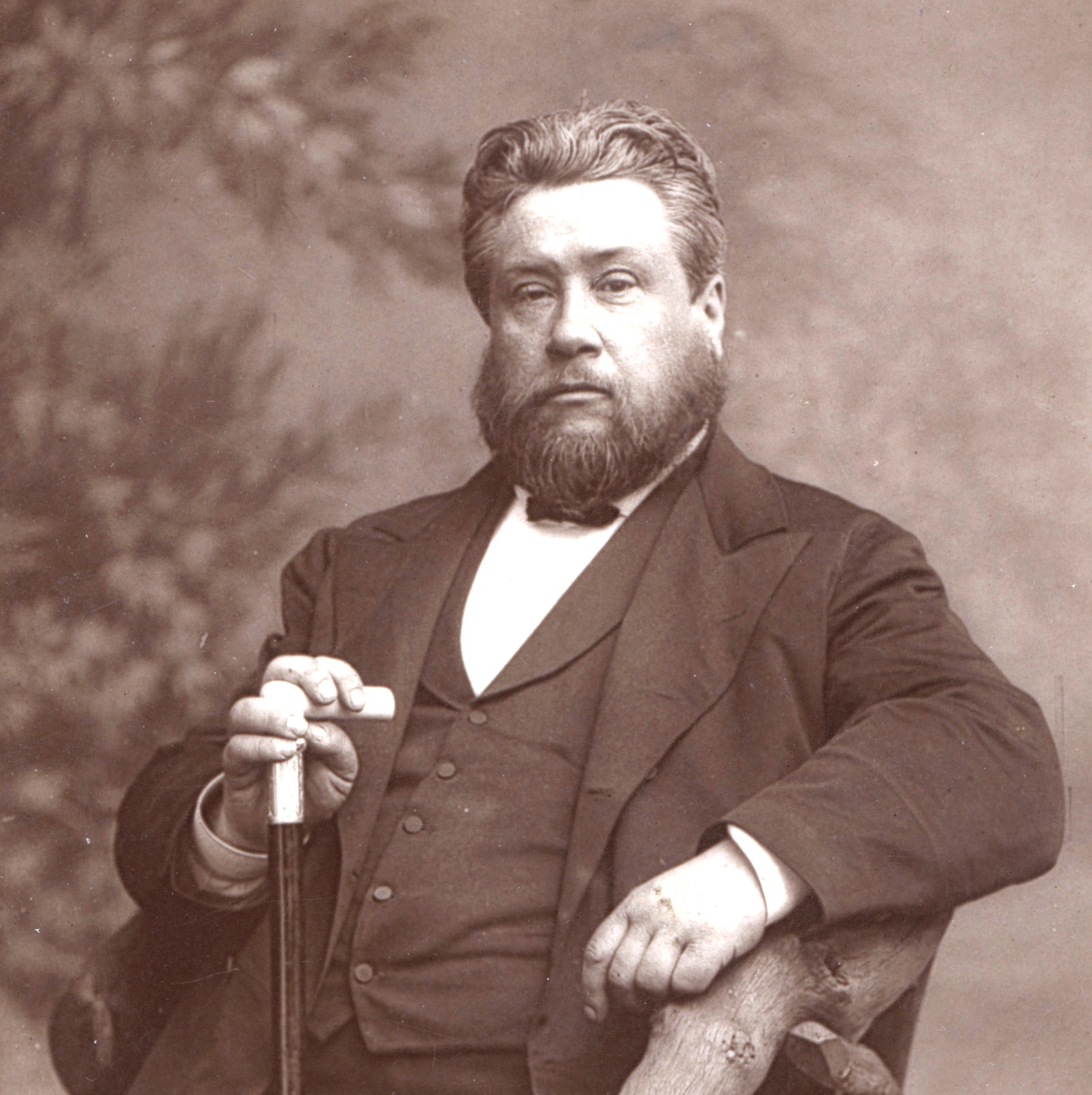
The Nature of True Practical Holiness

First then, let me try to show what true practical holiness is: what sort of persons are those whom God calls holy?

A man may go great lengths and yet never reach true holiness. It is not knowledge—JC RyleBalaam had that; nor great profession—Judas Iscariot had that; nor doing many things—Herod had that; nor zeal for certain matters in religion—Jehu had that; nor morality and outward respectability of conduct—the young ruler had that; nor taking pleasure in hearing preachers—the Jews in Ezekiel’s time had that; nor keeping company with godly people—Joab and Gehazi and Demas had that. Yet none of these were holy! These things alone are not holiness. A man may have any one of them and yet never see the Lord.

What then is true practical holiness? It is a hard question to answer. I do not mean that there is any want of scriptural matter on the subject. But I fear lest I should give a defective view of holiness and not say all that ought to be said, or lest I should say things about it that ought not to be said, and so do harm. Let me, however, try to draw a picture of holiness, that we may see it clearly before the eyes of our minds. Only let it never be forgotten, when I have said all, that my account is but a poor imperfect outline at the best.

a. Holiness is the habit of being of one mind with God, according as we find His mind described in Scripture. It is the habit of agreeing in God’s judgment, hating what He hates, loving what He loves, and measuring everything in this world by the standard of His Word. He who most entirely agrees with God, he is the most holy man.

b. A holy man will endeavor to shun every known sin and to keep every known commandment. He will have a decided bent of mind towards God, a hearty desire to do His will, a greater fear of displeasing Him than of displeasing the world, and a love to all His ways. He will feel what Paul felt when he said, “I delight in the law of God after the inward man” (Rom. 7:22), and what David felt when he said, “I esteem all Your precepts concerning all things to be right, and I hate every false way” (Ps. 119:128).

c. A holy man will strive to be like our Lord Jesus Christ. He will not only live the life of faith in Him and draw from Him all his daily peace and strength, but he will also labor to have the mind that was in Him and to be conformed to His image (Rom. 8:29). It will be his aim to bear with and forgive others, even as Christ forgave us; to be unselfish, even as Christ pleased not Himself; to walk in love, even as Christ loved us; to be lowly–minded and humble, even as Christ made Himself of no reputation and humbled Himself. He will remember that Christ was a faithful witness for the truth; that He came not to do His own will; that it was His meat and drink to do His Father’s will; that He would continually deny Himself in order to minister to others; that He was meek and patient under undeserved insults; that He thought more of godly poor men than of kings; that He was full of love and compassion to sinners; that He was bold and uncompromising in denouncing sin; that He sought not the praise of men, when He might have had it; that He went about doing good; that He was separate from worldly people; that He continued instant in prayer; that He would not let even His nearest relations stand in His way when God’s work was to be done. These things a holy man will try to remember. By them he will endeavor to shape his course in life. He will lay to heart the saying of John: “He who says he abides in [Christ] ought himself also so to walk, even as He walked” (1 John 2:6), and the saying of Peter, that “Christ . . . suffered for us, leaving us an example that you should follow His steps” (1 Pet. 2:21). Happy is he who has learned to make Christ his “all,” both for salvation and example! Much time would be saved, and much sin prevented, if men would oftener ask themselves the question: “What would Christ have said and done if He were in my place? “

d. A holy man will follow after meekness, patience, gentleness, patience, kind tempers, government of his tongue. He will bear much, forbear much, overlook much and be slow to talk of standing on his rights. We see a bright example of this in the behavior of David when Shimei cursed him, and of Moses when Aaron and Miriam spoke against him (2 Sam. 16:10; Num. 12:3).

e. A holy man will follow after temperance and self–denial. He will labor to mortify the desires of his body, to crucify his flesh with his affections and lusts, to curb his passions, to restrain his carnal inclinations, lest at any time they break loose. Oh, what a word is that of the Lord Jesus to the apostles: “Take heed to yourselves, lest at any time your hearts be overcharged with surfeiting, and drunkenness, and cares of this life” (Luke 21:34), and that of the apostle Paul: “I keep under my body, and bring it into subjection: lest that by any means, when I have preached to others, I myself should be a castaway” (1 Cor. 9:27).

f. A holy man will follow after charity and brotherly kindness. He will endeavor to observe the golden rule of doing as he would have men do to him and speaking as he would have men speak to him. He will be full of affection towards his brethren, towards their bodies, their property, their characters, their feelings, their souls. “He who loves another,” says Paul, “has fulfilled the law” (Rom. 13:8). He will abhor all lying, slandering, backbiting, cheating, dishonesty and unfair dealing, even in the least things. The shekel and cubit of the sanctuary were larger than those in common use. He will strive to adorn his religion by all his outward demeanor and to make it lovely and beautiful in the eyes of all around him. Alas, what condemning words are the thirteenth chapter of 1 Corinthians, and the sermon on the mount, when laid alongside the conduct of many professing Christians!

g. A holy man will follow after a spirit of mercy and benevolence towards others. He will not stand all the day idle. He will not be content with doing no harm; he will try to do good. He will strive to be useful in his day and generation and to lessen the spiritual wants and misery around him as far as he can. Such was Dorcas: “full of good works and almsdeeds, which she did”—not merely purposed and talked about, but did. Such a one was Paul: “I will very gladly spend and be spent for you,” he says, “though the more abundantly I love you, the less I be loved” (Acts 9:36; 2 Cor. 12:15).

h. A holy man will follow after purity of heart. He will dread all filthiness and uncleanness of spirit, and seek to avoid all things that might draw him into it. He knows his own heart is like tinder and will diligently keep clear of the sparks of temptation. Who shall dare to talk of strength when David can fall? There is many a hint to be gleaned from the ceremonial law. Under it the man who only touched a bone or a dead body or a grave or a diseased person became at once unclean in the sight of God. And these things were emblems and figures. Few Christians are ever too watchful and too particular about this point.

i. A holy man will follow after the fear of God. I do not mean the fear of a slave, who only works because he is afraid of punishment and would be idle if he did not dread discovery. I mean rather the fear of a child, who wishes to live and move as if he was always before his father’s face, because he loves him. What a noble example Nehemiah gives us of this! When he became governor at Jerusalem, he might have been chargeable to the Jews and required of them money for his support. The former governors had done so. There was none to blame him if he did. But he says, “So did not I, because of the fear of God” (Neh. 5:15).

j. A holy man will follow after humility. He will desire, in lowliness of mind, to esteem all others better than himself. He will see more evil in his own heart than in any other in the world. He will understand something of Abraham’s feeling, when he says, “I am dust and ashes,” and Jacob’s, when he says, “I am less than the least of all Your mercies,” and Job’s, when he says, “I am vile,” and Paul’s, when he says, “I am chief of sinners.” Holy Bradford, that faithful martyr of Christ, would sometimes finish his letters with these words: “A most miserable sinner, John Bradford.” Good old Mr. Grimshaw’s last words, when he lay on his deathbed, were these: “Here goes an unprofitable servant.”

k. A holy man will follow after faithfulness in all the duties and relations in life. He will try, not merely to fill his place as well as others who take no thought for their souls, but even better, because he has higher motives and more help than they. Those words of Paul should never be forgotten: “Whatever you do, do it heartily, as to the Lord”: “Not slothful in business; fervent in spirit; serving the Lord” (Col. 3:23; Rom. 12:11). Holy persons should aim at doing everything well and should be ashamed of allowing themselves to do anything ill if they can help it. Like Daniel, they should seek to give no “occasion” against themselves, except concerning the law of their God (Dan. 6:5). They should strive to be good husbands and good wives, good parents and good children, good masters and good servants, good neighbors, good friends, good subjects, good in private and good in public, good in the place of business and good by their firesides. Holiness is worth little indeed if it does not bear this kind of fruit. The Lord Jesus puts a searching question to His people when He says, “What do you more than others?” (Matt. 5:47).

l. Last, but not least, a holy man will follow after spiritual–mindedness. He will endeavor to set his affections entirely on things above and to hold things on earth with a very loose hand. He will not neglect the business of the life that now is; but the first place in his mind and thoughts will be given to the life to come. He will aim to live like one whose treasure is in heaven and to pass through this world like a stranger and pilgrim traveling to his home. To commune with God in prayer, in the Bible, and in the assembly of His people—these things will be the holy man’s chief enjoyments. He will value everything and place and company, just in proportion as it draws him nearer to God. He will enter into something of David’s feeling, when he says, “My soul follows hard after You”; “You are my portion” (Ps. 63:8; 119:57).

Here let me insert that I am not without fear that my meaning will be mistaken, and the description I have given of holiness will discourage some tender conscience. I would not willingly make one righteous heart sad or throw a stumbling block in any believer’s way. I do not say for a moment that holiness shuts out the presence of indwelling sin. No, far from it. It is the greatest misery of a holy man that he carries about with him a “body of death”; that often when he would do good “evil is present with him”; that the old man is clogging all his movements and, as it were, trying to draw him back at every step he takes (Rom. 7:21). But it is the excellence of a holy man that he is not at peace with indwelling sin, as others are. He hates it, mourns over it and longs to be free from its company. The work of sanctification within him is like the wall of Jerusalem—the building goes forward “even in troublous times” (Dan. 9:25).

Neither do I say that holiness comes to ripeness and perfection all at once or that these graces I have touched on must be found in full bloom and vigor before you can call a man holy. No, far from it. Sanctification is always a progressive work. Some men’s graces are in the blade, some in the ear, and some are like full corn in the ear. All must have a beginning. We must never despise “the day of small things.” And sanctification in the very best is an imperfect work. The history of the brightest saints that ever lived will contain many a “but” and “however” and “notwithstanding” before you reach the end. The gold will never be without some dross, the light will never shine without some clouds, until we reach the heavenly Jerusalem. The sun himself has spots upon his face. The holiest men have many a blemish and defect when weighed in the balance of the sanctuary. Their life is a continual warfare with sin, the world and the devil; and sometimes you will see them not overcoming, but overcome. The flesh is ever lusting against the spirit, and the spirit against the flesh, and in many things they offend all (Gal. 5:17; James 3:2).

But still, for all this, I am sure that to have such a character as I have faintly drawn, is the heart’s desire and prayer of all true Christians. They press towards it, if they do not reach it. They may not attain to it, but they always aim at it. It is what they strive and labor to be, if it is not what they are.

And this I do boldly and confidently say, that true holiness is a great reality. It is something in a man that can be seen and known and marked and felt by all around him. It is light: if it exists, it will show itself. It is salt: if it exists, its savor will be perceived. It is a precious ointment: if it exists, its presence cannot be hid.

I am sure we should all be ready to make allowance for much backsliding, for much occasional deadness in professing Christians. I know a road may lead from one point to another and yet have many a winding and turn, and a man may be truly holy and yet be drawn aside by many an infirmity. Gold is not the less gold because mingled with alloy, nor light the less light because faint and dim, nor grace the less grace because young and weak. But after every allowance, I cannot see how any man deserves to be called “holy” who willfully allows himself in sins and is not humbled and ashamed because of them. I dare not call anyone “holy” who makes a habit of willfully neglecting known duties and willfully doing what he knows God has commanded him not to do. Well says Owen, “I do not understand how a man can be a true believer unto whom sin is not the greatest burden, sorrow and trouble.”

Such are the leading characteristics of practical holiness. Let us examine ourselves and see whether we are acquainted with it. Let us prove our own selves.

J.C. Ryle   “Holiness: Its Nature, Hindrances, Difficulties, and Roots”                               1816-1900

Posted in Christian Living, J.C. Ryle | Tagged , | Leave a comment

Do You Think of Holiness?

Let me speak a little to believers. I ask you this question, “Do you think you feel the importance of holiness as much as you should?”

I admit I fear the temper of the times about this subject. I doubt exceedingly whether it JC Ryleholds that place which it deserves in the thoughts and attention of some of the Lord’s people. I would humbly suggest that we are apt to overlook the doctrine of growth in grace and that we do not sufficiently consider how very far a person may go in a profession of religion, and yet have no grace and be dead in God’s sight after all. I believe that Judas Iscariot seemed very like the other apostles. When the Lord warned them that one would betray Him, no one said, “Is it Judas?” We had better think more about the churches of Sardis and Laodicea than we do.

I have no desire to make an idol of holiness. I do not wish to dethrone Christ and put holiness in His place. But I must candidly say I wish sanctification was more thought of in this day than it seems to be, and I therefore take occasion to press the subject on all believers into whose hands these pages may fall. I fear it is sometimes forgotten that God has married together justification and sanctification. They are distinct and different things, beyond question; but one is never found without the other. All justified people are sanctified, and all sanctified are justified. What God has joined together let no man dare to put asunder. Tell me not of your justification unless you have also some marks of sanctification. Boast not of Christ’s work for you unless you can show us the Spirit’s work in you. Do not think that Christ and the Spirit can ever be divided. I do not doubt that many believers know these things, but I think it good for us to be put in remembrance of them. Let us prove that we know them by our lives. Let us try to keep in view this text more continually: “Follow holiness, without which no man shall see the Lord.”

I must frankly say that the overly–sensitive approach many people take towards the subject of holiness is a dangerous error. Some would think it more dangerous to approach the subject, yet the opposite is the case! Yet if we exalt Christ as the “way, the truth and the life,” how can we refuse to speak strongly about those who call themselves after His name?

I would say it with all reverence, but say it I must: I sometimes fear if Christ were on earth now, there are not a few who would think His preaching legal; and if Paul were writing his Epistles, there are those who would think he had better not write the latter part of most of them as he did. But let us remember that the Lord Jesus did speak the sermon on the mount and that the Epistle to the Ephesians contains six chapters and not four. I grieve to feel obliged to speak in this way, but I am sure there is a cause.

That great divine, John Owen, the Dean of Christ Church, used to say, more than two hundred years ago, that there were people whose whole religion seemed to consist in going about complaining of their own corruptions and telling everyone that they could do nothing of themselves. I am afraid that after two centuries the same thing might be said with truth of some of Christ’s professing people in this day. I know there are texts in Scripture which warrant such complaints. I do not object to them when they come from men who walk in the steps of the apostle Paul and fight a good fight, as he did, against sin, the devil and the world. But I never like such complaints when I see ground for suspecting, as I often do, that they are only a cloak to cover spiritual laziness and an excuse for spiritual sloth. If we say with Paul, “O wretched man that I am,” let us also be able to say with him, “I press toward the mark.” Let us not quote his example in one thing, while we do not follow him in another (Rom. 7:24; Phil. 3:14).

I do not set up myself to be better than other people; and if anyone asks, “What are you, that you write in this way?” I answer, “I am a very poor creature indeed.” But I say that I cannot read the Bible without desiring to see many believers more spiritual, more holy, more single–eyed, more heavenly–minded, more whole–hearted than they are in the nineteenth century. I want to see among believers more of a pilgrim spirit, a more decided separation from the world, a conversation more evidently in heaven, a closer walk with God; and therefore I have written as I have.

Is it not true that we need a higher standard of personal holiness in this day? Where is our patience? Where is our zeal? Where is our love? Where are our works? Where is the power of religion to be seen, as it was in times gone by? Where is that unmistakable tone which used to distinguish the saints of old and shake the world? Truly our silver has become dross, our wine mixed with water, and our salt has very little savor. We are all more than half asleep. The night is far spent, and the day is at hand. Let us awake and sleep no more. Let us open our eyes more widely than we have done up to this time. “Let us lay aside every weight, and the sin which does so easily beset us.” “Let us cleanse ourselves from all filthiness of flesh and spirit, and perfect holiness in the fear of God” (Heb. 12:1; 2 Cor. 7:1). “Did Christ die,” says Owen, “and shall sin live? Was He crucified in the world, and shall our affections to the world be quick and lively? Oh, where is the spirit of him, who by the cross of Christ was crucified to the world, and the world to him?”

J.C. Ryle   “Holiness: Its Nature, Hindrances, Difficulties, and Roots”                               1816-1900

Posted in Christian Living, J.C. Ryle | Tagged , | Leave a comment

Shepherd’s Conference 2014

It is a goal of mine to make it to one of these in the next few years.  I will be watching most of the sessions online.  It looked like a great time.

Posted in John MacArthur, Shepherd's Conference, Video | Tagged , , | Leave a comment

3 Tips for Responding to Criticism

Criticism is inevitable. At certain times we will all face another person’s analysis or rebuke Tim-Challiesof our behavior. The best kind of criticism comes from friends, from those who know us and love us best. “Better is open rebuke than hidden love. Faithful are the wounds of a friend; profuse are the kisses of an enemy” (Proverbs 27:5-6). In his little book True Friendship, Vaughan Roberts offers three tips for responding to criticism, and especially this kind of criticism—the kind that comes in the context of friendship, of iron sharpening iron.

EXPECT IT

We should expect criticism. We should expect criticism because we are sinful, so far from the holiness God requires and so far from the holiness we desire. If anything we ought to be surprised that we receive so little criticism. We should also expect criticism because friendships—especially close friendships—invite it. Criticism may arise from a negative spirit, but it can also arise from love. Our best friends must have an open invitation to offer criticism of our lives. Is there no one in your life who offers you critical feedback? Then it may be that you have chased off your friends by responding poorly and pridefully in the past. Expect to be criticized from time to time, and give your friends an open invitation to do so.

EXAMINE ITTrue Friendship

When we receive criticism, and especially when that criticism stings or seems outrageous, we need to examine it to see if it is true. It may be that our friends have a faulty perspective, but it may be that they have a better perspective that we do. George Orwell was right when he said, “To see what is in front of one’s nose needs a constant struggle.” Humility admits that others may see what we cannot or will not see ourselves. Roberts says, “We should resist the instinctive temptation to defend ourselves or attack the critic, but rather consider whether there is truth in what is being said.” Prayerfully examine that criticism to see if it is true and fair.

ENDURE IT

There will be times the criticism will be painful but true. In such times, we will need to endure that criticism as we respond to it by making changes to our lives. There are times the criticism will sting because we come to believe the criticism is unfair. In either case, we need to keep ourselves from responding in kind or lashing out at the one who criticized us. We must resist the temptation to gossip about that person or to sever the friendship. Far better, we must endure criticism just as Christ Jesus patiently endured all the criticism that was heaped upon him. As always, as ever, he is our model.

Tim Challies   March 05, 2014    See more great content at challies.com

Posted in Christian Living, Tim Challies, Vaughan Roberts | Tagged , , , , | Leave a comment

A Letter from Dad

A young couple in Australia discover that their unborn child is severely disabled and will most likely not survive. The couple choose not to terminate the pregnancy. Here’s the letter this real-life father wrote to his son.  Created by Focus on the Family.

Posted in Video | Tagged , | Leave a comment

23 Things That Love Is

  1. LOVE IS… being willing to have your life complicated by the needs and struggles of others without impatience or anger.
  2. LOVE IS… actively fighting the temptation to be critical and judgmental toward another while looking for ways to encourage and praise.
  3. LOVE IS… making a daily commitment to resist the needless moments of conflict that come from pointing out and responding to minor offenses.
  4. LOVE IS… being lovingly honest and humbly approachable in times of misunderstanding.
  5. LOVE IS… being more committed to unity and understanding than you are to winning, accusing, or being right.
  6. LOVE IS… making a daily commitment to admit your sin, weakness, and failure and to resist the temptation to offer an excuse or shift the blame.
  7. LOVE IS… being willing, when confronted by another, to examine your heart rather than rising to your defense or shifting the focus.
  8. LOVE IS… making a daily commitment to grow in love so that the love you offer to another is increasingly selfless, mature, and patient.
  9. LOVE IS… being unwilling to do what is wrong when you have been wronged, but looking for concrete and specific ways to overcome evil with good.
  10. LOVE IS… being a good student of another, looking for their physical, emotional, and spiritual needs so that in some way you can remove the burden, support them as they carry it, or encourage them along the way.
  11. LOVE IS… being willing to invest the time necessary to discuss, examine, and understand the relational problems you face, staying on task until the problem is removed or you have agreed upon a strategy of response.
  12. LOVE IS… being willing to always ask for forgiveness and always being committed to grant forgiveness when it is requested.
  13. LOVE IS… recognizing the high value of trust in a relationship and being faithful to your promises and true to your word.
  14. LOVE IS… speaking kindly and gently, even in moments of disagreement, refusing to attack the other person’s character or assault their intelligence.
  15. LOVE IS… being unwilling to flatter, lie, manipulate, or deceive in any way in order to co-opt the other person into giving you what you want or doing something your way.
  16. LOVE IS… being unwilling to ask another person to be the source of your identity, meaning, and purpose, or inner sense of well-being, while refusing to be the source of theirs.
  17. LOVE IS… the willingness to have less free time, less sleep, and a busier schedule in order to be faithful to what God has called you to be and to do as a spouse, parent, neighbor, etc.
  18. LOVE IS… a commitment to say no to selfish instincts and to do everything that is within your ability to promote real unity, functional understanding, and active love in your relationships.
  19. LOVE IS… staying faithful to your commitment to treat another with appreciation, respect, and grace, even in moments when the other person doesn’t seem deserving or is unwilling to reciprocate.
  20. LOVE IS… the willingness to make regular and costly sacrifices for the sake of a relationship without asking for anything in return or using your sacrifices to place the other person in your debt.
  21. LOVE IS… being unwilling to make any personal decision or choice that would harm a relationship, hurt the other person, or weaken the bond of trust between you.
  22. LOVE IS… refusing to be self-focused or demanding, but instead looking for specific ways to serve, support, and encourage, even when you are busy or tired.
  23. LOVE IS… daily admitting to yourself, the other person, and God that you are unable to be driven by a cruciform love without God’s protecting, providing, forgiving, rescuing, and delivering grace.

Paul Tripp

“This resource is from Paul Tripp Ministries. For additional resources, visit www.paultripp.com. Used with permission.”

Don’t forget to check out “The Invitation To Love.”

Posted in Christian Living, Paul Tripp | Tagged , , | Leave a comment

The House is Being Robbed!

We could multiply this painful evidence, but there is no need, since the charge is not denied. It is ridiculed; it is treated as a matter of no consequence, but it is not seriously met. Is this what we have come to? Is there no doctrine left which is to be maintained? Is there no revelation? Or is that revelation a nose of wax to be shaped by the finger of fashion? Are the sceptics so much to the fore that no man will open his mouth against them? Are all the orthodox afraid of the ridicule of the “cultured”? We cannot believe it. The private knowledge which we possess will not allow of so unhappy a conclusion; yet Christian people are now so tame that they shrink from expressing themselves. The house is being robbed, its very walls are being digged down, but the good people who are spurgeon_chair1in bed are too fond of the warmth, and too much afraid of getting broken heads, to go downstairs and meet the burglars; they are even half vexed that a certain noisy fellow will spring his rattle, or cry, “Thieves!”

That the evil leaven is working in the churches as well as among the ministers, is also sadly certain. A heterodox party exists in many congregations, and those who compose it are causing trouble to the faithful, and sadly influencing the more timid towards a vacillating policy. An earnest preacher, who is only one of a class, says: “The old truths are unpopular here. I am told that I have preached the doctrines of grace to my cost—that is, in a pecuniary aspect; and I know that it is so. I cannot find anything to rest upon in the modern theories, but this places me in antagonism to the supporters of the chapel. They find fault, not with the style of my preaching, but with the subjects of it.” In another place the witness is—” Our minister is an able and gracious man, but there are those in the church who are determined that no one shall remain here unless he is in favor of advanced opinions.” Yes, the divergence is every day becoming more manifest. A chasm is opening between the men who believe their Bibles and the men who are prepared for an advance upon Scripture. Inspiration and speculation cannot long abide in peace. Compromise there can be none. We cannot hold the inspiration of the Word, and yet reject it; we cannot believe in the atonement and deny it; we cannot hold the doctrine of the fall and yet talk of the evolution of spiritual life from human nature; we cannot recognize the punishment of the impenitent and yet indulge the “larger hope.” One way or the other we must go. Decision is the virtue of the hour.

Neither when we have chosen our way can we keep company with those who go the other way. There must come with decision for truth a corresponding protest against error. Let those who will keep the narrow way keep it, and suffer for their choice; but to hope to follow the broad road at the same time is an absurdity. What communion hath Christ with Belial?

Charles Spurgeon  “Our Reply to Sundry Critics and Enquirers”                               September 1887, Sword and Trowel

Posted in Charles Spurgeon, Church History | Tagged , , , | 1 Comment

What Does True Forgiveness Look Like?

See more from R.C. Sproul at Ligonier Ministries 

Posted in R.C. Sproul, Video | Tagged , , | Leave a comment

5 More Signs You Glorify Self

Last week we looked at five ways the pursuit of self-glory shapes your ministry. Here are five more warning signs for you to consider in an effort to pursue wisdom and holiness. May God use these additional signs to expose your heart and to redirect your ministry.

Self-glory will also cause you to:

6. Care too little about what people think about you. 

If you think you’ve arrived, you are so self-assured that you simply don’t think others should evaluate your thoughts, ideas, actions, words, plans, goals, attitudes, or initiatives. You really don’t think you need help. You do alone what should be done in a group. And if you work with a group, you will tend to surround yourself with people who are all too impressed with you, all too excited to be included by you, and who will find it hard to say anything but “yes” to you. You have forgotten who you are and what your Savior says you daily need. You live in a place of both personal and also ministry danger.

7. Resist facing and admitting your sins, weaknesses, and failures. 

Why do any of us get upset or tense when we are being confronted? Why do any of us activate our inner lawyer and rise to our defense? Why do any of us turn the tables and remind the other person that we are not the only sinner in the room? Why do we argue about the facts or dispute the other person’s interpretation? We do all of these things because we are convinced that we are more righteous than the other person. Proud people don’t welcome loving warning, rebuke, confrontation, criticism, or accountability. And when they fail, they are very good at erecting plausible reasons for what they said or did given the stresses of the situation or relationship.

Are you quick to admit weakness? Are you ready to own your failures before God and others? Are you ready to face your weaknesses with humility? Remember, if the eyes or ears of a ministry partner ever see or hear your sin, weakness, or failure, it is never a hassle, never a ministry interruption, and it should never be viewed as an affront. It is always grace. God loves you, he has put you in this community of faith, and he will reveal your spiritual needs to those around you so they may be his tools of conviction, rescue, and transformation.

8. Struggle with the blessings of others. 

Self-glory is always at the base of envy. You envy others’ blessings because you see them as less deserving than you. And because you see yourself as more deserving, it is hard for you not to be mad that they get what you deserve, and it is nearly impossible for you not to crave and covet what they wrongfully enjoy. In you envious self-glory, you are actually charging God with being unjust and unfair. In ways you may not be aware, you begin to be comfortable with doubting God’s wisdom, justice, and goodness. You don’t think he has been kind to you in the way you deserve. This begins to rob you of motivation to do what is right, because it doesn’t seem to make any difference. It is important to recognize that there is a short step between envy and bitterness. That’s why envious Asaph cries in Psalm 73:13, “All in vain have I kept my heart clean and washed my hands in innocence.” He’s saying, “I’ve obeyed, and this is what I get?” Then he writes, “When my soul was embittered, when I was pricked in heart, I was brutish and ignorant; I was like a beast before you.” What a word picture—a bitter beast!

I have met many bitter pastors; men convinced they have endured hardships they really didn’t deserve. I have met many bitter pastors, envious of others’ ministries, who have lost their motivation and joy. I have met many pastors who have come to doubt the goodness of God. And you don’t tend to run for help, in your time of need, to someone you have come to doubt.

9. Be more position oriented than submission oriented. 

Self-glory will always make you more oriented to place, power, and position than in submission to the will of the King. You see this in the lives of the disciples. Jesus hadn’t called them to himself to make their little kingdom purposes come true, but to welcome them as recipients and instruments of a better kingdom. Yet in their pride, they missed the whole point. They were all too oriented to the question of who would be greatest in the kingdom.

You can never fulfill your ambassadorial calling and want the power and position of a king. Position orientation will cause you to be political when you should be pastoral. It will cause you to require service when you should be willing to serve. It will cause you to demand of others what you wouldn’t be willing to do yourself. It will cause you to ask for privilege when you should be willing to give up your rights. It will cause you to think too much about how things will affect you, rather than thinking of how things will reflect on Christ. It will cause you to want to set the agenda, rather than finding joy in submitting to the agenda of Another. Self-glory turns those who have been chosen and called to be ambassadors into self-appointed kings.

10. Control ministry rather than delegate ministry. 

When you are full of yourself, when you are too self-assured, you will tend to think you’re the most capable person in the circle of your ministry. You will find it hard to recognize and esteem the God-given gifts of others, and because you do, you will find it hard to make ministry a community process. Thinking of yourself more highly than you ought always leads to looking down on others.

Personal humility and neediness will cause you to seek out and esteem the gifts and contributions of others. Pastors who think they have arrived tend to see delegation as a waste of time. In their hearts they think, Why should I give to another what I could do better myself? Pastoral pride will crush shared ministry and the essential ministry of the body of Christ.

Personal Grief and Remorse

It is important for me to say that I have written these cautions with personal grief and remorse. In shocking self-glory I have fallen, at some time in my ministry, into all of these traps. I have dominated when I should have listened. I have controlled what I should have given to others. I have been defensive when I desperately needed rebuke. I have resisted help when I should have been crying out for it. I have been too full of my own opinions and too dismissive of the perspective of others.

I am saddened as I reflect on my many years of ministry, but I am not depressed. Because in all my weakness, the God of amazing grace has rescued and restored me again and again. He has progressively delivered me from me (a work that is ongoing). And in being torn between the kingdom of self and the kingdom of God, he has miraculously used me in the lives of many others. In love, he has worked to dent and deface my glory so that his glory would be my delight. He has plundered my kingdom so that his kingdom would be my joy. And he has crushed my crown under his feet so that I would quest to be an ambassador and not crave to be a king.

In this violent mercy there is hope for everyone. Your Lord is not just after the success of your ministry; he is working to dethrone you as well. Only when his throne is more important than yours will you find joy in the hard and humbling task of gospel ministry. And his grace will not relent until our hearts have been fully captured by his glory. That’s good news!

Paul Tripp                                                                                                                             Originally posted at The Gospel Coalition on Dec. 9, 2012                                                   “This resource is from Paul Tripp Ministries. For additional resources, visit www.paultripp.com. Used with permission.”

Posted in Paul Tripp | Tagged , , | Leave a comment

5 Signs You Glorify Self

It is important to recognize the harvest of self-glory in you and in your ministry. May God use this list to give you diagnostic wisdom. May he use it to expose your heart and to redirect your ministry.

Self-glory will cause you to:

1. Parade in public what should be kept in private.

The Pharisees live for us as a primary example. Because they saw their lives as glorious, they were quick to parade that glory before watching eyes. The more you think you’ve arrived and the less you see yourself as daily needing rescuing grace, the more you will tend to be self-referencing and self-congratulating. Because you are attentive to self-glory, you will work to get greater glory even when you aren’t aware that you’re doing it. You will tend to tell personal stories that make you the hero. You will find ways, in public settings, of talking about private acts of faith. Because you think you’re worthy of acclaim, you will seek the acclaim of others by finding ways to present yourself as “godly.”

I know most pastors reading this column will think they would never do this. But I am convinced there is a whole lot more “righteousness parading” in pastoral ministry than we would tend to think. It is one of the reasons I find pastors’ conferences, presbytery meetings, general assemblies, ministeriums, and church planting gatherings uncomfortable at times. Around the table after a session, these gatherings can degenerate into a pastoral ministry “spitting contest” where we are tempted to be less than honest about what’s really going on in our hearts and ministries. After celebrating the glory of the grace of the gospel there is way too much self-congratulatory glory taking by people who seem to need more acclaim than they deserve.

2. Be way too self-referencing.

We all know it, we’ve all seen it, we’ve all been uncomfortable with it, and we’ve all done it. Proud people tend to talk about themselves a lot. Proud people tend to like their opinions more than the opinions of others. Proud people think their stories are more interesting and engaging than others. Proud people think they know and understand more than others. Proud people think they’ve earned the right to be heard. Proud people, because they are basically proud of what they know and what they’ve done, talk a lot about both. Proud people don’t reference weakness. Proud people don’t talk about failure. Proud people don’t confess sin. So proud people are better at putting the spotlight on themselves than they are at shining the light of their stories and opinions on God’s glorious and utterly undeserved grace.

3. Talk when you should be quiet.

When you think you’ve arrived, you are quite proud of and confident in your opinions. You trust your opinions, so you are not as interested in the opinions of others as you should be. You will tend to want your thoughts, perspectives, and viewpoints to win the day in any given meeting or conversation. This means you will be way more comfortable than you should be with dominating a gathering with your talk. You will fail to see that in a multitude of counsel there is wisdom. You will fail to see the essential ministry of the body of Christ in your life. You will fail to recognize your bias and spiritual blindness. So you won’t come to meetings formal or informal with a personal sense of need for what others have to offer, and you will control the talk more than you should.

4. Be quiet when you should speak.

Self-glory can go the other way as well. Leaders who are too self-confident, who unwittingly attribute to themselves what could only have been accomplished by grace, often see meetings as a waste of time. Because they are proud, they are too independent, so meetings tend to be viewed as an irritating and unhelpful interruption of an already overburdened ministry schedule. Because of this they will either blow meetings off or tolerate the gathering, attempting to bring it to a close as quickly as possible. So they don’t throw their ideas out for consideration and evaluation because, frankly, they don’t think they need it. And when their ideas are on the table and being debated, they don’t jump into the fray, because they think that what they have opined or proposed simply doesn’t need to be defended. Self-glory will cause you to speak too much when you should listen and to feel no need to speak when you surely should.

5. Care too much about what people think about you.

When you have fallen into thinking that you’re something, you want people to recognize the something. Again, you see this in the Pharisees: personal assessments of self-glory always lead to glory-seeking behavior. People who think they have arrived can become all too aware of how others respond to them. Because you’re hyper-vigilant, watching the way the people in your ministry respond, you probably don’t even realize how you do things for self-acclaim.

Sadly, we often minister the gospel of Jesus Christ for the sake of our own glory, not for the glory of Christ or the redemption of the people under our care. I have done this. I have thought during the preparation for a sermon that a certain point, put a certain way, would win a detractor, and I have watched for certain people’s reactions as I have preached. In these moments, in the preaching and preparation of a sermon, I had forsaken my calling as the ambassador of the eternal glory of another for the purpose of my acquiring the temporary praise of men.

Next week we’ll look at five more signs the pursuit of self-glory shapes your ministry.

Paul Tripp                                                                                                                             Originally posted at The Gospel Coalition on Dec. 2, 2012                                                   “This resource is from Paul Tripp Ministries. For additional resources, visit http://www.paultripp.com. Used with permission.”

Posted in Paul Tripp | Tagged , , | Leave a comment