“What is it to glorify God?”

“Glorifying God consists in four things: 1: Appreciation, 2. Adoration, 3. Affection,               4. Subjection. This is the yearly rent we pay to the crown of heaven.

[1] Appreciation. To glorify God is to set God highest in our thoughts, and to have a venerable esteem of him. Psa 92:2. Thou, Lord, art most high for evermore.’ Psa 97:7. Thou art exalted far above all gods.’ There is in God all that may draw forth both wonder and delight; there is a constellation of all beauties; he is prima causa, the original and springhead of being, who sheds a glory upon the creature. We glorify God, when we are God-admirers; admire his attributes, which are the glistering beams by which the divine nature shines forth; his promises which are the charter of free grace, and the spiritual cabinet where the pearl of price is hid; the noble effects of his power and wisdom in making the world, which is called the work of his fingers.’ Psa 8:8. To glorify God is to have God-admiring thoughts; to esteem him most excellent, and search for diamonds in this rock only.
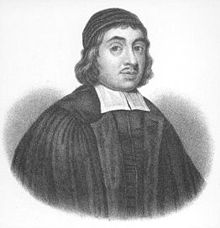
Thomas Watson[2] Glorifying God consists in adoration, or worship. Psa 29:9. Give unto the Lord the glory due unto his name; worship the Lord in the beauty of holiness.’ There is a twofold worship: (1.) A civil reverence which we give to persons of honour. Gen 23:3. Abraham stood up and bowed himself to the children of Heth.’ Piety is no enemy to courtesy. (2.) A divine worship which we give to God as his royal prerogative. Neh 8:8. They bowed their heads, and worshipped the Lord with their faces towards the ground.’ This divine worship God is very jealous of; it is the apple of his eye, the pearl of his crown; which he guards, as he did the tree of life, with cherubims and a flaming sword, that no man may come near it to violate it. Divine worship must be such as God himself has appointed, else it is offering strange fire. Lev 10:0: The Lord would have Moses make the tabernacle, according to the pattern in the mount.’ Exod 25:50. He must not leave out anything in the pattern, nor add to it. If God was so exact and curious about the place of worship, how exact will he be about the matter of his worship! Surely here everything must be according to the pattern prescribed in his word.

[3] Affection. This is part of the glory we give to God, who counts himself glorified when he is loved. Deut 6:6. Thou shalt love the Lord thy God with all thy heart, and with all thy soul.’ There is a twofold love: (1.) Amor concupiscentiae, a love of concupiscence, which is self-love; as when we love another, because he does us a good turn. A wicked man may be said to love God, because he has given him a good harvest, or filled his cup with wine. This is rather to love God’s blessing than to love God. (2.) Amor amicitiae, a love of delight, as a man takes delight in a friend. This is to love God indeed; the heart is set upon God, as a man’s heart is set upon his treasure. This love is exuberant, not a few drops, but a stream. It is superlative; we give God the best of our love, the cream of it. Cant 8:8. I would cause thee to drink of spiced wine of the juice of my pomegranate.’ If the spouse had a cup more juicy and spiced, Christ must drink of it. It is intense and ardent. True saints are seraphims, burning in holy love to God. The spouse was amore perculsa, in fainting fits, sick of love.’ Cant 2:2. Thus to love God is to glorify him. He who is the chief of our happiness has the chief of our affections.

[4] Subjection. This is when we dedicate ourselves to God, and stand ready dressed for his service. Thus the angels in heaven glorify him; they wait on his throne, and are ready to take a commission from him; therefore they are represented by the cherubims with wings displayed, to show how swift they are in their obedience. We glorify God when we are devoted to his service; our head studies for him, our tongue pleads for him, and our hands relieve his members. The wise men that came to Christ did not only bow the knee to him, but presented him with gold and myrrh. Matt 2:2: So we must not only bow the knee, give God worship, but bring presents of golden obedience. We glorify God when we stick at no service, when we fight under the banner of his gospel against an enemy, and say to him as David to King Saul, Thy servant will go and fight with this Philistine.’ I Sam 17:72. A good Christian is like the sun, which not only sends forth heat, but goes its circuit round the world. Thus, he who glorifies God, has not only his affections heated with love to God, but he goes his circuit too; he moves vigorously in the sphere of obedience.”

Thomas Watson, “A Body of Divinity”
Posted in Church History, Thomas Watson | Tagged , , | Leave a comment

“The Church Before the Watching World”

“One cannot explain the explosive power of the early church apart from the fact that they practiced two things simultaneously: the orthodoxy of doctrine and orthodoxy of community in the midst of the visible church, a community which the world could see.

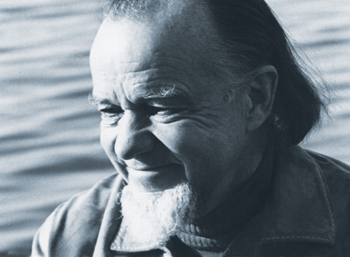
By the grace of God, therefore, the church must be known simultaneously for its purity of doctrine and the reality of its community. Our churches have so often been only preaching points with very little emphasis on community. But the exhibition of the love of God in practice is beautiful and must be there.Francis-Schaeffer_IN2

We have, then, two sets of parallel couplets: (1) the principle of the purity of the visible church, and yet the practice of observable love among all true Christians; and (2) the practice of orthodoxy of doctrine and observable orthodoxy of community in the visible church.

The heart of these sets of principles is to show forth the love of God and the holiness of God simultaneously. If we show either of these without the other, we exhibit not the character, but a caricature of God for the world to see.

If we stress the love of God without the holiness of God, it turns out only to be compromise. But if we stress the holiness of God without the love of God, we practice something that is hard and lacks beauty. And it is important to show forth beauty before a lost world and a lost generation.

All too often people have not been wrong in saying that the church is ugly. In the name of our Lord Jesus Christ, we are called upon to show a watching world and to our own young people that the church is something beautiful.

Several years ago I wrestled with the question of what was wrong with much of the church that stood for purity. I came to the conclusion that in the flesh we can stress purity without love or we can stress the love of God without purity, but that in the flesh we cannot stress both simultaneously.

In order to exhibit both simultaneously, we must look moment by moment to the work of Christ, to the work of the Holy Spirit. Spirituality begins to have real meaning in our moment-by-moment lives as we begin to exhibit simultaneously the holiness of God and the love of God.”

–Francis Schaeffer, “The Church Before the Watching World”  1982

Posted in Church History, Francis Schaeffer | Tagged , , , | Leave a comment

The Most Important Thing About Us

“What comes into our minds when we think about God is the most important thing about us. The history of mankind will probably show that no people has ever risen above its religion, and man’s spiritual history will positively demonstrate that no religion has ever been greater than its idea of God. Worship is pure or base as the worshiper entertains highAW Tozer or low thoughts of God.

For this reason the gravest question before the Church is always God Himself, and the most portentous fact about any man is not what he at a given time may say or do, but what he in his deep heart conceives God to be like. We tend by a secret law of the soul to move toward our mental image of God. This is true not only of the individual Christian, but of the company of Christians that composes the Church. Always the most revealing thing about the Church is her idea of God.”

A.W. Tozer, The Knowledge of the Holy

Posted in A.W. Tozer, Church History | Tagged , , | Leave a comment

“Our Good Shepherd”

“He shall gather the lambs with his arm.” –Isaiah 40:11

“Our good Shepherd has in His flock a variety of experiences, some are strong in the Lord, and others are weak in faith, but He is impartial in His care for all His sheep, and the weakest lamb is as dear to Him as the most advanced of the flock.

Lambs are wont to lag behind, prone to wander, and apt to grow weary, but from all the danger of these infirmities the Shepherd protects them with His arm of power. He finds new-born souls, like young lambs, ready to perish—He nourishes them till life becomes vigorous; He finds weak minds ready to faint and die—He consoles them and renews their strength.

SpurgeonAll the little ones He gathers, for it is not the will of our heavenly Father that one of them should perish. What a quick eye He must have to see them all! What a tender heart to care for them all! What a far-reaching and potent arm, to gather them all!

In His lifetime on earth He was a great gatherer of the weaker sort, and now that He dwells in heaven, His loving heart yearns towards the meek and contrite, the timid and feeble, the fearful and fainting here below.

How gently did He gather me to Himself, to His truth, to His blood, to His love, to His church! With what effectual grace did He compel me to come to Himself! Since my conversion, how frequently has He restored me from my wanderings, and once again folded me within the circle of His everlasting arm!

The best of all is, that He does it all himself personally, not delegating the task of love, but condescending Himself to rescue and preserve His most unworthy servant. How shall I love Him enough or serve Him worthily? I would fain make His name great unto the ends of the earth, but what can my feebleness do for Him?

Great Shepherd, add to Thy mercies this one other, a heart to love Thee more truly as I ought.”

Charles Spurgeon, “Morning and Evening”

Posted in Charles Spurgeon, Church History | Tagged , , , | Leave a comment

“Honour Him in your life”

“If you are a son of God, I beseech you to walk worthy of your Father’s house. I charge you solemnly to honour Him in your life; and above all to honour Him by implicit obedience to all His commands, and hearty love to all His children.

Labour to travel through the world like a child of God and heir to glory. Let men be able to trace a family likeness between you and Him that begat you. Live a heavenly life. Seek things that are above.

Do not seem to be building your nest below. Behave like a man who seeks a city out of sight, whose citizenship is in heaven, and who would be content with many hardships till he gets home.

Labour to feel like a son of God in every condition in which you are placed. Never forget you are on your Father’s ground so long as you are here on earth. Never forget that a Father’s hand sends all your mercies and crosses.

Cast every care on Him. Be happy and cheerful in Him. Why indeed art thou ever sad if thou art the King’s son? Why should men ever doubt, when they look at yon, whether it is a pleasant thing to be one of God’s children?

Labour to behave towards others like a son of God. Be blameless and harmless in your dayJC Ryle and generation. Be a ‘peacemaker among all you know.’ (Matt. 5:9.)

Seek for your children sonship to God, above everything else: seek for them an inheritance in heaven, whatever else you do for them. No man leaves his children so well provided for as he who leaves them sons and heirs of God.

Persevere in your Christian calling, if you are a son of God, and press forward more and more. Be careful to lay aside every weight, and the sin which most easily besets you. Keep your eyes steadily fixed on Jesus. Abide in Him.

Remember that without Him you can do nothing, and with Him you can do all things. (John 15:5; Philip. 4:13.) Watch and pray daily. Be steadfast, unmoveable, and always abounding in the work of the Lord.

Settle it down in your heart that not a cup of cold water given in the name of a disciple shall lose its reward, and that every year you are so much nearer home. ’Yet a little time and He that shall come will come, and will not tarry.’ (Heb. 10:37.)

Then shall be the glorious liberty, and the full manifestation of the sons of God. (Rom. 8:19, 21.)

Then shall the world acknowledge they that were the truly wise.

Then shall the sons of God at length come of age, and be no longer heirs in expectancy, but heirs in possession.

Then shall they hear with exceeding joy those comfortable words: ‘Come, ye blessed of my Father, inherit the kingdom prepared for you from the foundation of the world.’ (Matt. 25:34.) Surely that day will make amends for all!”

J.C. Ryle, “Practical Religion”  1900

Posted in Church History, J.C. Ryle | Tagged , | Leave a comment

“My eyes have seen your salvation!” Luke 2:30

So said Simeon–when he saw the child Jesus. Yes, Jesus is God’s salvation, and everything necessary to save a sinner is to be found in Him!

His blood atones for our sins.James Smith 1
His righteousness justifies our persons.
His Spirit sanctifies our natures.
His precepts direct our steps.
His promises comfort our hearts.
His peace keeps our minds.
His intercession secures our lives.
His power subdues our foes.
His providence supplies our needs.
His beauty feasts our souls.

Jesus is enough. Jesus is all.

“Praise be to the God and Father of our Lord Jesus Christ, who has blessed us in the heavenly realms with every spiritual blessing in Christ!” Ephesians 1:3

James Smith “Food for the Soul” 1867

Posted in Church History, James Smith | Tagged , , , | Leave a comment

The Hope of Heaven

“Our hope in Christ for the future is the mainspring and the mainstay of our joy here. It will animate our hearts to think often of heaven, for all that we can desire is promised there. Here we are weary and toilworn, but yonder is the land of rest where the sweat of labour shall no more bedew the worker’s brow, and fatigue shall be for ever banished.

To those who are weary and spent, the word ‘rest’ is full of heaven. We are always in the field of battle; we are so tempted within, and so molested by foes without, that we have little or no peace; but in heaven we shall enjoy the victory, when the banner shall be waved aloft in triumph, and the sword shall be sheathed, and we shall hear our Captain say, ‘Well done, good and faithful servant.’

We have suffered bereavement after bereavement, but we are going to the land of the immortal where graves are unknown things. Here sin is a constant grief to us, but there we shall be perfectly holy, for there shall by no means enter into that kingdom anything which defileth.

Hemlock springs not up in the furrows of celestial fields. Oh! is it not joy, that you are not to be in banishment for ever, that you are not to dwell eternally in this wilderness, but shall soon inherit Canaan?

Nevertheless let it never be said of us, that we are dreaming about the future and forgetting the present, let the future sanctify the present to highest uses. Through the Spirit of God the hope of heaven is the most potent force for the product of virtue; it is a fountain of joyous effort, it is the cornerstone of cheerful holiness.

The man who has this hope in him goes about his work with vigour, for the joy of the Lord is his strength. He fights against temptation with ardour, for the hope of the next world repels the fiery darts of the adversary. He can labour without present reward, for he looks for a reward in the world to come.”

‘The hope which is laid up for you in heaven.’—Colossians 1:5.

Charles Spurgeon, “Morning and Evening”

Posted in Charles Spurgeon, Church History | Tagged , , , | Leave a comment

In Christ Alone

In Christ alone my hope is found;
He is my light, my strength, my song;
This cornerstone, this solid ground,
Firm through the fiercest drought and storm.
What heights of love, what depths of peace,
When fears are stilled, when strivings cease!
My comforter, my all in all—
Here in the love of Christ I stand.

In Christ alone, Who took on flesh,
Fullness of God in helpless babe!
This gift of love and righteousness,
Scorned by the ones He came to save.
Till on that cross as Jesus died,
The wrath of God was satisfied;
For ev’ry sin on Him was laid—
Here in the death of Christ I live.

There in the ground His body lay,
Light of the world by darkness slain;
Then bursting forth in glorious day,
Up from the grave He rose again!
And as He stands in victory,
Sin’s curse has lost its grip on me;
For I am His and He is mine—
Bought with the precious blood of Christ.

No guilt in life, no fear in death—
This is the pow’r of Christ in me;
From life’s first cry to final breath,
Jesus commands my destiny.
No pow’r of hell, no scheme of man,
Can ever pluck me from His hand;
Till He returns or calls me home—
Here in the pow’r of Christ I’ll stand.

“In Christ Alone”
Words and Music by Keith Getty & Stuart Townend
Copyright © 2001 Kingsway Thankyou Music

Posted in Sola Conference, Uncategorized | Tagged , , | Leave a comment

Sin is Cosmic Treason

“Is the death penalty for sin unjust? By no means. Remember that God voluntarily created us. He gave us the highest privilege of being His image bearers. He made us but a little lower than the angels. He freely gave us dominion over all the earth. We are not turtles. We are not fireflies. We are not caterpillars or coyotes. We are people. We are the image bearers of the holy and majestic King of the cosmos.

We have not used the gift of life for the purpose God intended. Life on this planet has become the arena in which we daily carry out the work of cosmic treason. Our crime is far more serious, far more destructive than that of Benedict Arnold. No traitor to any king or nation has even approached the wickedness of our treason before God.

Sin is cosmic treason. Sin is treason against a perfectly pure Sovereign. It is an act of supreme ingratitude toward the One to whom we owe everything, to the One who has given us life itself. Have you ever considered the deeper implications of the slightest sin, of the most minute peccadillo? What are we saying to our Creator when we disobey Him at the slightest point? We are saying no to the righteousness of God. We are saying, ‘God, Your law is not good. My judgment is better than Yours. Your authority does not apply to me. I am above and beyond Your jurisdiction. I have the right to do what I want to do, not what You command me to do.’

The slightest sin is an act of defiance against cosmic authority. It is a revolutionary act, a rebellious act in which we are setting ourselves in opposition to the One to whom we owe everything. It is an insult to His holiness. We become false witnesses to God.

When we sin as the image bearers of God, we are saying to the whole creation, to all of nature under our dominion, to the birds of the air and the beasts of the field: ‘This is how God is. This is how your Creator behaves. Look in his mirror; look at us, and you will see the character of the Almighty.’

We say to the world, ‘God is covetous; God is ruthless; God is bitter; God is a murderer, a thief, a slanderer, an adulterer. God is all of these things that we are doing.’”

R.C. Sproul, “The Holiness of God”  1985

Posted in R.C. Sproul | Tagged , , , | Leave a comment

Christ’s Dying Word for His Church

“The perfect satisfaction of the Father with Christ’s work for His people so that Christ could say, ‘It is finished,’ is a ground of solid comfort to His Church forevermore! Dear Friends, once more, take comfort from this, ‘It is finished,’ for the redemption of Christ’s Church is perfected!

There is not another penny to be paid for her full release. There is no mortgage upon Christ’s inheritance. Those whom He bought with blood are forever clear of all charges, paid for to the utmost! There was a handwriting of ordinances against us, but Christ has taken it away, He has nailed it to His Cross.

‘It is finished,’ finished forever. All those overwhelming debts which would have sunk us to the lowest Hell have been discharged—and they who believe in Christ may appear with boldness even before the Throne of God, itself.Spurgeon

‘It is finished.’ What comfort there is in this glorious Truth of God! And I think that we may say to the Church of God that when Jesus said, ‘It is finished,’ her ultimate triumph was secured. ‘Finished!’ By that one Word He declared that He had broken the head of the old dragon.

By His death Jesus has routed the hosts of darkness and crushed the rising hopes of Hell. We have a stern battle yet to fight—nobody can tell what may await the Church of God in years to come—it would be idle for us to attempt to prophesy.

But it looks as if there are to be sterner times and darker days than we have ever yet known, but what of that? Our Lord has defeated the foe and we have to fight with one who is already vanquished! The old serpent has been crushed, his head is bruised, and we have, now, to trample on him.

We have this sure Word of promise to encourage us, ‘The God of peace shall bruise Satan under your feet shortly’ Surely, ‘It is finished,’ sounds like the trumpet of victory! Let us have faith to claim that victory through the blood of the Lamb!

And let every Christian, here—let the whole Church of God, as one mighty army take comfort from this dying Word of the now risen and ever-living Savior—’It is finished.’ His Church may rest perfectly satisfied that His work for her is fully accomplished!”

Charles Spurgeon, 1894                                                                                                     Spurgeon’s Sermons, Volume 40

Posted in Charles Spurgeon, Church History | Tagged , | Leave a comment