
This message by Steve Nichols is from the Ligonier Conference 2015, After Darkness, Light
This message by Steve Nichols is from the Ligonier Conference 2015, After Darkness, Light
I’m sure we could garner many plausible answers to this question, but I see two primary motivations bubbling to the surface. First, the Thessalonian church was distinguished for its flourishing gospel mission. And second, the church manifested vibrant spiritual formation in Christlikeness. A closer look at 1 Thessalonians reveals that one connecting thread flowing from Paul’s inspired pen is a robust understanding and affirmation of Christian vocation. Indeed, vocational diligence is one of the letter’s main literary themes. Paul’s robust doctrine of vocation inextricably links the church’s vibrant spiritual formation with its flourishing gospel mission (1 Thess. 4:11–12; 5:12–15; see also 2 Thess. 3:6–15).
Paul’s opening words to the Thessalonians strike a vocational tone: “We give thanks to God always for all of you, constantly mentioning you in our prayers, remembering before our God and Father your work of faith and labor of love and steadfastness of hope in our Lord Jesus Christ” (1 Thess. 1:2–3). He affirms three Christian virtues of new-creation life: faith, love, and hope. And these virtues are ensconced in the language of work and labor. The rest of the letter reveals that the work of faith, labor of love, and steadfastness of hope Paul has in mind isn’t confined to otherworldly contemplative spirituality, but to real-world vocational life.
Paul uses these same “work words” to describe his own hands-on vocational work as a tentmaker: “For you remember, brothers, our labor and toil: we worked night and day, that we might not be a burden to any of you, while we proclaimed to you the gospel of God” (1 Thess. 2:9). Paul doesn’t view his tent-making efforts as an unwelcome distraction to his apostolic mission, but as a primary conduit for gospel incarnation and proclamation.
The apostle points to his own vocational diligence and commends the Thessalonian believers’ extraordinary, ordinary lives—expressed through the work of their hands in the vocations and providential places God has put them, lives that were used mightily by the Holy Spirit to spread Christ’s gospel in the world. He writes, “For not only has the word of the Lord sounded forth from you in Macedonia and Achaia, but your faith in God has gone forth everywhere, so that we need not say anything” (1 Thess. 1:8).
Through the Thessalonians, the transforming gospel message of faith in Christ had greatly spread. And this came about through their daily work. The Thessalonian believers didn’t become a monastic community, nor did they pull up stakes and head out en masse as overseas missionaries. These first-century believers saw their gospel stewardship through the lens of their vocations and stations in life. Having embraced the gospel, they were honoring their King in the various stations of life they were in when they were called.
As these believers were faithful to their callings in these arenas, the gospel was spreading like wildfire through an increasingly mobile Roman world brimming with economic activity, imposing military presence, and wide-ranging commerce. In The Rise of Christianity, historian Rodney Stark raises this question: “How did a tiny and obscure messianic movement from the edge of the Roman Empire dislodge classical paganism and become the dominant faith of Western civilization?” His answer points, in part, to the early church and its normal, day-to-day living in vocational marketplace networks. The early church didn’t just gather for fellowship and teaching on the first day of the week, but scattered the rest of the week in various vocational workplaces. In these workplaces the gospel dynamically spread.
Sometimes we wrongly buy into the idea that our gospel mission advances most when we become a pastor or missionary or parachurch worker, or when we recruit others to do the same. But Paul commends gospel incarnation and proclamation in the primary context of Christian vocation and vocational networks. Our gospel mission advances when we faithfully embrace our vocations, whatever and wherever they may be. If we are called to be a pastor or missionary, that is a high calling and should be applauded. If we are called to be a business leader, a teacher, a homemaker, or an assembly-line worker, that is also a high calling deserving of equal applause. As God’s redeemed people, we are called to live ordinary lives in ordinary places as bold witnesses of an extraordinary gospel.
I believe much of our foggy thinking about work will clear once we begin to see our gospel mission through a vocational lens. As gospel-centered Christian leaders, we have been entrusted with the stewardship of equipping others to live lives of growing Christian maturity. Our equipping stewardship goes beyond merely assisting others to do church well. We are called to encourage, equip, and assist others in being the church in the world. Former missionary Lesslie Newbigin brings into sharper focus the depth and breadth of our gospel-centered mission:
If the gospel is to challenge the public life of our society, if Christians are to occupy the “high ground” which they vacated in the noon-time of “modernity,” it will not be by forming a Christian political party, or by aggressive propaganda campaigns. . . . It will only be by movements that begin with the local congregation in which the reality of the new creation is present, known, and experienced, and from which men and women will go into every sector of public life to claim it for Christ, to unmask the illusions which have remained hidden and to expose all areas of public life to the illumination of the gospel.
God designed the local church to be a transformed people scattered in various vocational callings throughout the week. One of the highest stewardships for church leaders is to encourage and equip apprentices of Jesus for their work. Sadly, this stewardship rarely gets the attention and commitment it requires.

Dan Morse of Hinson Church
Brent Kimball of LifePoint Church
Andrew Murch of LifePoint Church
Pastor Eric Spuur of Mt. Angel Bible Church
Brett Davisson of Emmanuel Bible Church
Stan Myers of Emmanuel Bible Church
Sinful anger is not just volatile anger. It has many forms, especially less dramatic iterations that are so common that they have become accepted. This creates a problem because if you can’t identify your anger, you will not be able to change, which will prove to be soul diminishing and relationally damaging.
I think if I were anger, I would be mad. Sinful anger is regularly minimized, even among Christians. Especially among Christians. When it comes to sin categories, anger is often reclassified to lesser sounding offenses. Typically, when I talk to people about being angry the response is usually along the lines of,
Oh no, I’m not an angry person. I’m just frustrated.
They believe the anger diagnosis is wrong, when in reality, the person I’m talking to has softened the language to the point where their conscience no longer perceives their anger as sinful. Frustration is anger. This graphic helps illustrate the many forms of sinful anger. This is not an exhaustive list of anger terms. Perhaps you can think of others.

Sinful anger will manifest itself on a spectrum. We all have our preferential way of getting angry. This is why our labels must be clear. Without understanding the gradations of anger, you will not perceive yours, which means you will not be able to change. Paul told us to put off our former manner of life but if you don’t know how to identify your bad behaviors then you’ll not be able to put them off (Ephesians 4:22).
All the words in the graphic fit into one “basket” of anger. Just like there are shades of black, there are shades of anger. Now I’m not the “word police” and if you want to call gray, gray, that is fine with me as long as you’re willing to acknowledge that it is wrong.
Just because you’re not the kind of person to throw a chair across a room or yell obscenities in congested traffic, it does not mean a smaller nail was used to put Christ on the cross. He died for all sins, and any sin–big or small–makes you guilty as if you committed them all (James 2:10).
You may express anger through impatience, apathy, dismissiveness, or frustration. Most of us have “refined” our manifestations of anger. Civilized Christians are not typically characterized by the more coarse and obvious ones. Of course, the temptation with people like us is to dismiss our anger because it’s not as volatile and the consequences are less dramatic.
Being blind to blindness is the worst possible condition of the soul. See Hebrews 3:7-8, 4:7, 5:12-14. Also read this short prayer, asking the Spirit of God to help you see what you cannot see.
The point of this article is about sinful anger. If you’re interested in learning more about righteous anger, then click on the banner and go to my article on that subject.
The comparison trap is a trap that can make you feel justified with your anger. Once you remove the grievousness of your sin by watering it down, then you will be less motivated to repent.
Not that we dare to classify or compare ourselves with some of those who are commending themselves. But when they measure themselves by one another and compare themselves with one another, they are without understanding. – 2 Corinthians 10:12 (ESV)
If you do feel the urge to compare yourself to anyone, then compare yourself with Christ. He is the measuring stick that you want to gauge your maturity. Comparing yourself with others may make you feel good about yourself. Comparing yourself to Christ is your most effective reality check. One of the ways you can do this is by filtering your anger through the interpretive grid of Scripture. If you do this you’ll find murder coming out the other side.
What causes quarrels and what causes fights among you? Is it not this, that your passions are at war within you? You desire and do not have, so you murder. You covet and cannot obtain, so you fight and quarrel. – James 4:1-2 (ESV)
James called it murder. You see this on both ends of The Anger Spectrum. One is physical murder, which says, “I do not want you to exist any longer” and the other is the silent treatment, which says, “I can’t kill you but I can treat you as though you don’t exist any longer.”
Obviously, physical murder is a consequentially worse manifestation of anger on the anger spectrum, though any form of anger is an offense against a holy God who will not be manipulated by trifling rationalizations.
 Murder is how we at times communicate the sin of anger in our home. While I don’t want to be given to non-redemptive hyperbole (Luke 14:26), I do want my children to see the wretchedness of their sin. If any sin will put Christ on the cross, then I want to take all sin serious, even the less consequential ones.
When I am impatient, I have found it helpful to think of myself as a murderer. When I see myself as a murderer, there is no place to hide or justifications to proffer. There is only one option: repent to those who experienced my version of anger.
Do you really want wiggle room when it comes to your sin? Do you want to skirt around your anger no matter how light it may appear? Isn’t it better to steer away from ambiguous and subjective sin gradations?
Put off your old self, which belongs to your former manner of life and is corrupt through deceitful desires, and to be renewed in the spirit of your minds, and to put on the new self, created after the likeness of God in true righteousness and holiness. – Ephesians 4:22-24 (ESV)
If you really want to change, then give anger the full credit it deserves. Name it and claim it. Once you’ve identified what you need to put off, then you can move to the transformative stages of renewing your mind and putting on a new kind of person that is created differently from you (Ephesians 5:1).
Rather than lounging around the pool of purposeless excuses, jump into the water of God’s cleansing Word (Ephesians 5:26) and be brutally honest with yourself. That is humility, which is the one condition that opens the door to God’s empowering favor on your life (James 4:6).
I’m writing a book on anger. It’s called, MAD: Seeing your anger with the clarity of God’s Word. This is the introduction. It addresses our problem with anger from many different directions. This book will help you if you let it. More than likely you have not physically murdered anyone. But you have murdered in other ways. Can you acknowledge your anger, regardless of the type? Can you see how your anger is a sin that motivated the Father to crush His Son (Isaiah 53:10) on a cross so you could be saved?
Once you get past the things you do to water-down, hide behind, or make excuses for your anger, you’ll be able to find the restoration the Father freely provides to all humble people. Rather than guarding your reputation, your best call to action is to ask the Spirit of God to illuminate your mind as you move through this book.
If you will pray that prayer then expect God to do some amazing things in your life and relationships. If we can serve you in this process, please let us know. We have a lot of ways of doing that and it would be a joy to direct you.
find more great resources at http://rickthomas.net/
Any pretense of friendship with iniquity is mischievous. If you are a friend of sin, you are not a friend of God. All sorts of sins are our enemies and we are to hate them with our whole soul. If you can say of any sin, “I do not hate it,” then you may gravely question whether you were ever born again.
One of the marks of a child of God is that, although he sins, he does not ‘love’ sin. He may ‘fall’ into sin but he is like a sheep which, if it tumbles into the mud, is quickly up again; for it hates the mire. The sow wallows where the sheep is distressed. Now we are not the swine that love the slough, though we are as sheep that sometimes slip with their feet.
What a misery sin is to us! Every sin hates us and we hate every sin. There is no beauty in sin. There is no comfort in sin. There is no strength in sin. There is nothing whatever good in sin. From the crown of its head to the sole of its foot, sin is all bruises and putrefying sores. Sin is evil, only evil and that continually. It will do you all the hurt it can.
It will never be satisfied with the mischief that it has worked in you. It will try to lead you farther and farther into danger so as to bring you down to Hell.
Sin would utterly destroy you if it could and it certainly could and would, if the grace of God did not prevent it.
Proclaim, then, a ceaseless warfare against all sin. Cry, “War to the knife with sin!”
We Must Drive Sin Out!
Sin is a powerful enemy; and if you are a child of God, you will have to fight against it.
Every sin has to be slaughtered. Not a single sin is to be tolerated. Off with their heads! Drive the sword into their hearts! They are all to die! Not one of them may be spared!
The whole race is to be exterminated and so buried that not a bone of them can be found.
Here is a labor worthy of all the valor of faith and the power of love. They must all be driven out, for every sin is our enemy. Every sin, every evil, of every shape, is our true enemy; against which we are to wrestle to the bitter end.
You cannot say to any sin, “You may dwell in my heart and be my friend.” It cannot be your friend; evil is our natural and necessary enemy and we must treat it as such.
Your sins war with you; take care that you war with them. Up with the blood-red banner! Draw the sword and never sheath it again. So long as sin remains in our heart, or in our life, or in th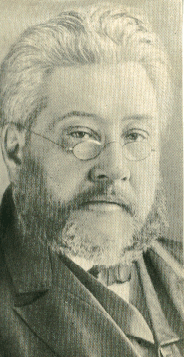 e world, it is to be fought against to the death.
Sin is our Lord’s most cruel enemy. All sorts of sins He bore in His own body on the tree. From our sins, all of which were laid upon Him, came the lashings of His back, when the whip plowed deep furrows. From our sins came the bloody sweat that covered Him from head to foot. From our sins came the crown of thorns, the nails, the spear, the vinegar and gall and the dread death of agony.
Sin! Oh, how our Lord loathes it! “He who knew no sin was made sin for us…” It was sin that caused Him such an agony. Sin to Jesus was horror, torment, death. Jesus abhors sin with all the force of His holy nature.
Saved by Jesus, will you not hate sin as He did? Would any person here lay up in his drawer as a treasure, the knife with which his father was murdered?
Our sins were the daggers that slew the Savior! Can we bear to think of them? Oh, that our tears might flow at the very thought of our horrible conduct towards our Lord, whom we slew by our sins; and may we never, never, never indulge any of all our iniquities; for no one of them is innocent of the murder of our best Beloved. They conspired to take away His life. Let us execute them at once!
“Oh, how I hate those lusts of mine That crucified my God; Those sins that pierced and nailed His flesh Fast to the fatal wood! Yes, my Redeemer, they shall die; My heart has so decreed; Nor will I spare the guilty things That made my Savior bleed. While with a melting, broken heart, My murdered Lord I view, I’ll raise revenge against my sins, And slay the murderers, too.”
We cannot have Christ, and have one sin ‘reigning’ in our hearts. Sin may ‘lurk’ in our nature, as it does, ready to plot against the King of kings. But it cannot ‘reign’ in our nature, for it has come under another sovereignty; Christ is on the throne.
Our Lord Jesus will not share His dominion even with an angel; much less with a sin. If you have iniquity ‘enthroned’ in your heart you must be lost.
You may have Christ and leave your sin. But you can not have Christ and hug your sin.
Christ shall help you to slay your sin. But if you say, “No, but I will indulge this evil; is it not a little one?” you will perish in your iniquity.
If there is one darling sin that you would spare, Christ and your soul will never agree. There can be no peace between you and Christ while there is peace between you and sin.
“The dearest idol I have known, Whatever that idol be, Help me to tear it from its throne, And worship only Thee.”
Sins of all sorts must go when divine grace takes possession of the soul.
Bring out the ‘golden’ calf! This costly idol must be ground to powder and strewn upon the water. The ‘golden’ calf is as detestable before the Lord as the most beggarly gods of ‘wood’. One form of enmity to God is as obnoxious to His Law as another.
Sin in satin is as great a rebel as sin in rags. You may wash sin in perfume but it smells none the sweeter.
You cannot be free from sin if you are the ‘slave’ of even one sin. As long as a man is held a captive by a single vice; no matter how small it is; he is still in bondage to iniquity and under the dominion of evil.
Down with them all! They must all be conquered, every one. Not one single sin must be allowed to occupy the love of our heart and the throne of our nature.
Certain sins are very hard to deal with. They fight back and seem to have as many lives as a cat. There is no killing them. When you think that you have slain them, they are up and at you again.
These sins are sometimes those which have gained their power through long habit. “Can the Ethiopian change his skin, or the leopard his spots?” No, he never shall, but the grace of God can. The grace of God has taken all the spots out of many leopards and all the black out of crowds of Ethiopians.
But occasionally old, ‘deep seated habits’ come up again from their graves by a hideous resurrection. Terrible is the power of habit which has long held sway. It is not easy to uproot the oak of many a year’s growth. These habits make chariots of iron into which your sins mount and they become terrible enemies to our holy desires and fervent resolves.
You must not say of any sin, “I cannot help it.” You have to help it. You must not say, “Oh but it is natural to me.” I know that it is natural; that is the very reason why you have to be doubly on your guard against it.
Everything that is of nature; yes, and of your fallen nature when it is at its best; has to be put under the feet of Christ that Divine Grace may reign over every form of evil.
Certain sins are supposed to be irresistible. It is a sad calamity when a Christian says, “I can keep straight in everything except that. Do not touch me there. You must allow me a great deal of latitude in that direction. Please make large allowances for my peculiar constitution.” All such pleading is mischievous.
I beseech you, do not make any allowance for yourself. I implore you, do not take out a license to sin. For you to make an allowance for yourself will be most injurious to your soul.
You have to overcome and destroy the sin for which you claim toleration. Mark that! You must not; you dare not; allow ANY sin to ‘master’ you! And if it does overpower you, do not therefore claim that you may indulge it, but draw an inference of the opposite sort. Because it has mastered you, concentrate your entire strength upon its utter destruction.
Sin must come down; let not your eyes spare it. The Canaanite must be driven out; the finest and fairest of the race must fall by the sword.
Charles Spurgeon, 1834-1892
Are we using Philippians 4:13 in the right way?
“He predestined us to be adopted as His sons through Jesus Christ, in accordance with His pleasure and will” Ephesians 1:5
“Beloved, now we are children of God!” 1 John 3:2
No man has any ‘right’ to be a child of God–it is an act of pure unmistakable grace!
If we are born into God’s family, it is a miracle of mercy. It is one of the ever-blessed exhibitions of the infinite love of God, that has set itself upon us.
If you are this day an heir of Heaven, remember, man, you were once the slave of Hell. Once you wallowed in the mire of sin!
If you would adopt a swine to be your child you would not then have performed an act of greater compassion, than when God adopted you.
And if an angel could exalt a gnat to equal dignity with himself, yet this would not be as great a privilege as that which God has conferred on you.
He has taken you from the dunghill, and He has set you among princes!
Remember that this is pure grace! Look back to the hole of the pit from where you were dug, and the miry clay from where you were drawn.
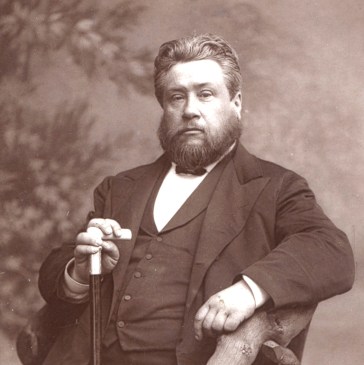
Charles Spurgeon, 1834-1892
Nor must we overlook the grand source of encouragement to a returning soul, – that which springs from the cross of Christ. But for a crucified Savior, there could be no possible return to God; in no other way could he consistently with the holiness and rectitude of the Divine government, with what he owes to himself as a just and holy God, receive a poor wandering, returning sinner. Mere repentance and humiliation for, and confession of, sin, could entitle the soul to no act of pardon. The obedience and death of the Lord Jesus laid the foundation, and opened the way for the exercise of this great and sovereign act of grace. The cross of Jesus displays the most awful exhibition of God’s hatred of sin, and at the same time the most august manifestation of his readiness to pardon it. Pardon, full and free, is written out in every drop of blood that is seen, is proclaimed in every groan that is heard, and shines in the very prodigy of mercy that closes the solemn scene upon the cross. O blessed door of return, open and never shut, to the wanderer from God! how glorious, how free, how accessible! Here the sinful, the vile, the guilty, the unworthy, the poor, the penniless, may come. Here, too, the weary spirit may bring its burden, the broken spirit its sorrow, the guilty spirit its sin, the backsliding spirit its wandering. All are welcome here. The death of Jesus was the opening and the emptying of the full heart of God; it was the outgushing of that ocean of infinite mercy… it was God showing how he could love a poor, guilty sinner. What more could he have done than this?
Octavius Winslow 1841
 Reformation Pratum
