Having a Biblical Worldview

In our third and fourth session of Reformation Pratum: Discernment, Larry Nickel of Emmanuel Bible Church addressed the topic of discerning the competing worldviews that we are presented with today.  Our worldview is the lens through which we interpret the world around us, and making sure the Bible is that lens is of the utmost importance.  Larry explored the implications that occur when people abandon the book of Genesis and the Bible at large, and replace it with another worldview.

Posted in Discernment, Discernment Conference, Video | Tagged , , | Leave a comment

What is Discernment?

In our first session of Reformation Pratum: Discernment, Pastor Eric Spuur of Mt. Angel Bible Church tackled the Biblical definition of discernment.  Our culture, and even many Christians, say that discernment is judgmental and mean.  Eric addressed this by focusing on God’s call for all believers to be discerning and the dangers of not developing discernment.  He also addressed the most important aspect of discernment: the Word of God.  Eric reminded us of the fundamental importance of Sola Scriptura.

Posted in Discernment Conference, Video | Tagged , , | Leave a comment

Doing Right Doctrine Rightly

This is the second presentation of Reformation Pratum: Discernment, held at Emmanuel Bible Church on November 14-15, 2014.  Pastor Andrew Murch of LifePoint Church (Vancouver, WA) addressed how we should engage in discernment Christianly.  How do we hold fast to correct doctrine in a loving way?  Using I Timothy, Titus, and the historical example of Marcion, Andrew will navigate the tricky territory of maintaining a Christ-like attitude when we engage in doctrinal issues.

Posted in Andrew Murch, Discernment, Discernment Conference, Uncategorized, Video | Tagged , , , | 1 Comment

Discerning What is Best

This is the final presentation of Reformation Pratum: Discernment, held at Emmanuel Bible Church on November 14-15, 2014.  Stan Myers, pastor of EBC, concludes by addressing how we should discern what is best in our lives.

Posted in Discernment, Discernment Conference, Video | Tagged , , | Leave a comment

Who is Jesus?

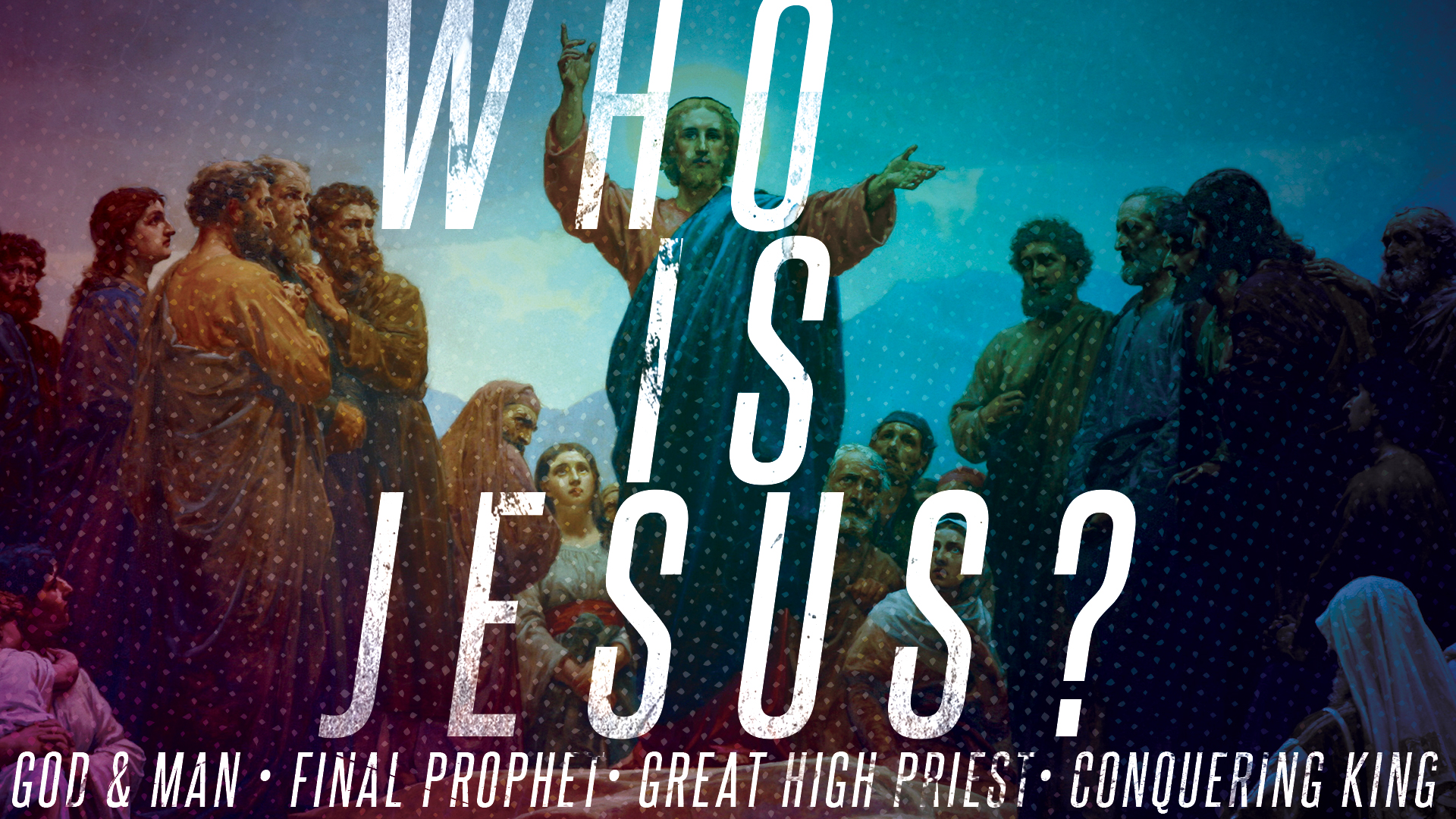
Reformation Pratum: Who is Jesus?  is our conference for next year, November 13-14, 2015.  Details to come.  Who-Is-Jesus


Posted in Jesus Christ | Tagged , , , , , | 1 Comment

Who Could Have Thought?

“But I am a worm and not a man, scorned by men and despised by the people!” Psalm 22:6

How wondrously did Jesus display His love, when He . . .
assumed our nature,
took upon Him the form of a slave, and
was found in appearance as a man!

What love–to stoop so low as to . . .
be conceived in a virgin’s womb,
be brought forth in pain, and
experience all the weakness and ignorance of infancy!

Yes, He was brought forth in poverty–a stable for His birth-place, and a feeding-trough for His bed! He passed by the palaces of the noble, and the mansions of the great–yes, even the comfortable cottages of the poor–and was born in circumstances of misery and degradation!

Who could have thought, if they had entered that stable and seen that infant nursing on His mother’s bosom–that that infant was the mighty God, the everlasting Father, and the Prince of peace! That all the fullness of the Godhead dwelt in that little babe! That it was love–incomparable and inconceivable love, which brought Deity and humanity together in such a wonderful and indescribable union! This is the mystery of Godliness–the mystery of love! He left . . .
the bright abodes of blessedness and glory,
the songs of Cherubim and Seraphim,
the bosom of His Father, and
the infinite delights which He had eternally enjoyed–
to be a worm and not a man; to be scorned and despised by all!

What privations He suffered, even from the very beginning of His career on earth! What pain He endured–from His birth unto His death! He went sorrowing, sighing, and groaning–from the stable, to gloomy Calvary; where He . . .
finished His work,
proved His love,
conquered His foes,
delighted His Father, and
merited everlasting honors and glories for His people!

Jesus was once a helpless infant, a feeble child; and yet, at the same moment–He was the Almighty, the self-sufficient God!

O mystery of mercy!

Here is love beyond measure and degree!

O my soul, admire and adore!

James Smith  “The Love of Christ!”                                                                                             1802-1862

Posted in Uncategorized | Leave a comment

Do You Hear What I Hear?

Posted in Funny, Tim Hawkins | Tagged , , | Leave a comment

A Holy Violence

Is it wise to teach believers that they ought not to think so much of fighting and struggling against sin, but ought rather to “yield themselves to God,” and be passive in the hands of Christ? Is this according to the proportion of God’s Word? I doubt it.

It is a simple fact that the expression “yield yourselves” is only to be found in one place in the New Testament, as a duty urged upon believers. That place is in the sixth chapter of Romans, and there within six verses the expression occurs five times. (See Romans 6:13-19.) But even there, the word will not bear the sense of “placing ourselves passively in the hands of another.” Any Greek student can tell us that the sense is rather that of actively “presenting” ourselves for use, employment, and service. (See Romans 12:1.) The expression therefore stands alone.

J.C. Ryle 3But, on the other hand, it would not be difficult to point out at least twenty-five or thirty distinct passages in the Epistles, where believers are plainly taught to use active personal exertion, and are addressed as responsible for doing personally, what Christ would have them do, and are not told to “yield themselves” up as passive agents and sit still — but to arise and work! A holy violence, a conflict, a warfare, a fight, a soldier’s life, a wrestling — are spoken of as characteristic of the true Christian. The account of “the armor of God” in the sixth chapter of Ephesians, one might think, settles the question.

Again it would be easy to show that the doctrine of sanctification without personal exertion, by simply “yielding ourselves to God,” is precisely the doctrine of the antinomian fanatics in the seventeenth century (to whom I have referred already, described in Rutherford’s Spiritual Antichrist), and that the tendency of it is evil in the extreme!

Again, it would be easy to show that the doctrine is utterly subversive of the whole teaching of such tried and approved books as Pilgrim’s Progress, and that if we receive it — we cannot do better then put Bunyan’s old book in the fire! If Christian in Pilgrim’s Progress simply yielded himself to God, and never fought, or struggled, or wrestled — I have read the famous allegory in vain.

But the plain truth is, that men will persist in confounding two things that differ — that is, justification and sanctification. In justification, the word to address to man is believe — only believe. In sanctification, the word must be “watch, pray, and fight!” What God has divided — let us not mingle and confuse.

J.C. Ryle  “Holiness”                                                                                                                         1816—1900

Posted in Christian Living, J.C. Ryle | Tagged , , | Leave a comment

Adoring Worship

God, Himself, must ever be the object of our worship.

AW TozerThe old creed said that we worship one God, the Father Almighty, maker of heaven and earth and of all things visible and invisible.  If we could set forth all of God’s attributes and tell all that He is, we would fall on our knees in adoring worship.  It says in the Bible that God dwells in light that is unapproachable, whom no man can see or has seen, and whom no man can see and live.  It says that God is holy and eternal and omnipotent and omniscient and sovereign, and that He has a thousand sovereign attributes.  And all of these should humble us and bring us down!

No Worship is wholly pleasing to God until there’s nothing in us displeasing God.  Now, if this discourages anybody, I do not apologize.  Actually, some of us need to be discouraged in order that we may get straightened out.  Faith and love and obedience and loyalty and high conduct of life – all of these must be taken as burnt offerings and offered to God.  If there is anything in me that does not worship God, then there is nothing in me that worships God perfectly!

I do not say that God must have a perfection of worship or He will not accept any worship at all.  I would not go that far; if I did, I would rule myself out.  And we would all hang our harps on the willows and refuse to sing the songs of the Lord in a strange land.  But, I do say that the ideal God sets before us is that we should worship as near to perfectly as we can, and that if there are areas in my being that are not harmonious and that do not worship God, then there’s no area in my being that worships God perfectly.

When all creatures, all intelligent, moral creatures are attuned in worship, then we have this symphony of creation.  For where there is not worship there is discord from the broken strings.  When all of the fully-redeemed universe is back once more worshipping God in full voice, happily and willingly and out of the heart, men will see the new creation and the new heaven and the new earth!

Worship seeks union with its beloved, and an active effort to close the gap between the heart and the God it adores is worship at its best.

A.W. Tozer  “Tozer Speaks” 1897-1963

Posted in A.W. Tozer, Worship | Tagged , , | Leave a comment

A Holy Antipathy Against Sin

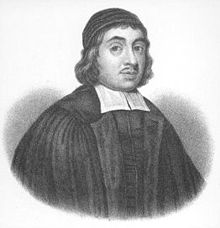
There is no better sign of true repentance, than a holy antipathy against sin. Sound repentance begins in love to God–and ends in the hatred of sin.Thomas Watson
How may true hatred of sin be known?

1. When a man’s HEART is set against sin. Not only does the tongue protest against sin–but the heart abhors it. However lovely sin is painted, we find it odious–just as we abhor the picture of one whom we mortally hate, even though it may be well drawn.

Suppose a dish is finely cooked and the sauce good–yet if a man has an antipathy against the meat, he will not eat it. So let the devil cook and dress sin with pleasure and profit–yet a true penitent has a secret abhorrence of it, is disgusted by it, and will not meddle with it.

2. True hatred of sin is UNIVERSAL. There is a dislike of sin not only in the judgment–but in the will and affections. Many a one is convinced that sin is a vile thing, and in his judgment has an aversion to it–yet he tastes sweetness in it, and has a secret delight in it. Here is a disliking of sin in the judgment–and an embracing of it in the affections!Whereas in true repentance, the hatred of sin is in all the faculties, not only in the mind–but chiefly in the will: “I do the very thing I hate!” (Romans 7:15). Paul was not free from sin–yet his will was against it.

3. He who truly hates one sin–hates all sins. He who hates a serpent–hates all serpents. “I hate every false way!” (Psalm 119:104). Hypocrites will hate some sins which mar their credit. But a true convert hates all sins–gainful sins, complexion sins, the very stirrings of corruption.

4. A holy heart detests sin for its intrinsic pollution. Sin leaves a stain upon the soul. A regenerate person abhors sin not only for the curse–but for the contagion. He hates this serpent not only for its sting–but for its poison. He hates sin not only for Hell–but asHell.

Those who have no antipathy against sin, are strangers to true repentance. Sin is in them–as poison in a serpent, which, being natural to it, affords delight. How far are they from repentance who, instead of hating sin–love sin! To the godly–sin is as a thorn in the eye; to the wicked–sin is as a crown on the head! “They actually rejoice in doing evil!” (Jeremiah 11:15).

Loving of sin is worse than committing it. What is it, which makes a swine love to tumble in the mire? Its love of filth. O how many there are–who love the forbidden fruit! They love their sin–and hate holiness.

There should be a deadly antipathy between the heart and sin. What is there in sin, which may make a penitent hate it?

Sin is the accursed thing, the most deformed monster! Look upon the origin of sin, from whence it comes. It fetches its pedigree from Hell: “He who commits sin is of the devil!” (1 John 3:8). Sin is the devil’s special work. How hateful is it to be doing that which is the special work of the devil–indeed, that which makes men into devils!

Thomas Watson  “Doctrine of Repentance”                                                                               1620—1686

Posted in Thomas Watson | Tagged , , | 1 Comment