“The Leading of the Spirit” – part 1

“For as many as are led by the Spirit of God, these are sons of God” (Romans 8:14 RV).

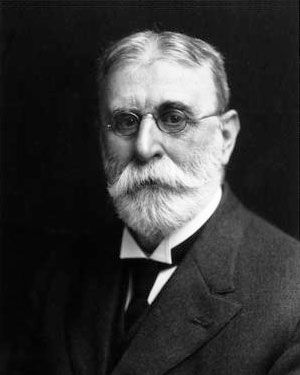
These words constitute the classical passage in the New Testament on the great subject of the leading of the Holy Spirit. They stand, indeed, almost without strict parallel in the NewBB Warfield Testament.

We read, no doubt, in that great discourse of our Lord’s which John has preserved for us, in which, as he was about to leave his disciples, he comforts their hearts with the promise of the Spirit, that “when he, the Spirit of truth, is come, he shall guide you into all the truth” (John 16:13). But this guidance into truth by the Holy Spirit is something very different from the leading of the Spirit spoken of in our present text, and it is appropriately expressed by a different term.

We read also in Luke’s account of our Lord’s temptation that he was “led by the Spirit in the wilderness during forty days, being tempted of the devil” (Luke 4:1-2), where our own term is used. But though undoubtedly this passage throws light upon the mode of the Spirit’s operation described in our text, it can scarcely be looked upon as a parallel passage to it.

The only other passage, indeed, which speaks distinctly of the leading of the Spirit in the sense of our text is Galatians 5:18, where, in a context very closely similar, Paul again employs the same phrase: “But if ye are led by the Spirit, ye are not under the law.” It is from these two passages primarily that we must obtain our conception of what the Scriptures mean by “the leading of the Holy Spirit.”

A High Privilege

There is certainly abundant reason why we should seek to learn what the Scriptures mean by “spiritual leading.” There are few subjects so intimately related to the Christian life, of which Christians appear to have formed, in general, conceptions so inadequate, where they are not even positively erroneous. The sober-minded seem often to look upon it as a mystery into which it would be well not to inquire too closely. And we can scarcely expect those who are not gifted with sobriety to guide us in such a matter into the pure truth of God.

The consequence is that the very phrase, “the leading of the Spirit,” has come to bear, to many, a flavor of fanaticism. Many of the best Christians would shrink with something like distaste from affirming themselves to be led by the Spirit of God, and would receive with suspicion such an averment on the part of others, as indicatory of an unbalanced religious mind. It is one of the saddest effects of extravagance in spiritual claims that, in reaction from them, the simplehearted people of God are often deterred from entering into their privileges.

It is surely enough, however, to recall us to a careful searching of Scripture in order to learn what it is to be led by the Spirit of God, simply to read the solemn words of our text: “As many as are led by the Spirit of God, these are sons of God.” If the case be so, surely it behooves all who would fain believe themselves to be God’s children to know what the leading of the Spirit is.

Let us, then, commit ourselves to the teaching of Paul, and seek to learn from him what is the meaning of this high privilege. And may the Spirit of truth here too be with us and guide us into the truth.

Who Is Led by the Spirit?

Approaching the text in this serious mood, the first thing that strikes us is that the leading of the Spirit of God of which it speaks is not something peculiar to eminent saints, but something common to all God’s children, the universal possession of the people of God.

“As many as are led by the Spirit of God,” says the apostle, “these are sons of God.” We have here, in effect, a definition of the sons of God. The primary purpose of the sentence is not, indeed, to give this definition. But the statement is so framed as to equate its two members, and even to throw a stress upon the coextensiveness of the two designations. “As many as are led by the Spirit of God, these and these only are sons of God.”

Thus, the leading of the Spirit is presented as the very characteristic of the children of God. This is what differentiates them from all others. All who are led by the Spirit of God are thereby constituted the sons of God, and none can claim the high title of sons of God who are not led by the Spirit of God. The leading of the Spirit thus appears as the constitutive fact of sonship.

And we dare not deny that we are led by God’s Spirit, lest we therewith repudiate our part in the hopes of a Christian life. In this aspect of it, our text is the exact parallel of the immediately preceding declaration, which it thus takes up and repeats: “But if any one hath not the Spirit of Christ, that one is not His” (Rom. 8:9).

It is obviously a mistake, therefore, to look upon the claim to be led by God’s Spirit as an evidence of spiritual pride. It is rather a mark of spiritual humility. This leading of the Spirit is not some peculiar gift reserved for special sanctity and granted as the reward of high merit alone. It is the common gift poured out on all God’s children to meet their common need, and is the evidence, therefore, of their common weakness and their common unworthiness.

It is not the reward of special spiritual attainment; it is the condition of all spiritual attainment. In its absence, we should remain hopelessly the children of the devil; by its presence alone are we constituted the children of God. It is only because of the Spirit of God shed abroad in our hearts that we are able to cry, “Abba, Father” (Rom. 8:15).

What Is the Goal of the Spirit’s Leading?

We observe, therefore, next that the end in view in the spiritual leading of which Paul speaks is not to enable us to escape the difficulties, dangers, trials, or sufferings of this life, but specifically to enable us to conquer sin.

Had the former been its object, it might indeed have been a special grace granted to a select few of God’s children, and its possession might have separated them from among their brethren as the peculiar favorites of the Deity. Since, however, the latter is its object, it is the appropriate gift of all those who are sinners, and is the condition of their conquest over the least of their sins.

In the preceding context, Paul displays to us our inherent sin in all its festering rottenness. But he displays to us also the Spirit of God as dwelling in us and forming the principle of a new life. It is by the presence of the Spirit within us alone that the bondage in which we are by nature held to sin is broken, that we are emancipated from sin and are no longer debtors to live according to the flesh. This new principle of life reveals itself in our consciousness as a power claiming regulative influence over our actions–leading us, in a word, into holiness.

If we consider our life of new obedience from the point of view of our own activities, we may speak of ourselves as “fighting the good fight of faith” (see 1 Tim. 6:12); a deeper view reveals it as the work of God in us by his Spirit. When we consider this divine work within our souls with reference to the end of the whole process, we call it sanctification. When we consider it with reference to the process itself, as we struggle on day by day in the somewhat roundabout and always thorny pathway of life, we call it spiritual leading.

Thus, the leading of the Holy Spirit is revealed to us as simply a synonym for sanctification when looked at from the point of view of the pathway itself, through which we are led by the Spirit as we more and more advance toward that conformity to the image of his Son, which God has placed before us as our great goal.

It is obvious at once, then, how grossly it is misconceived when it is looked upon as a peculiar guidance granted by God to his eminent servants in order to insure their worldly safety, worldly comfort, and even worldly profit. The leading of the Holy Spirit is always for good, but it is not for all goods, but specifically for spiritual and eternal good.

I do not say that the good man may not, by virtue of his very goodness, be saved from many of the sufferings of this life and from many of the failures of this life. How many of the evils and trials of life are rooted in specific sins we can never know. How often even failure in business may be traced directly to lack of business integrity rather than to pressure of circumstances or business incompetence is mercifully hidden from us.

Nor do I say that the gracious Lord has no care for the secular life of his people. But it surely is obvious that the leading of the Spirit spoken of in the text is not in order to guide men into secular goods. And it is not to be inferred to be absent when trials come–sufferings, losses, despair of this world. It is specifically in order to guide them into eternal good–to make them not prosperous, not free from care or suffering, but holy, free from sin.

It is not given us to save us from the consequences of our business carelessness or incompetence, to take the place of ordinary prudence in the conduct of our affairs. It is not given us to preserve us from the necessity of strenuous preparation for the tasks before us or from the trouble of rendering decision in the difficult crises of life. It is given specifically to save us from sinning, to lead us in the paths of holiness and truth.

When Does the Spirit Lead?

Accordingly, we observe next that the spiritual leading of which Paul speaks is not something sporadic, given only on occasion of some special need of supernatural direction, but something continuous, affecting all the operations of a Christian man’s activities throughout every moment of his life.

It has but one end in view, the saving from sin, the leading into holiness, but it affects every single activity of every kind–physical, intellectual, and spiritual–bending it toward that end. Were it directed toward other ends, we might indeed expect it to be more sporadic. Were it simply the omniscience of God placed at the disposal of his favorites, which they might avail themselves of in times of perplexity and doubt, it might well be occasional and temporary. But since it is nothing other than the power of God unto salvation, it must needs abide with the sinner, work constantly upon him, enter into all his acts, condition all his doings, and lead him thus steadily onward toward the one great goal.

It is easy to estimate, then, what a perversion it is of the “leading of the Spirit” when this great saving energy of God, working continually in the sinner, is forgotten, and the name is accorded to some fancied sporadic supernatural direction in the common offices of life. Let us not forget, indeed, the reality of providential guidance, or imagine that God’s greatness makes him careless of the least concerns of his children.

But let us much more not forget that the great evil under which we are suffering is sin, and that the great promise which has been given us is that we shall not be left to wander, self-directed, in the paths of sin into which our feet have strayed, but that the Spirit of holiness shall dwell within us, breaking our bondage and leading us into that other pathway of good works, which God has afore prepared that we should walk in them (Eph. 2:10).

B. B. Warfield                                                                                                                               1851-1921


Posted in B.B. Warfield, Christian Living | Tagged , , | Leave a comment

Don’t Waste Your Life


Posted in John Piper, Video | Tagged , , | Leave a comment

True Spiritual Worship

But the hour cometh, and now is, when the true worshippers shall worship the Father in spirit and in truth, for the Father seeketh such to worship him. God is a Spirit: and they that worship him must worship him in spirit and in truth.” — John 4:23, 24.

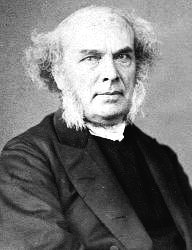
The woman’s conscience had been aroused by Christ’s declaration of her sin. He was touching upon matters of the most vital importance, and her depraved heart naturally shrunk from the lancet. From the truth which was becoming inconveniently personal she Spurgeonflew to that natural resort of the carnal mind, namely, to religious discourse upon points of outward observance. Instead of confessing her sin, and asking how it may be forgiven, she must needs say, “Our fathers worshipped in this mountain; and ye say, that in Jerusalem is the place where men ought to worship.” The carnal heart dreads the contact of spiritual truth, and finds a most convenient way of avoiding it by running to questions of holy places, holy times, and holy customs. Jesus, to her astonishment, informs her that the question which she had asked was of only temporary importance. There had been a time when it was well to know that salvation was of the Jews, and that the rival temple of the Samaritans was an imposture; but he says in effect to her, “Woman, believe me that question is of no importance now, for the hour cometh, yea and now is, when the external is to be abolished and the ritualistic is to be put away, and a purer, simpler, and more spiritual worship, is to take its place.”
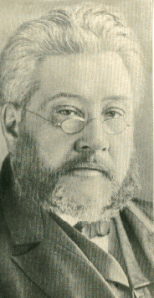
The worship which our Lord Jesus Christ established involved a change. That is implied in the expressions here used. He announced to her that the hour was just then come when all questions about this or that place must cease, and be superseded by spiritual worship. Our Lord gave a very brief, but I think a very instructive description of what this worship was to be. If you observe carefully the words, you will see that it was a distinguishing kind of worship, for he mentions true worshippers. There had been but little distinction before; so long as they all passed through the same outward form they all seemed to be worshippers; but a distinction was now to be made clear and manifest. Merely outward worshippers were now false worshippers, and only those who pressed into spiritual worship were to be regarded as true. The gospel of Christ is a great discerner and an accurate judge. Christ has the winnowing fan in his hand; he sits as a refiner; he is compared by the prophet to the “refiner’s fire” and to “fuller’s soap;” and hence you see he discerns at once between worshippers and worshippers. There they stand both alike with bended heads, perhaps both repeating the same words, but the Savior distinguishes: “there is,” saith he, “a false worshipper, and there is a true worshipper, and he alone who is spiritual is true.” He announces further that under the gospel, God is to be worshipped in the character of a Father; true worshippers shall worship the Father. This had not been the case before. The Lord had been adored as the Adonai, and reverenced as Jehovah; but to say “Our Father which art in heaven” remains the prerogative of the enlightened Christian who, having believed in Christ, has received power to become a son of God. True Christian worship addresses God, not merely as Creator and Preserver, or as the great Lord of the Universe, but as one who is very near of kin to us, our Father, beloved of our souls. Jesus likewise states that gospel worship is to be of a kind which does not result from the man himself merely, but comes from God, and is a work of grace. This is implied in the sentence, “The Father seeketh such to worship him,” as if no true worship would come from any man unless God sought it. True devotion under the Christian dispensation is not merely human but also divine. It is the work of the Spirit in the soul returning to its author; or as our hymn puts it —

Prayer is the breath of God in man,
Returning whence it came
.”

These are very grave points, and draw a broad line of distinction between the living worship of the chosen of God and the dead formal worship of the world which lieth in the wicked one.

Furthermore, the Savior goes on to say that they who worship God are to worship him “in spirit.” No longer with the visible sacrifice of a lamb, but inwardly trusting in him who is the Lamb of God’s passover; no more with sprinkled blood of goats, but heartily relying upon the blood once shed for many; no longer worshipping God with ephod, breastplate, and mitre, but with prostrate soul, with uplifted faith, and with the faculties not of the body but of the inward spirit. We who worship God under the Christian dispensation are no longer to fancy that bodily exercise in worship profiteth anything, that bended knees and contortions are of any value, but that acceptable worship is wholly mental, inward, and spiritual.

But he adds, lest there should seem an omission in the description, “must worship him in spirit and in truth;” for though we should profess to worship God only with the spirit and so despise forms, yet unless the soul shall truly love, and really adore, and sincerely bow, our worship will be as unacceptable as though it were formal and outward. See then, brethren, putting the whole three together, the worship under the Christian dispensation which God ordains, and which he accepts through Christ Jesus, is a worship distinguished by an inward vitality from the outward worship of the carnal mind. It is the worship of a child towards a father, feeling within himself a kinship with the divine; it is a worship wrought in us by God the Holy Ghost, because the Father has sought us out and taught us how to worship him. It is a worship which is not outward, but of the inner man, and occupies not hand, eye, and foot, but heart and soul and spirit: and it is a worship which is not professional and formal, but real, hearty, earnest, and so acceptable before God.

Let me give a sketch of this worship as it actually exhibits itself. A man may have been to a place of worship from his youth up, and he may have fallen into a habit of repeating a sacred form every morning and every evening, he may even have been a tolerably diligent reader of the Word of God, and yet though this may have been continued for sixty years and more, he may never once have worshipped God after the fashion prescribed in the text. But see him! the Father seeks him, truth comes home to his soul, and in the light of that truth he feels himself a sinner, and feeling himself so, he cries, “Father, I have sinned.” That is his first true worship. See, brethren, his spirit feels it, he means what he says. All that he said before was as nothing, but that first cry “I have sinned” has in it the vitality of worship. He hears the story of the cross, the full atonement made by God’s appointed sacrifice, and he prays, “Lord, I believe in Jesus, and I trust him;” here is another specimen of true worship; here is the spirit resting upon God’s appointed sacrifice, and reverencing God’s way of salvation by accepting it. Being saved by the precious blood of Jesus, he cries, “Father, I bless thee that I am saved, I thank thee that my sins are washed away.” This is true worship. Whether a man sings in the assembly, or sings alone; whether he prays aloud, or prays in silence, if he feels gratitude to God for pardon received, he offers the true worship. The whole of the Christian’s life, consisting as it must do of dealings with the invisible God through Jesus Christ by his heart, is a life of worship, and when at last he comes to die, you perceive that his worship will not cease with death, because it has always been spiritual, and did not depend upon the body. So that while the outward man faileth him, the inward spiritual man grows more strong in devotion than ever it was before; and when at last the spirit leaves its earthly tenement, and is disembodied, it has still a song for God, and throughout eternity its spiritual worship can continue; which worship must have been suspended if it had been connected with the body, and not with the immortal part of man.

If I understand the Savior’s words, and I hope I do, not only theoretically but practically, he means that those of us who are his true worshippers must worship him with our better and our nobler part, and our soul, with all the power she has, must pay reverence to the unseen God. Brethren, this is the kind of worship that men will not render to God; they will render him anything else but this; and until divinely effectual grace shall work such worship in man’s heart, it is obnoxious to him; he will worship God with robes, and incense, and flowers, and banners, but he will not consent to worship him in spirit and in truth.

History of Worship

I shall proceed to my work by giving a brief outline of the history of worship, in connection with the doctrine that we are now to worship more manifestly than ever God in spirit and in truth. It appears from Scripture that worship before the flood was of the very simplest form. The outward ordinances were very few; the chief of them being the offering of sacrifice. This was probably instituted by God himself when he clothed Adam and his wife with skins of beasts; it has been thought that he then indicated to them the slaughter of beasts for sacrifice. Certain it is that the first worship of fallen man was by sacrifice. There was connected with this no doubt the meeting of gracious hearts for prayer, and also the ministration of truth, for Enoch also, the seventh from Adam, prophesied concerning the coming of the Lord; so that they appear to have had what was tantamount to a ministry, and the sons of God had appointed times for meeting. But this simple form of worship seems to have been too high, too spiritual for fallen man at the first; at any rate the seed of the serpent could not endure it, for Cain at the very first commenced a schism; instead of bringing a sacrifice by blood he must needs bring a sacrifice of the fruits of the ground. Perhaps he was a man of taste, and desired to bring something that should look more decorous than a poor bleeding victim; he would lay those rich grapes, those ruddy fruits upon the altar; and those fair flowers that gemmed the bosom of earth, surely he might consecrate those. At any rate he was the first man who set up taste and self as the guide in religious worship, and God had no respect unto his sacrifice. The two stood by their altars; Abel by faith, exercising spiritual worship, offered a more acceptable sacrifice than Cain; Cain’s offering was possibly even more fair to look upon but it was of his own invention; Abel was accepted, but Cain discarded.

The ultimate result of man’s sinfulness in connection with this early type of worship was general neglect of all religion. The sons of God seem to have maintained their simplicity for a time, but at last by unholy alliances with the ungodly race there arose a widespread neglect of all thought of God, so that they were married and given in marriage, they ate and they drank till the day when the flood came and swept them all away. Depraved nature thus refused to render spiritual worship. After the flood we find worship restored in very much the same form: let us distinguish it as the patriarchal method of worship. The head of a family was accustomed to offer sacrifice, and no doubt if Job be taken as a type thereof family prayer and household religion were maintained, But you see very early the indication that man, although he could not forget God, for the deluge had struck to the very heart of manhood an awful dread of the Most High, began to interpose symbols and visible objects between God and himself. The use of teraphim became very common; so that in the house even of Abraham’s ancestors teraphs were found; and when we come down to the time of Jacob, we find one of his wives stealing her father’s images, thus proving that Laban, one of a once God-fearing family, had become a worshipper of God through the medium of images. Thus was it among those who still had some knowledge of God; but the nations being dispersed, soon lost the pure idea of the invisible One, and worshipped gods of their own devising. From the plagues of Egypt, which were no doubt intended to be a blow against all Egypt’s gods, we find out that, in addition to the worship of the calf or bull, the Egyptians paid religious reverence to flies, the river Nile, the elements, beetles, and all kinds of creatures; and throughout the world, as a general rule, through the introduction of visible symbols of the unseen Being, the Lord himself had become forgotten, and spiritual worship had almost ceased, except in one elect household; and even there, alas! how fallen had spirituality become!

Keeping to the line of grace, we shall now introduce you to the ceremonial form of worship which God instituted after the more spiritual method had entirely broken down. He saw that the children of Israel whom he loved were but a mob of slaves; their spirits had been broken by bitter bondage, they seemed as a whole incapable of rising at once to mental dignity, and needed to pass through a generation or two before they could as a nation achieve manly self-government. So when he brought his people out of Egypt the Lord did not try them with an altogether spiritual form of worship; because of the hardness of their hearts among other reasons, though he was still to be worshipped as a spirit, yet he gave them certain outward signs by which they might be enabled to understand his character.

A great deal has been made of the symbolical worship of the Jew, as if it were an excuse for the manmade symbolism of the Roman and Anglican Antichrist. We would remark that nothing ought to be made of it at all now, since it has been positively declared many times in Scripture that the age of the shadow has gone, and that the age of the substance now reigns. Whatever may or may not have been the excellence of the old Jewish economy — and being divinely ordained, God forbid we should say a word against it — yet the apostle Paul always talks of it as being but a yoke of bondage to which we are no more to submit ourselves, being but the shadow and not the very image of the good things which were to come; and he speaks of it as a thing so passed away, that to go back to it is to go back to the rudiments, and not to go onward in the full-grown manliness of Christianity. If there were no other passage my text might show that the ceremonialism of the Jew is no excuse whatever for ceremonialism now, but that we ought to stand in direct contrast to that, hearing the Savior declare, that whatever may have been before his time, the hour had come when the true worshipper must worship the Father in spirit and in truth.

Remember that symbolical worship was suitable merely to the infancy of God’s church, and that now having received the Spirit of God to dwell in us it would be as unsuitable as would the swaddling bands of babyhood to full-grown men. Besides, even while it existed it was spoken of as soon to be superseded by a new and better covenant. It was frequently broken through by divine authority. Elijah though not at all of the house of Levi offered sacrifice, and prophet after prophet as he arose manifested and declared by his actions that God did not intend to give the Levitical form of worship undivided sway, but that when he poured his Spirit upon special men they were to break through all ritual regulations in order to show that they were not meant to be fixed and permanent.

It is not sufficiently remembered that the most of God’s people in the Jewish nation had very little to do with this symbolical worship. When they were all in the wilderness, and gathered round the one tent called the tabernacle, they might all see the fiery cloudy pillar; but when they came into the land which God had given them, what had they most of them to see? Why the temple itself the most of them would only see once or twice in a year. Scarcely anyone ever saw the ark, the cherubim, or the golden candlestick; they were always within the veil, and only once in the year did the high priest enter that sacred place. Even the place where the sacrifices were carried on continually, no one entered but the priests; so that to at least eleven tribes out of twelve the ceremonials were mainly invisible. Little was done outside the court of the priests, but the most of the sacrifices, and of the typology of Judaism, was as much a hidden thing as the spiritual things of God are to us at the present day; and thus there was a great exercise of the spiritual faculties, and comparatively little of outward display. Moreover, it is to be remembered that there was nothing whatever visible for the Jew to worship. It is not so in the symbology of that false Church which is trying to raise up and revive the beggarly elements; there men bow before a cross; a pure ill bread inside a box is reverenced and treated with worship; cast-off clouts and rotten rags, called relics, are the objects of adoration; but there was nothing like this with the Jews, they did worship toward the temple, but t hey did not adore the temple, or mercy-seat, the altar, or any other emblem. Is it not said expressly, “Ye saw no similitude”? When God descended upon Sinai, and all the people worshipped there, they saw nothing which they dared to worship; God was to them still invisible, and they had to exercise their mental faculties in the worship of the invisible God. When at one time it was thought that the miraculous powers of the brazen serpent entitled it to worship, Hezekiah called it Nehushtan, that is, a piece of brass, and broke it to pieces. So that with all its splendor of imagery, embroidered vest, and glittering breastplate, to a great extent there was a powerful element of spirituality even about Aaronic worship; I mean, of course, only to spiritual men. David himself utterly outstripped the outward, when he declared, “Sacrifice and offering thou dost not desire;” and when he said again, “Thou desirest not sacrifice, else would I give it thee.” The prophet declares that God is weary of their sacrifices, and in another place the Lord himself says that if we could come before him with rivers of oil, or ten thousand of the fat of fed beasts, he would not accept us with these. To obey is better than sacrifice, is told us even under the law. So that even there, though not so distinctly as now, the spirituality of worship was taught and declared.

But, dear friends, what became of this accommodation of worship to the childhood of the church? You know that very soon after Israel came out of Egypt they said, “Let us make gods that they may go before us.” They could not do without a visible God. Do not think that when they set up the calf they meant to worship the calf instead of Jehovah, that would be a slander upon them; they worshipped Jehovah through the calf — that was their plea, for they said, “Tomorrow is a feast unto Jehovah.” They thought to represent Jehovah by a bull, “they changed their glory into the similitude of an ox that eateth grass.” Though severely rebuked, it was the constant sin of Israel to desire to worship God under the favourite Egyptian emblem of the bull. At last they had so far gone into idolatry that they were driven far away; and in captivity they were so chastened, and moreover brought into such contact with the abominations of idolatry that they were heartily sick of it, and no Jew has been an idolater ever since. Still, spiritual worship they would not offer, and therefore fell into rigid ritualism, reverencing the mere letter of the law, and fighting over trifling refinements of regulation and observance; so that in Christ’s day they made broad their phylacteries and the borders of their garments, but they forgot the Great Spirit who is to be worshipped in spirit and in truth.

Since that day the Lord has been treated by carnal men in one of three ways; either God is adored by outward symbols as among Brahminists, Romanists, Puseyites, and other idolaters; or else he is worshipped through ritualism, as among too many who claim to be orthodox, who contend for pre-arranged, and unbending forms; written or unwritten as the case may be: or else men show an utter indifference to God altogether, and then rush into superstitious reverence for something or other which is evil, and therefore to be dreaded and spoken of with awe. This is the history of religious worship, that let spiritual worship assume what form it may, man always will if he can, get away from it and forget his God and set up something seen, instead of bowing down before the unseen; hence the necessity of the second commandment in the Decalogue, “Thou shalt not make unto thee any graven image, or any likeness of anything that is in heaven above, or that is in the earth beneath, or that is in the water under the earth: thou shalt not bow down thyself to them, nor serve them: for I the Lord thy God am a jealous God”, and so on. This is not a command against worshipping another God, that is the first commandment, but a command against worshipping God under any shape, or through any medium or under any symbol; for he is a spirit, and must be worshipped in spirit and in truth and not by symbols. Against this command the human mind is always dashing itself, and in one shape or another idolatry is the ruling religion of mankind.

Christ comes to tell us that now his worship is to be wholly spiritual, even the altar which belongs to antediluvian times is gone, for we have an altar of another kind; even the sacrifice which belonged to the early period has departed like a shadow, because we have the sacrifice of Christ in which to trust. As for the institutions which suited the infancy of the church, they also have disappeared, for now Jesus would have the worship of men enlightened by the indwelling of the Holy Ghost; he would have us understand that a perfect revelation demands of us, that in the perfection of our spiritual powers we should adore the invisible God without the interference of visible signs. Now he would have us cast away all outward types and signs, except the two which he has himself ordained, and even these are types of the Savior’s manhood and not of his Godhead at all, to be only valued because of the spiritual communion which they enable our hearts to hold with Jesus; baptism being intended for spiritual men, that they may enter into the Savior’s death and burial, and the Lord’s supper that the same persons may remember his body broken and his blood shed for them; the water, the bread, the wine, being mere emblems, not to be treated with reverence, but put to their proper emblematic use.

Why Men Don’t Truly Worship God

I shall now, in the second place, try to account for the extreme rarity of spiritual worship. The reason is, my brethren, because man has fallen. If man were what he once was, pure and holy, I cannot conceive of his wanting holy places and crosses, copes, and dalmatics, crosiers, and chasubles. I cannot conceive of the temptation to bow down before a bull, or a Virgin Mary, or a wafer. There the noble creature walks in paradise, and if he reclines beneath a shady tree, he lifts up his eyes and says, “My Father, thou hast made this grateful shade, here I will adore thee;” or if he walks in the full heat of the sun, he says, “My God, it is thy light that shineth on me, — I adore thee.” Up yonder on the mountain’s brow, or down by the gleaming river, or the silvery lake, he needs build no altar, his altar is within himself; be needs make no temple, his temple is everywhere. The morning is holy, and the evening is holy; he hath no prescribed hour of prayer, it is devotion all day long; his morning bath is his baptism; each meal is his Eucharist. Depend upon it, the nearer we get back to the nakedness of worship, the nearer we get to its truth and purity; and it is because man has fallen, that as his body wants clothing, so he is always dressing up his religion.

Moreover, it is far more difficult to worship God in spirit than in form. To patter through a dozen Ave Marias or Paternosters is so easy, that I can nearly go to sleep over them: to repeat a form of prayer in the morning and evening is a very small matter, and one can be thinking of the shop all the while; to go to church or chapel so many times a week is a cheap duty, and withal one may still be a thief or a hypocrite; but it is hard, very hard, to bring the heart down to humble penitence, and the soul to holy meditation. The last thing that most people will do is to think. The noblest part of our nature is still the least exercised. Humbly to tremble before God, to confess sin before him, to believe him, to love him — this is spiritual worship! Because this is so hard, men say, “No, no, let me crawl on my knees around a shrine! Let me kneel down before a pyx, let me help to make a cope, or to manufacture some pretty piece of millinery for the priest to wear. Let me go every morning to the steeple house and come out in half an hour, and feel I have done my religion.” That is quite easy, but the hard part of religion is the part of spiritual worship.

And yet again, to worship God spiritually men would have to part with their sins. There is no effect produced upon a man’s conscience by his being sprinkled, or by his taking the sacraments, he can do all that and be as much a pleasure-lover, or a worshipper of Mammon, as he was before; but, to worship God spiritualty, a man must give up his sins, must overcome his pride and lust, and his evil concupiscence must be cast out of him. Many persons might honestly declare, “I do not mind worshipping God if it consists in doing penance, or going without meat on Fridays; but if I am to give up my sins, love God, seek Christ, trust to him, I cannot attend to that.” Furthermore, man, for the most part, somehow cannot get the idea of this spiritual worship into his brain, Oh the many times I have tried to preach spiritual worship here, and yet I am conscious that when I try at it I do not interest many of you, and some of you think, “if he would only give us more metaphors, more anecdotes, and so on;” I say I will do that, for I believe we should speak by parable, but sometimes I do not know how to clothe these spiritual things without making you look at the clothing rather than the spirit. It is not your worshipping God by words in hymns and prayers, or sit ting in a certain place, or covering your faces at certain times that is accept able to him; true worship lies in your heart paying reverence to him, your soul obeying him, and your inner nature coming into conformity to his own nature, by the work of his Spirit in your soul; and because men can scarcely get the idea of this till the Holy Spirit gives it to them, this is a reason why it is so rare, so exceedingly rare. There is one other reason, dear friends, why spiritual worship is unusual, and that is because man cannot traffic in spiritual religion. The priest is up at arms directly. “Oh,” saith he, “spiritual! spiritual! why they will do without me one of these days. Spiritual — why, if you tell these people that every place is holy, and that there are no holy places; and that one believer is as much a priest as another, and that prayer is as acceptable at home, as it is in a particular spot, why,” says he, “there is an end of me.” Yes, sir, there is an end of you, and the sooner the better for the world; for of all the curses that have ever fallen upon the human race, the priesthood is the worst. Its claims are imposture, and its actions are full of deceit. In the age of witches and ghosts priesthood might be tolerated, but he who now sets himself up as a priest is as much a common nuisance as a fortune-teller. Nothing has been such a nightmare upon the intellect of man; nothing has sat like old Sindbad the Sailor upon the back of humanity, like the pretensions of priesthood. God forbid that Christianity should even for a moment endorse the lie! Christ has put it all down. Christ says, “All ye are brethren,” and he says of the whole body of his elect, “Ye are a royal priesthood.” Concerning all the saints, Scripture declares, “Ye are God’s clergy,” for that is the Greek word in the passage — “Ye are God’s heritage.” We know no clergy and no laity; we know nothing whatever now of priesthood and of the common people, for ye are made priests and kings unto God to offer spiritual sacrifice, holy and acceptable to God by Jesus Christ.

Why Must Worship Be Spiritual?

Turning from that point, a third subject is this, why is such worship to be rendered? Why did not God ordain worship by windmills as in Thibet? Why has he not chosen to be worshipped by particular men in purple and fine linen, acting gracefully as in Roman and Anglican churches? Why not? He gives two reasons which ought to suffice.

The first is, he himself seeks spiritual worship. It is his own wish that the worship should be spiritual, And in the second place, he is himself a spirit, and is to be spiritually worshipped. Whatever kind of worship the great Ruler desires he ought to receive, and it is impertinence on my part if I say to him, “No, not that, but this.” It is true I may say, “I am very sincere in all this, very earnest in it. It suits my taste. There is a beauty about it; it excites certain emotions which I think to be devotional.” What is all that but saying, “Great God, thou hast chosen such-and-such a way of being worshipped, but I will not render it to thee?” Is not that in effect saying, “I will not worship thee at all;” for must not worship, to be worship, be such as the person worshipped himself will accept? To invent our own forms of worship is to insult God; and every mass that is ever offered upon the Romish altar is an insult to heaven, and a blasphemy to God who is a Spirit. Every time any form of worship by procession, celebration, or ceremonial of man’s invention is offered to God, it is offered in defiance of this word of Christ, and cannot and will not be received; however earnest people may be they have violated the imperative canon of God’s Word; and in fighting for rubrics they have gone against the eternal rubric that God as a Spirit must be worshipped in spirit and in truth.

The second reason given is, that God is a Spirit. If God were material, it might be right to worship him with material substances; if God were like to ourselves, it might be well for us to give a sacrifice congenial to humanity; but being as he is, pure spirit, he must be worshipped in spirit. I like the remark made by Trapp in his commentary on this passage, when he says that perhaps the Savior is even here bringing down God to our comprehension; “for,” saith he, “God is above all notion, all name.” Certainly, this we know, that anything which associates him with the grossness of materialism is infinitely removed from the truth. Said Augustine, “When I am not asked what God is, I think I know, but when I try to answer that question, I find I know nothing.” If the Eternal were such an one as thou art, O man, he might be pleased with thy painted windows. But what a child’s toy must coloured glass be to God! I can sit and gaze upon a cathedral with all its magnificence of architecture, and think what a wonderful exhibition of human skill; but what must that be to God, who piles the heavens, who digs the foundation of the deep, who leads Arcturus with his sons? Why, it must be to him the veriest trifle, a mere heap of stones. I delight to hear the swell of organs, the harmony of sweet voices, the Gregorian chant, but what is this artistic sound to him more than sounding brass or a tinkling cymbal? As a sight, I admire the choristers and priests, and the whole show of a grand ceremonial; but do you believe that God is imposed upon by those frocks and gowns of white, and blue, and scarlet, and fine linen? It seems to me as if such a notion brings down God to the level of a silly woman who is fond of finery. The infinite God, who spreads out the heavens and scatters stars with both his hands, whom heaven and earth cannot contain, to whom space is but a speck, and time is as nothing, do you think that he dwelleth in temples made with hands, that is to say, of man’s building? And is he to be worshipped with your organs, and your roodscreens, and your gaudy millinery? He laugheth at them, he treadeth on them as being less than nothing and vanity. Spiritual worship is what he regardeth, because he is a Spirit. My brethren, if you could get together a procession of worlds, if you could make the stars walk along the streets of some great new Jerusalem, dressed in their brightest array; if instead of the songs of a few boys or men you could catch the sonnets of eternal ages; if instead of a few men to officiate as priests you could enlist time, eternity, heaven and earth to be the priesthood, yet all this would be to him but as a company of grasshoppers, and he would take up the whole as a very little thing. But let me tell you that even God himself, great as he is, does not despise the tear that drops from a repentant eye, nor does he neglect the sigh that comes from a sinner’s soul. He thinks more of your repentance than of your incense, and more of your prayers than of your priesthoods. He views with pleasure your love and your faith, for these are spiritual things in which he can take delight; but your architecture, your music and your fine arts, though they lavish their treasures at his feet, are less than nothing and vanity. Ye know not what spirit ye are of. If ye think to worship my God with all these inventions of man, ye dream like fools. I feel glowing within me the old iconoclastic spirit. Would God we had men now like Knox or Luther, who with holy indignation would pull in pieces those wicked mockeries of the Most High, against which our soul feels a hallowed indignation as we think of his loftiness, and of that poor paltry stuff with which men degrade his name.

Practical Application

What then? What is the practical drift of this? Why two things.

The first is, my dear brothers and sisters, I mean you who have learned to worship God in spirit and in truth, who have got above the beggarly elements of the outward, and can worship him in spirit and in truth, what then? Why, in the first place, let us be particularly jealous of anything which looks at all like going back to ceremonialism. As a matter of taste I have a great liking for noble architecture. Many an hour have I lingered in the ruins of some splendid abbey or our own majestic buildings still used for sacred worship. I have a great delight in a well-painted window. I cannot say that I like most Dissenting painted windows, because they look to me as if they were a sort of would be if you could. I cannot say I have any kind of liking for most of our Dissenting Gothic, for it seems to me such a paltry thing to build a front just like St. Paul’s or Westminster Abbey, and then as if to cheat the Lord to make the back part shabby. I cannot say I care for that kind of thing. But a really splendid place of worship I admire, as a matter of taste. I like an organ very well, as a matter of musical taste. But, my brethren, I feel that these are times when we must stand out even against allowable things, lest going one step we should go another. I do pray you therefore if you have any influence anywhere always use it in favor of simplicity, and if you see at any time in the churches of which you are the members a tendency to creep on to something a little nearer, a little towards the way of Rome, cry “Halt!” Let us rather go back to the barns in which our fathers worshipped, or better still to the hill side, and to the green sward than go forward to anything like symbolism, which will tempt the soul away from spiritual worship. We ought ourselves to guard against falling into formalism by means of simplicity, for we may do it the one way as well as the other, by laying it down as a rule that a service must begin with prayer or begin with singing, that the preacher must preach at such a time in the service, that the service must commence, continue, and conclude in some fixed fashion; that seems to me to have a tendency to breed another form of ritualism inconsistent with worshipping God in spirit and in truth. I am afraid I have hardly grace enough to worship God by two or three hours together in silence as our Quaker friends do. I do enjoy a quarter of an hour’s silence every now and then; to sit quite still seems to me to be an admirable way of getting into contact with God. Our service is so much words, words, words, that I am almost afraid you get to think as much of words as other people do of banners, and (lags, and so on. Now, to sit still, to get right away from words, if so your heart keeps to God, is better even than preaching and singing. Juan De Yaldes, a Catholic, but a good Protestant for all that, remarks that the vulgar in seeking to remember Christ by the crucifix do not exercise their mind but stop at the crucifix, and therefore that which was intended to be a help becomes a hindrance; so the learned get their bibles which should help them to think upon divine things, but being content with having read the letter of Scripture they often fail to reach the spiritual truth which it containeth, and so after all do not worship God. Remember that while we should be jealous of anything which would make it easy to be formal of worship which might be adopted, yet we may still after all have missed the main thing, the worshipping of God in spirit and in truth.

Let us make it a matter of heart-searching as to whether we ourselves have been in the habit of worshipping the Father in spirit and in truth. Dear friends, I am jealous of some of you that you do not do this. If the preacher happens to be away you do not feel in so good a frame; somebody else takes my place, and there are certain feeble folk among you who feel as if the sabbath had lost its enjoyment. But God is here, and you might worship God as much surely without me as with me; and though the instruction received from one man may not seem so edifying as that which may come from another, and possibly may not be so, yet still if your object be the worship of God, which should be the main object of our gathering, surely you should do that as well under the ministry of Mr. A. as Mr. B. I am afraid too that many of you are content with singing through the hymn; now all that singing which is not thought-singing is of no use; you may have very sweet voices but God does not regard your voice, he hears your heart, and if your heart does not sing you have not sung at all. When we stand up to pray it may be that the preacher’s words may happen to be suitable to your case, but it is not prayer so far as you are concerned, though it may be as far as he is, unless you join in it. Recollect that if you do not put your hearts into the worship of God, you might for that matter as well be at home as here; you are better here than at home for other reasons, because you are in the way where good may come to you; but for worship’s sake you might as well have been in bed as here. You who have no spiritual worship may even clog the devotions of those who have; an invisible savor of death unto death may be stealing from you, helping to pollute or to render dead the worship of those who truly adore God. At any rate, my dear hearers, if you have not with your whole hearts loved and worshipped God, repent over it, and pray the Holy Ghost to make you spiritual. Go to Christ’s cross, and trust in him; then, and not till then, will you be capable of adoring the most High God in a style in which he can accept your worship. God grant that this may be impressed upon the hearts of all of us, that we may worship God in spirit and in truth.

Charles Spurgeon                                                                                                                           1834-1892                                                                                                                                     (This sermon was previously titled: The Axe at the Root-A Testimony Against Puseyite Idolatry)

Posted in Charles Spurgeon, Worship | Tagged , | 1 Comment

God Seeking Worshippers

For ages before God sought a temple, he had been seeking worshippers. He could do without the former, but not without the latter. His first sanctuary was but a tent; and three thousand years had elapsed before he said, Build me a house wherein I may dwell. Yet all this time he was seeking for worshippers amongst the sons of men. By man’s sin God had lost the worship of earth, and he had set himself to regain it.

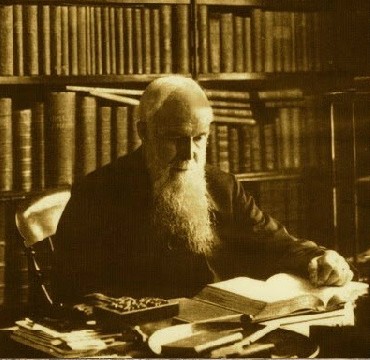
Horatius Bonar

1. He wants LOVE. Being the infinitely loveable God, he asks love from man — from every man; love according to his worth and beauty.

2. He claims OBEDIENCE. For his will is the fountainhead of all law; and he expects that this will of his should be in all things conformed to.

3. He expects SERVICE. The willing and living service of man’s whole being is what he claims and desires, — the service of body, soul, and spirit.

4. He asks for WORSHIP. He does not stand in need of human praise or prayer; yet he asks for these, he delights in these, he wants the inner praise of the silent heart. He wants the uttered praise of the fervent lip and tongue. He desires the solitary praise of the closet; and still more the loud harmony of the great congregation; for “the Lord loveth the gates of Zion more than all the dwellings of Jacob,” (Psa 87:2). True praise is a ‘speaking well of God’, (1 Peter 1:3), speaking of him in psalms and hymns and spiritual songs, according to his excellency. “Bless the Lord, O my soul” (Psa 103:1), “Blessed be the God and Father of our Lord Jesus Christ” (Eph 1:3).

It was of “worship” that the Lord spoke so much to the woman of Sychar. To Nicodemus he said nothing of this; nor indeed to any others. It was in regard to “worship” that the Samaritans had gone so far astray, therefore he speaks specially of this, — even to this poor profligate. He spoke to her of “the Father,” and of “the worship of the Father” (John 4:21); reminding her that God was a spirit and that “they who worship him must worship him in spirit and in truth.” And then he adds these memorable words, “the Father seeketh such to worship him.”

It was of the difference between outward and inward religion, between the real and the unreal, between the acceptable and the unacceptable, that he spoke to the woman. Samaria and Jerusalem, Gerizzim and Moriah, these were but external things. There was no religious virtue connected with them; God is not the God of the outward, but of the inward; not the God of places, but of living creatures; not the God of cities and mountains, but the God of hearts and souls. No rites, however numerous or gorgeous or beautiful, can be a substitute for the life and the spirit. The question is not intellectual, or aesthetic, or pictorial, but spiritual; not as to what gratifies our eye or ear, our sense of the great or the tasteful, but what is acceptable to God and according to his instructions.

Where am I to worship God? man asks; but he answers it in his own way; as all false religions, and indeed some true ones, have done. On certain sacred spots, he says, where some man of God has lived, where some martyr’s blood has been shed, where the footsteps of good men are recorded to have been, which have been consecrated by certain priestly rites, — there and there only must men worship God. God’s answer to the question, Where am Ito worship God? is, EVERYWHERE: on sea and land, vale or hill, desert or garden, city or village or moor, — anywhere and everywhere. For certain purposes God set apart Sinai for a season, and then Moriah; but not to the exclusion of other places. And even these consecrations are at an end. Sinai is but the old red granite hill, — no more, — where now no man worships. Moriah is but the old limestone platform, now desecrated by false worship. “Woman, believe me, the hour cometh, when ye shall neither in this mountain, nor yet at Jerusalem, worship the Father” (John 4:21).

When am I to worship God? man asks; but he answers it in his own way also. Only at certain times, he says, — certain hours, and certain days, fixed and arranged by priestly authority, or ecclesiastical law, or traditional rule. God’s answer is, “at all times and seasons”: pray without ceasing. The naming of certain hours and days is necessary for the gathering together of the worshippers; but worship is to be perpetual, without restriction of times. All hours are holy; all days are holy, in so far as worship is concerned; only one day having been specially appointed of God, and that not for restriction but for order.

How am I to worship God? man asks; and he has answered it also in his own way. In the gorgeous temple, in the pillared cathedral, with incense, and vestments, and forms, and ceremonies, and processions, and postures, he says. But these performances are the will-worship of self-righteousness, not the obedient service of men worshipping God in ways of his own ordination. Man cannot teach man how to worship God. When he tries it, he utterly fails. He distorts worship; he misrepresents God, and he indulges his own sensuous or self-righteous tastes. His “dim religious light” is but a reflection of his own gloomy spirit, and an ignorant misrepresentation of him “who is light, and in whom is no darkness at all.” God’s answer to man’s question is given in the Lord’s words, “they that worship him must worship him in spirit and in truth.” The vestments may or may not be comely; that matters not. The music may or may not be fine: the knees may or may not be bent; the hands may or may not be clasped; the place of worship may or may not be a cathedral, or a consecrated fabric. These are immaterial things; adjuncts of religion, not its essence. The true worship is that of the inner man; and all things else are of little moment. As it is with love, so it is with worship. The heart is everything. God can do without the bended knee, but not without the broken heart.

It is of the Father that Christ is here speaking; — of him whose name is not only God but Father, the God and Father of our Lord Jesus Christ. As the fountainhead of all being in heaven and in earth, the paternal Creator, the Father of spirits, the great Father-spirit, the God of the spirits of all flesh, whom the heaven of heavens cannot contain, yet who visiteth earth in his fatherly love, — as such he is here spoken of by our Lord. He is a spirit, yet he is no vague or cold abstraction, no mere assemblage of what we call attributes, but full of life and love; with the heart of a father, with the pity and power and care of a father, and also with all a father’s resources and rights. Though we have broken off from that father and gone into the far country, that does not change his paternal nature, though it alters our relationship to him and the treatment we are to receive at his hands. He made the fatherly heart of man, and he did so after the likeness of his own. That fatherly heart yearns over his wandered family; “His tender mercies are over all his works.”

It is as Father that he is seeking worshippers, and seeking them here on earth among the fallen sons of men.

He seeketh! That word means more than it seems. He is in search of something; of something which he has lost; of something which he counts precious; of something which he cannot afford to lose. Great as he is, there are many things which he cannot think of letting go. His very greatness makes him needy, for it makes him understand the value, not only of every soul which he has formed, but of every atom of dust which he has created. When he misses any part of his creation, he goes or sends in search of it; he will not part with it. Men of common souls, when they lose anything, are apt to say, Let it go, I can do without it. Men of great minds, when they lose anything, say, I must have it back again, I cannot afford to lose it. Much more is this true of the infinite Jehovah. It is his greatness that makes him so susceptible of loss. Others may overlook the lost thing. He cannot. He must go in quest of it.

It is the same kind of seeking and searching as the prophet Ezekiel, speaking in the name of Jehovah, declares, — ”I will search and seek,” (Eze 34:11); and to which our Lord so often refers, when he represents himself as “seeking the lost” (Luke 19:10); it may be the lost sheep, or the lost piece of silver, or the lost son.

We must not dilute these expressions, and say that they simply imply that God is willing to have us back again if we will come; that he is willing to take us as worshippers if we will come. All that comes very far short of the meaning. And though we may say, what can the infinite Jehovah be in want of; what can he need, to whom belongs not only the heaven of heavens but the whole universe; — still we must see how anxious he is to show us his unutterable earnestness in seeking and in searching.

Such is the attitude of God! He bends down from his eternal throne to seek; as if the want of something here on earth, on this old sinful earth, would be a grievous and irreparable loss. What value does he attach to us and to our worship!

Yes, the Father seeketh worshippers! He is in search of many things of which sin has robbed Him; affection, homage, allegiance, reverence, obedience; but worship, — the worship of man, and of man’s earth, he is specially seeking and claiming. He so created this world, that from it there should arise, without ceasing, wide as the universal air, that fragrance of holy worship, from the creatures which he had made and placed upon its surface. The command is not merely, “Thou shalt love the Lord thy God with all thy heart,” but “thou shalt worship the Lord thy God and him only shalt thou serve.” Over this broken command he mourns; “it grieves him at his heart”; and he seeks to have it restored in man. He loves worship from human hearts and lips, and he will not be satisfied without it. It might seem a small thing to lose the worship of a creature’s heart, here on this low and evil earth. Can he not let it go? It will only be the worse for the creature, not for him, who has the worship of heaven, and of ten thousand times ten thousand angels. No, he cannot lose that worship. It is precious to him. He must have it back.

O man, God speaks to you and says, “Worship me.” He comes up to each sinner upon earth and says, “Worship me.” If he does so, he must care for you and he must care for your worship. It is not a matter of indifference to him whether you worship him or not. It concerns him, and it concerns you. Perhaps the thought comes up within you, what does God care for my worship? I may praise, or I may not, what does he care? I may sing, or I may blaspheme, what does it matter to him? He cares much. It concerns him deeply. He is thoroughly in earnest when he asks you to worship him. He wants these lips of yours, that tongue of yours, that heart of yours. He wants them all for himself. Will you give him what he wants?

You say he has enough of praise in heaven, what can he want on earth? He has angels in myriads to praise him, does he really desire my voice? Will he be grieved if I refuse it? Yes, he desires your voice, and he will be grieved if you withhold it. He has many a nobler tongue than yours, but still he wants yours. He has many a sweeter voice than yours, still he is bent on having that poor sinful voice. Oh come and worship me, he says.

This answers the question so often put by the inquiring, What warrant have I for coming to God. God wants you. Is not that enough? What more would you have? He wants you to draw near. He has no pleasure in your distance. He wants you to praise him, to worship him. He is seeking your worship. Do you mean to ask, What warrant have I for worshipping God? Rather should you ask, What warrant have I for refusing to worship him? Is it possible that you can think yourself at liberty not to worship him; nay, think that you are not under any obligation to worship him, until you can ascertain your election, or feel within you some special change which you can consider God’s call to worship him?

His search for worshippers is a world-wide one. It goes over the whole earth; and his call on men to worship is equally universal. He made man to worship and to love; can he ever forego such claims, or can man ever be in a position in which that claim ceases, or that obligation is cancelled? Can his sinfulness or unworthiness exempt him from the duty, or make it unwarrantable in him to come and worship Jehovah?

Let us hear how he speaks to the sons of men, Jew and Gentile: —

“Make a joyful noise unto God, all ye lands!
Sing forth the honour of his name,
Make his praise glorious.”
 (Psa 66:1, 2)

Again he speaks, —

“O sing unto the Lord a new song;
Sing unto the Lord, all the earth!
Sing unto the Lord,
Bless his name!
Show forth his salvation from day to day.” 
(Psa 96:1, 2)

Again he speaks, —

“Praise ye the Lords
For it is good to sing praises unto our God;
For it is pleasant;
Yea, praise is comely.”
 (Psa 147:1)

Nay, he calls on all nature to praise him. He claims the homage of the inanimate creation.

“Let the heavens rejoice,
And let the earth be glad;
Let the sea roar, and the fulness thereof
Let the field be joyful, and all that is therein;
Then shall the trees of the wood rejoice
Before the Lord.” 
(Psa 96:11-13)

Thus is God seeking for worshippers here on earth. And what is his gospel but the proclamation of his gracious search for worshippers? He sends out his glad tidings of great joy, that he may draw men to himself and make them worshippers of his own glorious self.

The shepherd loses one of his flock; and he misses it. The shepherd misses the sheep more than the sheep misses the shepherd. The sheep is too precious to be lost. It must be sought for and found; whatever toil or peril may be in the way. Even life itself is not to be grudged in behalf of the lost one, “The good Shepherd giveth his life for the sheep,” as if the life of the sheep were more valuable than that of the Shepherd.

The woman loses one of her ten silver pieces, she cannot afford to lose it. She must have it back again. She seeks till she finds it. It does not miss her, but she misses it. She seeks and finds!

The father loses his son; and is troubled. The son may not miss the father, but the father misses the son; nor can he rest till he has taken him in his arms again, and set him down at his table with gladness and feasting.

But the passage we are considering brings before us something beyond all this. It is not the shepherd seeking his sheep, nor the woman her silver, nor the father his son; it is Jehovah seeking worshippers! and he is in earnest. He wants to be worshipped by the sons of Adam. He desires the worship of earth no less than that of heaven. He has the praise of angels, but he must have that of men. Such is the value he sets upon us, and such is his love?

But it is spiritual worship, and spiritual worshippers that he is seeking: “The Father seeketh such to worship him.” The outward man is nothing, it is the inner man he is in quest of. The worship must come, not from the walls of the temple, but from the innermost shrine. It must be something pervading the man’s whole being, and coming up from the depths of the soul; otherwise, it is but as sounding brass or a tinkling cymbal. Forms, sounds, gestures, dresses, ornaments, are not worship. They are but

“Mouth-honour breath,
Which the poor heart would fain deny, but dare not.”

Instead of constituting worship, these outward things are often but excuses for refusing the inward service. Man pleases himself with a sensuous and theatrical externalism, because he hates the spiritual and the true. God says, “Give me thine heart.” Man says, “No; but I will give you my voice.” God says, “Give me thy soul.” Man says, “No; but I will give thee my knee and my bended body.” But it will not do. “God is a spirit, and they that worship him must worship him in spirit and in truth.”

But what provision has God made for all this? It is not enough to say to us, “Be worshippers,” — this might be said to the unsinning, and they would at once comply. “Let all the angels of God worship him.” But say this to a sinner, and he will ask, “How can I, a man of unclean lips and unclean heart, approach the infinitely holy One? It would not be safe in me to come, nor would it be right in God to allow me to approach.” There must be provision for this; — something which will satisfy the sinner’s conscience, remove the sinner’s dread, win the sinner’s confidence, on the one hand, and satisfy God, vindicate righteousness, magnify holiness, on the other.

For this there is the twofold provision of the blood and the Spirit. The blood satisfies God’s righteousness and the sinner’s conscience. The Holy Spirit renews the man, so as to draw out his heart in worship. It is the blood that propitiates, and it is the Spirit that transforms. God presents this blood freely to the sinner; God proclaims his desire to give this Spirit freely.

“May I use this blood?” perhaps one says. Use it! Certainly. Thou fool, why shouldst thou ask such a question? Use it! Yes; for thou must either use it, or trample on it. Which of these wilt thou do?

“May I expect the Spirit?” some one may say. Expect him! What! art thou more willing to have the Spirit than God is to give him? Art thou so willing, and God so unwilling? Thou fool, who has persuaded thee to believe such a lie?

God has come to thee, O man! saying, “I want thee for a worshipper”: wilt thou become one? Remember, thou must either be a worshipper or a blasphemer; which wilt thou be?

Horatius Bonar  “The Rent Veil”
1808-1889

Posted in Horatius Bonar, Worship | Tagged , | Leave a comment

How to Shut Down Gossip and its Nasty Kin

                                                 For lack of wood the fire goes out,                                                                                   and where there is no whisperer, quarreling ceases.

                                         As charcoal to hot embers and wood to fire,                                          so is a quarrelsome man for kindling strife.

                                 The words of a whisperer are like delicious morsels;                                 they go down into the inner parts of the body.

                                            Like the glaze covering an earthen vessel                                             are fervent lips with an evil heart.

(Proverbs 26:20-23)

Gossip kills churches. If you’re reading this blog at all, odds are I don’t want your church to be killed! So here’s what you do.

First, understand what gossip is. Gossip is spreading harmful information in an ungodly manner — without love, and thus to no positive end. Its bastard stepchildren are the triplets: Strife, Dissension, Division. Once again, my focus is the life of the local church.

Second, do any or all of the following steps, as needed. Some of them help identify whether you’re actually hearing gossip or not. All of them will stop it dead. But none will work… unless used.

1. Ask, “Why are you telling me this?” Often, that in itself is such a focusing question that it can bring an end to the whole unpleasant chapter. It has the added benefit that it can help a person whose intentions are as good as his/her judgment is bad.

2. Ask, “What’s the difference between what you’re telling me and gossip?” See above; same effect, same potential benefits.

3. Ask, “How is your telling me that thought, thatcomplaint, that information going to help you and me love God and our brothers better, and knit us closer together as a church in Christ’s love?” Isn’t that the goal we should share, every one of us? Won’t it take the working of each individual member (Eph. 4:16)? Isn’t the watch-out for harmful influences an every-member ministry (Heb. 3:12-1310:2413:12-15)?

4. Ask, “Now that you’ve told me about that, what are you going to do about it?” While the previous two are subjective, this is not. If neither of the previous two questions succeeded in identifying gossip/whispering/sowing-dissension for what they are, the answer to this question will do so. Tip: if the answer is “Pray,” a good response might be “Then why didn’t you do that and leave it there in the first place?”

5. Say, “Now that you’ve told me about that, you’ve morally obligated me to make sure you talk to ____ about it. How long do you think you need, so I can know when this becomes a sin that I will need to confront in you?” The least that this will accomplish is that you’ll fall of the list of gossips’/whisperers’ favorite venting-spots. The most is that you may head off a church split, division, harmed souls, sidelined Gospel ministry, and waylaid discipleship. Isn’t that worth it?

Dan Phillips at Pyromaniacs

Posted in Christian Living, Dan Phillips | Tagged , , | 1 Comment

Manifestations of Humility

A humble person lives differently than a proud one. How does your life measure up in the area of humility? Here is a sample list to help you evaluate how humble you are.

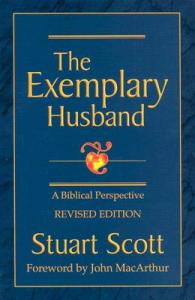
1. Recognizing and trusting God’s character. The-Exemplary-Husband-9781885904317
A humble person acknowledges who God is and rehearses God’s character often. Because he does this, he trusts God much more than the proud person. In trials he would even thank God for the reminder of how much he needs Him and for all the good He is doing through the trial (Psalm 119:66).

2. Seeing yourself as having no right to question or judge an Almighty and Perfect God.
A humble man thinks of God as his Creator and himself as God’s creation. He does not see himself as even remotely qualified to pass judgement on God or what God does. He knows that his perfect and all-wise God can do whatever He pleases, and it will be the best for him (Psalm 145:17; Romans 9:19-23).

3. Focusing on Christ.
The humble see Christ as their life and their first love. There is no other thing or person that they must have. Through the day they talk to and worship Him often (Philippians 1:21; Hebrews 12:1-2).

4. Biblical praying and a great deal of it. 
Humble people want to worship God and they see themselves as totally dependent on God for His enablement. John Owen once said, “We have no power from Christ unless we live in a persuasion that we have none of our own.” Because they see themselves as needy, they pray often (1 Thessalonians 5:17; 1 Timothy 2:1-2).

5. Being overwhelmed with God’s undeserved grace and goodness.
The humble person sees himself as truly deserving of hell. He is immensely grateful to God for forgiving him of so much (Psalm 116:12-19).

6. Being thankful and grateful in general towards others. 
Humble people thank God and others often. They expect nothing, so anything that is received is greatly appreciated. (1 Thessalonians 5:18).

7. Being gentle and patient. 
Humble people want to act like God, and they are not focused on what they want. They also want to love others the way God loves them. They are willing to wait and are not easily irritated (Colossians 3:12-14).

8. Seeing yourself as no better than others. 
A humble person understands the sinfulness of his own heart. He would never see himself as better than others. This is true no matter who the other person is. He understands that he, in and of himself, is capable of the worst sin. He agrees with John Bradford who said, “there but for the Grace of God go I” (Romans 12:16, Ephesians 3:8).

9. Having an accurate view of your gifts and abilities. 
Humble people do not bemoan the fact that they are not as gifted as others. Neither do they exaggerate their own abilities (Romans 12:3).

10. Being a good listener. 
Humble people consider what others have to say as more important than what they have to say. They take an interest in others by asking questions and listening. Self is not their primary focus (James 1:19; Philippians 12:3).

11. Talking about others only if it is good or for their good. 
A humble person will speak well of others, not negatively. He will convey something negative about someone only if he must do so in order to help that person (Proverbs 11:13).

12. Being gladly submissive and obedient to those in authority. 
Humble people are first of all obedient to God, and then the authorities over them (Romans 12:1-2; 13:1-2).

13. Preferring others over yourself. 
Humble people are willing to put others before self without first considering their own rights (Romans 12:10).

14. Being thankful for criticism or reproof. 
Humble people view reproof as good for them and consider that God may be trying to teach them something (Proverbs 9:8;27:5-6).

15. Having a teachable spirit. 
Humble people realize they don’t know everything, and even when they think they are right are willing to consider that they might be wrong (1 Corinthians 4:7). They also know that God can use anyone to teach them, since He was even able to use a donkey to teach Balaam in Numbers 22:22-35. They have many people they admire and respect.

16. Seeking always to build up others. 
Humble people encourage others. They only use words that build up and say what is necessary for the edification of others. They never cut others down (Ephesians 4:29).

17. Serving. 
Humble people are on the look out for ways to serve and assist others. They are first to volunteer for jobs no one else wants. In the area of service, of course, the humble husband would especially serve his wife (Galatians 5:13).

18. A quickness in admitting when you are wrong.
Humble people have no problem with saying, “I was wrong. You are right. Thank you for telling me.” (Proverbs 29:23).

19. A quickness in granting and asking for forgiveness. 
Humble people are eager to forgive because they know how much they have been forgiven. They have no trouble asking for forgiveness because they want to be peacemakers (Colossians 3:12-14).

20. Repenting of sin as a way of life. 
A humble person asks God daily for forgiveness and works towards real change (1 John 1:9; 1 Timothy 4:7-9).

21. Minimizing others’ sins or shortcomings in comparison to your own.
A humble person thinks about his own sins more often than another’s sin. He also sees his own sin as more important to deal with than the sin of others. (Matthew 7:3-4).

22. Being genuinely glad for others. 
Humble people rejoice with others when good things happen because they are aware that God has blessed them immeasurably and they trust God for what they do not have (Romans 12:15).

23. Being honest and open about who they are and the areas in which they need growth. 
Humble people are open and honest about their growth in the Lord. They ask for help and accountability in the repentance process, knowing they need their brothers and sisters (Philippians 3:12-14; Galatians 6:2).

24. Possessing close relationships. 
Humble people have friends and loved ones because they are friendly and love others (Acts 20:31-38).

Stuart Scott  “The Exemplary Husband”  pgs. 187-190

Posted in Christian Living, Stuart Scott | Tagged , , | Leave a comment

Manifestations of Pride

As we have said, pride is blinding. This fact is why it is often difficult to see pride in ourselves, and yet so easy to see it in others. Here is a sample list of pride manifestations that can easily clear away the smoke of any self-righteousness.

1. Complaining against or passing judgement on God. The-Exemplary-Husband-9781885904317
A proud person in a difficult situation thinks, “Look what God has done to me after all I have done for Him” (Numbers 14:1-4,9-11; Romans 9:20).

2. A lack of gratitude in general.
Proud people usually think they deserve what is good. The result is, they see no reason to be thankful for what they receive. As a matter of fact, they may even complain because they think they deserve better. They tend to be critical, complaining and discontent. The proud person is not in the practice of being thankful toward God or others (2 Chronicles 32:25).

3. Anger.
A proud person is often an angry person. One’s anger can include outbursts of anger, withdrawing, pouting, or frustration. A person most often becomes angry because his “rights” or expectations are not being met (Matthew 20:1-16).

4. Seeing yourself as better than others. 
A proud person is usually on top looking down on others. He gets easily disgusted and has little tolerance for differences ( Luke 7:36-50).

5. Having an inflated view of your importance, gifts and abilities. 
Many proud people have a very strong perception of themselves. They need a loving dose of reality. They need to hear, “What do you have that God did not give you?” (1 Corinthians 4:7).

6. Being focused on the lack of your gifts and abilities.
Some proud people may not come across proud at all, because they are always down on themselves. This is still evidence of pride because one is focused on self and wants self to be elevated. Having a “woe is me” attitude is self-pity which is pride (1 Corinthians 12:14-25).

7. Perfectionism.
People who strive for everything to be perfect often do so for recognition. They may do it so that they can feel good about themselves. Whatever the reason, this behaviour is very self-serving and proud. The basic problem is making things that are less important, more important (Matthew 23:24-28).

8. Talking too much. 
Proud people who talk too much often do it because they think that what they say is more important than what anyone else has to say. When there are many words, sin is generally unavoidable (Proverbs 10:19).

9. Talking too much about yourself. 
A person who is proud may center on themselves in conversation. Sharing personal accomplishments and good personal qualities with others can be bragging or boasting (Proverbs 27:2, Galatians 6:3).

10. Seeking independence or control.
Some proud people find it extremely difficult to work under someone else or to submit to an authority. They have to be their own boss. They might say, “I don’t need anyone,” or “I don’t need accountability for my faith and doctrine.” They are often rigid, stubborn, headstrong, and intimidating. They may also say, “It’s my way or no way” (1 Corinthians 1:10-13; Ephesians 5:21).

11. Being consumed with what others think.
Some proud people are too concerned about the opinion of others. Many of their decisions are based on what others might think. Many of their decisions are based on what others might think. Some are in a continual pursuit of gaining the approval and esteem of others. Focusing on what others think of you or trying to impress others is being a man-pleaser rather than a God pleaser (Galatians1:10).

12. Being devastated or angered by criticism.
Proud people usually struggle a great deal with criticism. Such people cannot bear that they are not perfect or have weaknesses because they cannot accept who they really are (Proverbs 13:1).

13. Being unteachable.
Many proud people know it all. They’re superior. They can’t seem to learn anything from someone else. They respect no one (Proverbs 19:20, John 9:13-34).

14. Being sarcastic, hurtful, or degrading.
Proud people can be very unkind people. Those who belittle other people usually want to raise themselves up above others. Very often this can be quite cleverly done through jesting. Thy may excuse themselves by saying, “That’s just the way I am. That’s my personality” (Proverbs 12:18,23).

15. A lack of service. 
Proud people may not serve because they are not thinking of others, or because they want to be coaxed to serve and don’t want to continue if there is no praise. Needing recognition is a sure sign of the wrong motive in service (Galatians 5:13; Ephesians 2:10).

16. A lack of compassion. 
A person who is proud is rarely concerned for others and their concerns. They cannot see beyond their own desires (Matthew 5:7; 18:23-35).

17. Being defensive or blame-shifting. 
You would often hear a proud person say, “Are you saying its my fault?” or “Well, what about you?” (Genesis 3:12-13; Proverbs 12:1).

18. A lack of admitting when you are wrong. 
A proud person would make a great many excuses such as, “I was tired,” or “I was having a bad day” (Proverbs 10:17).

19. A lack of asking forgiveness. 
Proud people rarely admit their sins or ask for forgiveness of other. They either cannot see their sin because they are blinded by their pride, or they just can’t seem to humble themselves before someone else and ask for forgiveness (Matthew 5:23-24).

20. A lack of biblical prayer.
Most proud people pray very little, if at all. Proud people who do pray usually center their prayers on themselves and their desires, rather than God and others (Luke 1:10-14).

21. Resisting authority or being disrespectful. 
A proud person may detest being told what to do. We might say he or she has a submission problem. What they actually have, however, is a pride problem. It is simply displaying itself in a lack of submission (1 Peter 2:13-17).

22. Voicing preferences and opinions when not asked.
A proud person might not be able to keep his preferences or opinions to himself. He will offer it when it is not asked for. These preferences are usually voiced without consideration for others (Philippians 2:1-4).

23. Minimizing your own sin and shortcomings.
A proud person typically believes that their own sin is no big deal. They think they have little sin and others have a great deal of it. (Matthew 7:3-5).

24. Maximizing other’s sin and shortcomings.
To the proud person, other people are the problem. They may magnify or bring attention to the sin of others by gossiping about the other’s sin (Matthew 7:3-5; Luke 18:9-14).

25. Being impatient or irritable with others.
A proud person might be angry with other people because they are concerned that their own schedule or plans are being ruined. They are often inflexible on preference issues (Ephesians 4:31-32).

26. Being jealous or envious.
Often when they do not enjoy the same benefits, proud people have a hard time being glad for other’s successes or blessings (1 Corinthians 13:4).

27. Using others.
The proud person usually views others in terms of what those people can do for them and their interests. Their focus is not on ministering to others. Everything is for them and about them (Matthew 7:12; Philippians 2:3-4).

28. Being deceitful by covering up sins, faults and mistakes.
Some proud people will do just about anything in order for others not to find out negative things about them.

29. Using attention-getting tactics.
A proud person may try to draw attention to themselves through dress, bizarre behaviour, being rebellious, always talking about their problems, etc. (1 Peter 3:3-4).

30. Not having close relationships. 
Proud people often have no use for close relationships, thinking that the trouble outweighs the benefits. They may see themselves as so self-sufficient that they do not need other people (Proverbs 188:1-2; Hebrews 10:24-25).

Stuart Scott  “The Exemplary Husband”  pgs. 180-183

Posted in Christian Living, Stuart Scott | Tagged , , | Leave a comment

Are You Holy, or Are You Not?

The most pertinent question to ask is this: “Are you holy?” Listen, I pray you, to the question I put to you this day. Do you know anything of the holiness of which I have been speaking?jc-ryle

I do not ask whether you attend your church regularly, whether you have been baptized and received the Lord’s Supper, whether you have the name of Christian. I ask something more than all this: are you holy, or are you not?

I do not ask whether you approve of holiness in others, whether you like to read the lives of holy people and to talk of holy things and to have on your table holy books, whether you mean to be holy and hope you will be holy some day. I ask something further: are you yourself holy this very day, or are you not?

And why do I ask so straitly and press the question so strongly? I do it because the Scripture says, “Without holiness no man shall see the Lord.” It is written, it is not my fancy; it is the Bible, not my private opinion; it is the word of God, not of man: “Without holiness no man shall see the Lord” (Heb. 12:14).

Alas, what searching, sifting words are these! What thoughts come across my mind as I write them down! I look at the world and see the greater part of it lying in wickedness. I look at professing Christians and see the vast majority having nothing of Christianity but the name. I turn to the Bible, and I hear the Spirit saying, “Without holiness no man shall see the Lord.”

Surely it is a text that ought to make us consider our ways and search our hearts. Surely it should raise within us solemn thoughts and send us to prayer.

You may try to put me off by saying you feel much and think much about these things: far more than many suppose. I answer, “This is not the point. The poor lost souls in hell do as much as this. The great question is not what you think, and what you feel, but what you do.”

You may say, it was never meant that all Christians should be holy and that holiness, such as I have described, is only for great saints and people of uncommon gifts. I answer, “I cannot see that in Scripture. I read that every man who has hope in Christ purifies himself” (1 John 3:3). “Without holiness no man shall see the Lord.”

You may say, it is impossible to be so holy and to do our duty in this life at the same time: the thing cannot be done. I answer, “You are mistaken.” It can be done. With Christ on your side, nothing is impossible. It has been done by many. David and Obadiah and Daniel and the servants of Nero’s household are all examples that go to prove it.

You may say, if you were so holy you would be unlike other people. I answer, “I know it well. It is just what you ought to be. Christ’s true servants always were unlike the world around them—a separate nation, a peculiar people, and you must be so too, if you would be saved!”

You may say, at this rate very few will be saved. I answer, “I know it. It is precisely what we are told in the sermon on the mount.” The Lord Jesus said so eighteen hundred years ago. “Strait is the gate, and narrow is the way, which leads unto life, and few there be that find it” (Matt. 7:14). Few will be saved because few will take the trouble to seek salvation. Men will not deny themselves the pleasures of sin and their own way for a little season. They turn their backs on an “inheritance incorruptible, undefiled, and that fades not away.” “You will not come to Me,” says Jesus, “that you might have life” (John 5:40).

You may say, these are hard sayings; the way is very narrow. I answer, “I know it. So says the sermon on the mount.” The Lord Jesus said so eighteen hundred years ago. He always said that men must take up the cross daily and that they must be ready to cut off hand or foot, if they would be His disciples. It is in religion as it is in other things, there are no gains without pains. That which costs nothing is worth nothing.

Whatever we may think fit to say, we must be holy if we would see the Lord. Where is our Christianity if we are not? We must not merely have a Christian name and Christian knowledge; we must have a Christian character also. We must be saints on earth if ever we mean to be saints in heaven. God has said it, and He will not go back: “Without holiness no man shall see the Lord.” “The pope’s calendar,” says Jenkyn, “only makes saints of the dead, but Scripture requires sanctity in the living.” “Let not men deceive themselves,” says Owen, “sanctification is a qualification indispensably necessary unto those who will be under the conduct of the Lord Christ unto salvation. He leads none to heaven but whom He sanctifies on the earth. This living Head will not admit of dead members.”

Surely we need not wonder that Scripture says, “You must be born again” (John 3:7). Surely it is clear as noonday that many professing Christians need a complete change, new hearts, new natures, if ever they are to be saved. Old things must pass away; they must become new creatures. “Without holiness no man,” be he who he may, “no man shall see the Lord.”

J.C. Ryle   “Holiness: Its Nature, Hindrances, Difficulties, and Roots”                               1816-1900

Posted in Christian Living, J.C. Ryle | Tagged , | Leave a comment

The Importance of Practical Holiness

Can holiness save us? Can holiness put away sin, cover iniquities, make satisfaction for transgressions, pay our debt to God? No, not a whit. God forbid that I should ever say so. Holiness can do none of these things. The brightest saints are all “unprofitable servants.” Our purest works are not better than filthy rags when tried by the light of God’s holy law. The white robe, which Jesus offers and faith puts on, must be our only righteousness, the name of Christ our only confidence, the Lamb’s book of life our only title to heaven. With all our holiness we are no better than sinners. Our best things are stained and tainted with imperfection. They are all more or less incomplete, wrong in the motive or defective in the performance. By the deeds of the law shall no child of Adam ever be justified. “By grace are you saved through faith; and that not of yourselves, it is the gift of God: not of works, lest any man should boast” (Eph. 2:8, 9).

J.C. Ryle 3Why then is holiness so important? Why does the apostle say, “Without it no man shall see the Lord”? Let me set out in order a few reasons.

a. For one thing, we must be holy, because the voice of God in Scripture plainly commands it. The Lord Jesus says to His people, “Except your righteousness shall exceed the righteousness of the scribes and Pharisees, you shall in no case enter into the kingdom of heaven” (Matt. 5:20). “Be you . . . perfect, even as your Father which is in heaven is perfect” (Matt. 5:48). Paul tells the Thessalonians, “This is the will of God, even your sanctification” (1 Thess. 4:3). And Peter says, “As He which has called you is holy, so be you holy in all manner of conversation; because it is written, ‘Be you holy, for I am holy’”(1 Pet. 1:15, 16). “In this,” says Leighton, “law and gospel agree.”

b. We must be holy, because this is one grand end and purpose for which Christ came into the world. Paul writes to the Corinthians, “He died for all, that they which live should not henceforth live unto themselves, but unto Him which died for them and rose again” (2 Cor. 5:15); and to the Ephesians, “Christ . . . loved the church, and gave Himself for it, that He might sanctify and cleanse it” (Eph. 5:25, 26); and to Titus, “[He] gave Himself for us, that He might redeem us from all iniquity, and purify unto Himself a peculiar people, zealous of good works” (Titus 2:14). In short, to talk of men being saved from the guilt of sin, without being at the same time saved from its dominion in their hearts, is to contradict the witness of all Scripture. Are believers said to be elect? It is “through sanctification of the Spirit.” Are they predestinated? It is “to be conformed to the image of God’s Son.” Are they chosen? It is “that they may be holy.” Are they called? It is “with a holy calling.” Are they afflicted? It is that they may be “partakers of holiness.” Jesus is a complete Savior. He does not merely take away the guilt of a believer’s sin; He does more—He breaks its power (1 Pet. 1:2; Rom. 8:29; Eph. 1:4; Heb. 12:10).

c. We must be holy, because this is the only sound evidence that we have a saving faith in our Lord Jesus Christ. The twelfth Article of our church says truly, that “Although good works cannot put away our sins, and endure the severity of God’s judgment, yet are they pleasing and acceptable to God in Christ, and do spring out necessarily of a true and lively faith; insomuch that by them a lively faith may be as evidently known as a tree discerned by its fruits.” James warns us there is such a thing as a dead faith, a faith which goes no further than the profession of the lips and has no influence on a man’s character (James 2:17). True saving faith is a very different kind of thing. True faith will always show itself by its fruits; it will sanctify, it will work by love, it will overcome the world, it will purify the heart. I know that people are fond of talking about deathbed evidences. They will rest on words spoken in the hours of fear and pain and weakness, as if they might take comfort in them about the friends they lose. But I am afraid in ninety–nine cases out of a hundred, such evidences are not to be depended on. I suspect that, with rare exceptions, men die just as they have lived. The only safe evidence that we are one with Christ, and Christ in us, is holy life. Those who live unto the Lord are generally the only people who die in the Lord. If we would die the death of the righteous, let us not rest in slothful desires only; let us seek to live His life. It is a true saying of Traill’s: “That man’s state is nothing, and his faith unsound, that finds not his hopes of glory purifying to his heart and life.”

d. We must be holy, because this is the only proof that we love the Lord Jesus Christ in sincerity. This is a point on which He has spoken most plainly, in the fourteenth and fifteenth chapters of John: “If you love Me, keep My commandments.” “He who has My commandments and keeps them, he it is that loves Me.” “If a man love Me he will keep My words.” “You are My friends if you do whatever I command you” (John 14:15, 21, 23; 15:14). Plainer words than these it would be difficult to find, and woe to those who neglect them! Surely that man must be in an unhealthy state of soul who can think of all that Jesus suffered, and yet cling to those sins for which that suffering was undergone. It was sin that wove the crown of thorns; it was sin that pierced our Lord’s hands and feet and side; it was sin that brought Him to Gethsemane and Calvary, to the cross and to the grave. Cold must our hearts be if we do not hate sin and labor to get rid of it, though we may have to cut off the right hand and pluck out the right eye in doing it.

e. We must be holy, because this is the only sound evidence that we are true children of God. Children in this world are generally like their parents. Some, doubtless, are more so and some less; but it is seldom indeed that you cannot trace a kind of family likeness. And it is much the same with the children of God. The Lord Jesus says, “If you were Abraham’s children you would do the works of Abraham.” “If God were your Father, you would love Me” (John 8:39, 42). If men have no likeness to the Father in heaven, it is vain to talk of their being His “sons.” If we know nothing of holiness, we may flatter ourselves as we please; but we have not got the Holy Spirit dwelling in us; we are dead and must be brought to life again; we are lost and must be found. “As many as are led by the Spirit of God, they,” and they only, “are the sons of God” (Rom. 8:14). We must show by our lives the family we belong to. We must let men see by our good conversation that we are indeed the children of the Holy One, or our sonship is but an empty name. “Say not,” says Gurnall, “that you have royal blood in your veins, and are born of God, except you can prove your pedigree by daring to be holy.”

f. We must be holy, because this is the most likely way to do good to others. We cannot live to ourselves only in this world. Our lives will always be doing either good or harm to those who see them. They are a silent sermon which all can read. It is sad indeed when they are a sermon for the devil’s cause, and not for God’s. I believe that far more is done for Christ’s kingdom by the holy living of believers than we are at all aware of. There is a reality about such living which makes men feel and obliges them to think. It carries a weight and influence with it which nothing else can give. It makes religion beautiful and draws men to consider it, like a lighthouse seen afar off. The day of judgment will prove that many besides husbands have been won “without the Word” by a holy life (1 Pet. 3:1). You may talk to persons about the doctrines of the gospel, and few will listen, and still fewer understand. But your life is an argument that none can escape. There is a meaning about holiness which not even the most unlearned can help taking in. They may not understand justification, but they can understand charity.

I believe there is far more harm done by unholy and inconsistent Christians than we are at all aware of. Such men are among Satan’s best allies. They pull down by their lives what ministers build with their lips. They cause the chariot wheels of the gospel to drive heavily. They supply the children of this world with a never–ending excuse for remaining as they are. “I cannot see the use of so much religion,” said an irreligious tradesman not long ago; “I observe that some of my customers are always talking about the gospel and faith and election and the blessed promises and so forth, and yet these very people think nothing of cheating me of pence and halfpence when they have an opportunity. Now, if religious persons can do such things, I do not see what good there is in religion.” I grieve to be obliged to write such things, but I fear that Christ’s name is too often blasphemed because of the lives of Christians. Let us take heed lest the blood of souls should be required at our hands. From murder of souls by inconsistency and loose walking, good Lord, deliver us! Oh, for the sake of others, if for no other reason, let us strive to be holy!

g. We must be holy, because our present comfort depends much upon it. We are sadly apt to forget that there is a close connection between sin and sorrow, holiness and happiness, sanctification and consolation. God has so wisely ordered it, that our well–being and our well–doing are linked together. He has mercifully provided that even in this world it shall be man’s interest to be holy. Our justification is not by works, our calling and election are not according to our works; but it is vain for anyone to suppose that he will have a lively sense of his justification, or an assurance of his calling, so long as he neglects good works or does not strive to live a holy life. “Hereby we do know that we know Him if we keep His commandments.” “Hereby we know that we are of the truth, and shall assure our hearts” (1 John 2:3; 3:19). A believer may as soon expect to feel the sun’s rays upon a dark and cloudy day, as to feel strong consolation in Christ while he does not follow Him fully. When the disciples forsook the Lord and fled, they escaped danger; but they were miserable and sad. When, shortly after, they confessed Him boldly before men, they were cast into prison and beaten; but we are told, “They rejoiced that they were counted worthy to suffer shame for His name” (Acts 5:41). Oh, for our own sakes, if there were no other reason, let us strive to be holy! He who follows Jesus most fully will always follow Him most comfortably.

h. Lastly, we must be holy, because without holiness on earth we will never be prepared to enjoy heaven. Heaven is a holy place. The Lord of heaven is a holy Being. The angels are holy creatures. Holiness is written on everything in heaven. The book of Revelation says expressly, “There shall in no wise enter into it anything that defiles, neither whatever works abomination, or makes a lie” (Rev. 21:27).

How will we ever be at home and happy in heaven if we die unholy? Death works no change. The grave makes no alteration. Each will rise again with the same character in which he breathed his last. Where will our place be if we are strangers to holiness now?

Suppose for a moment that you were allowed to enter heaven without holiness. What would you do? What possible enjoyment could you feel there? To which of all the saints would you join yourself, and by whose side would you sit down? Their pleasures are not your pleasures, their tastes not your tastes, their character not your character. How could you possibly be happy if you had not been holy on earth?

Now perhaps you love the company of the light and the careless, the worldly–minded and the covetous, the reveler and the pleasure–seeker, the ungodly and the profane. There will be none such in heaven.

Now perhaps you think the saints of God too strict and particular and serious. You rather avoid them. You have no delight in their society. There will be no other company in heaven.

Now perhaps you think praying and Scripture reading and hymn singing dull and melancholy and stupid work, a thing to be tolerated now and then, but not enjoyed. You reckon the Sabbath a burden and a weariness; you could not possibly spend more than a small part of it in worshiping God. But remember, heaven is a never–ending Sabbath. The inhabitants thereof rest not day or night, saying, “Holy, holy, holy, Lord God Almighty,” and singing the praise of the Lamb. How could an unholy man find pleasure in occupation such as this?

Do you think that such a one would delight to meet David and Paul and John, after a life spent in doing the very things they spoke against? Would he take sweet counsel with them and find that he and they had much in common? Do you think, above all, that he would rejoice to meet Jesus, the crucified One, face to face, after cleaving to the sins for which He died, after loving His enemies and despising His friends? Would he stand before Him with confidence and join in the cry, “This is our God . . . we have waited for Him, we will be glad and rejoice in His salvation” (Isa. 25:9)? Do you not think rather that the tongue of an unholy man would cleave to the roof of his mouth with shame, and his only desire would be to be cast out? He would feel a stranger in a land he did not know, a black sheep amid Christ’s holy flock. The voice of cherubim and seraphim, the song of angels and archangels, and all the company of heaven would be a language he could not understand. The very air would seem an air he could not breathe.

I do not know what others may think, but to me it does seem clear that heaven would be a miserable place to an unholy man. It cannot be otherwise. People may say in a vague way they “hope to go to heaven,” but they do not consider what they say. There must be a certain “fitness for the inheritance of the saints in light.” Our hearts must be somewhat in tune. To reach the holiday of glory, we must pass through the training school of grace. We must be heavenly–minded and have heavenly tastes in the life that now is, or else we will never find ourselves in heaven in the life to come.

J.C. Ryle   “Holiness: Its Nature, Hindrances, Difficulties, and Roots”                               1816-1900

Posted in Christian Living, J.C. Ryle | Tagged , | 2 Comments

St. Patrick

From Timothy Paul Jones and Church History Made Easy


Posted in Church History, St. Patrick, Timothy Paul Jones | Tagged , , | Leave a comment